View methods side by side.
Choose up to four methods. Add them using the search and share the comparison by copying its link.
| Criterion |  UX Research User Interviews |  Knowledge Modeling Knowledge Mapping | 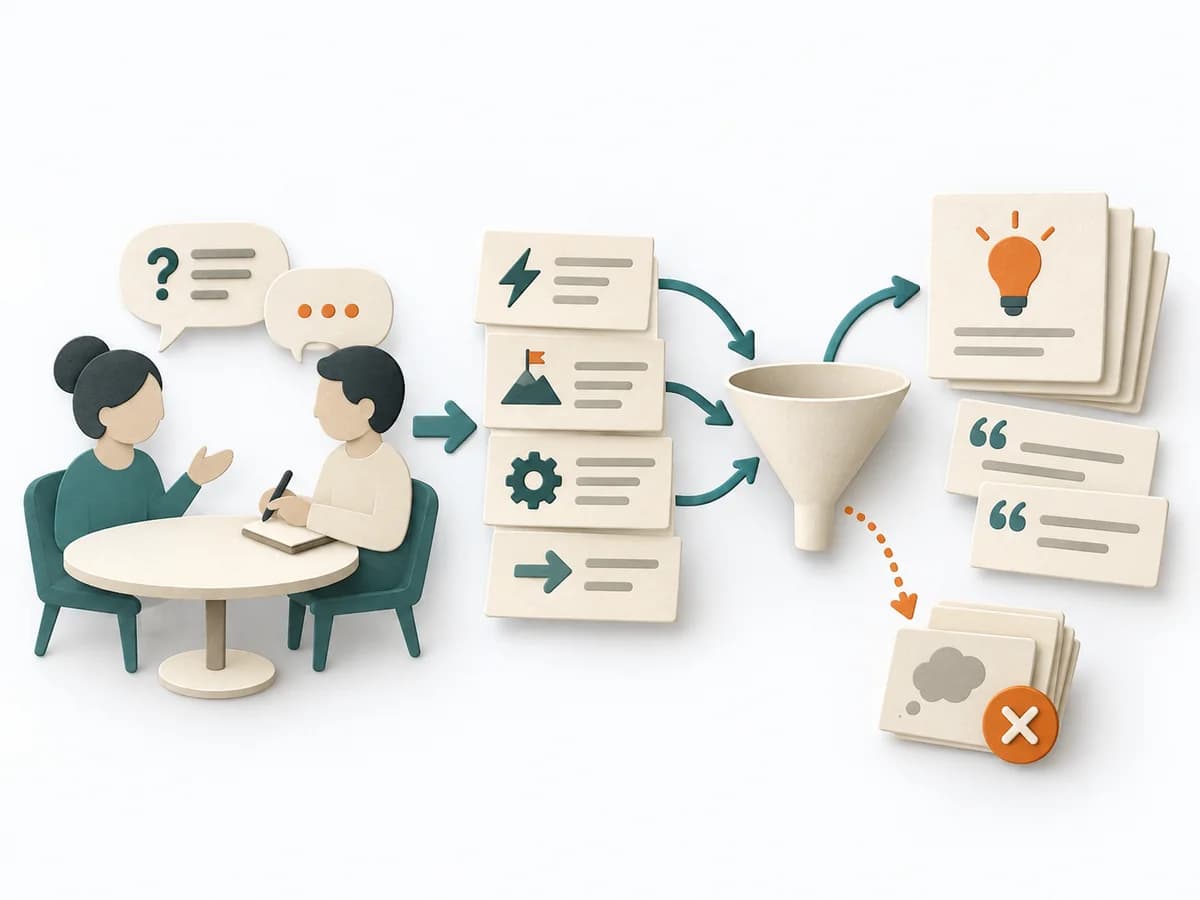 Product Discovery Opportunity Interview |  Decision Making Assumption Surfacing |
|---|---|---|---|---|
Purposedifferent | When teams derive needs only from assumptions and real motives are missing, user interviews give direct access to behavior and meaning. Conversations from the target group's everyday life make patterns, tensions, and open questions solidly visible. | Knowledge Mapping makes knowledge, gaps, and transfer paths visible across a field. It fits when expertise should not just exist but also be findable and transferable. | When opportunities are still hidden behind signals of need, it structures conversations around needs and obstacles. It looks for patterns that lead to new product opportunities. | Plans often contain assumptions that were never openly stated and remain dangerous precisely because of that. Assumption Surfacing makes these silent premises visible and prioritizes which of them carry the initiative or could sink it. |
Complexitydifferent | Low | Medium | Medium | Low |
Timedifferent | 30–60 min per interview | 1-3 h | 30-60 min je Interview | 45-90 min |
Participantsdifferent | 1 participant per interview | 3-12 | 5-12 Interviews | 2-8 |
Formatdifferent | Workshop + async | Workshop | Workshop + async | Workshop + async |
Outputdifferent | Interview Notes, Themes, Insight Summary | Knowledge Map, Critical Knowledge Areas, Transfer Plan | Interview Notes, Opportunity Themes, Customer Quotes | Assumption List, Critical Assumptions, Learning Plan |
Tagsno overlap | QualitativeResearchCustomerDiscovery | KnowledgeMappingRisk | DiscoveryInterviewsOpportunityCustomer | AssumptionsRiskDecisionDiscovery |