View methods side by side.
Choose up to four methods. Add them using the search and share the comparison by copying its link.
| Criterion |  UX Research User Interviews |  Knowledge Modeling IBIS |  Product Strategy DIBB | 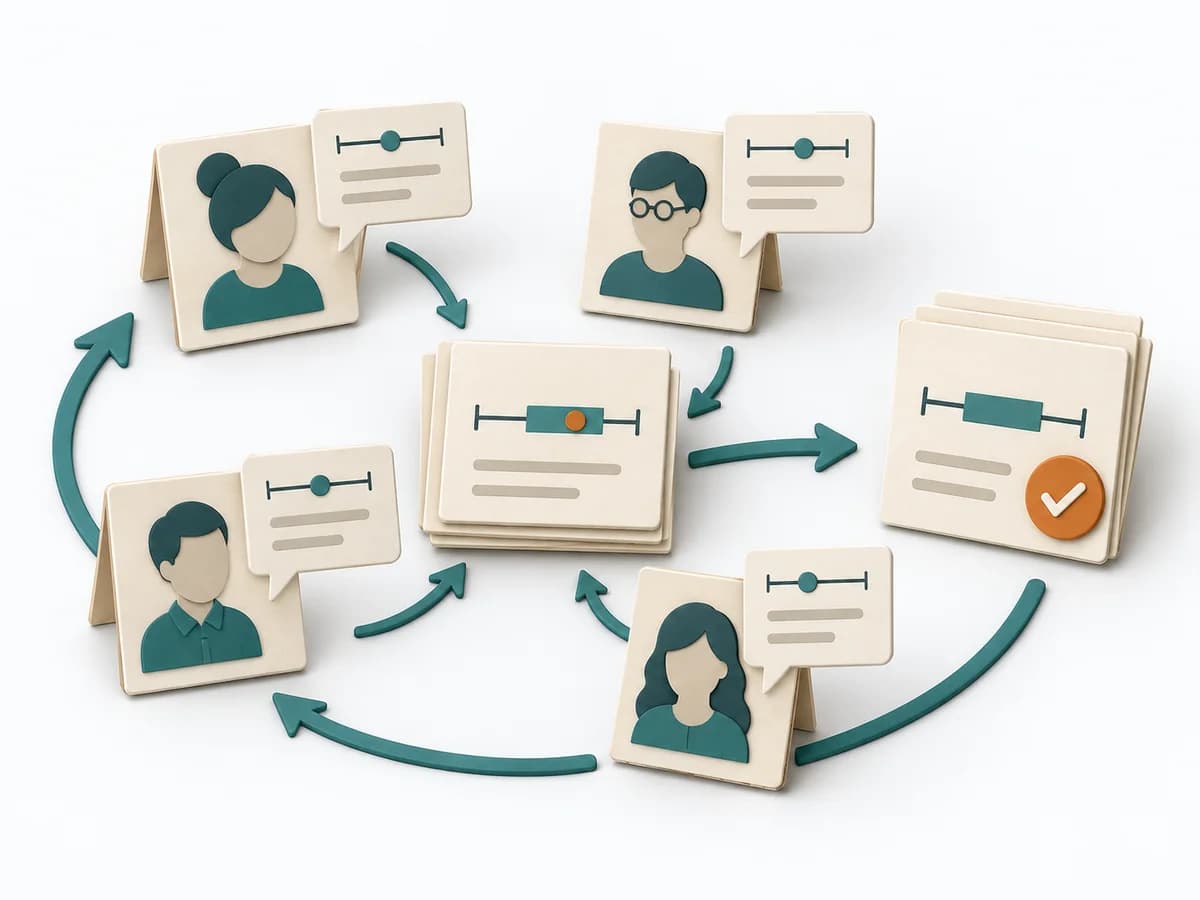 Decision Making Delphi Method |
|---|---|---|---|---|
Purposedifferent | When teams derive needs only from assumptions and real motives are missing, user interviews give direct access to behavior and meaning. Conversations from the target group's everyday life make patterns, tensions, and open questions solidly visible. | IBIS structures thinking about complex questions as a sequence of issues, ideas, and arguments. The method keeps discussions open without forcing them into premature consensus. | DIBB helps clarify target groups, value, goals, and priorities by making the logic behind a decision explicit. It captures results as a DIBB document, belief list, bet list, and learning report. | When knowledge is distributed and direct dominance should be avoided, groups quickly fall under the sway of their opinion leaders. The Delphi Method gathers assessments iteratively and gradually brings expert judgments closer together. |
Complexitydifferent | Low | Medium | Low | High |
Timedifferent | 30–60 min per interview | 1-3 h | 1-2 h | 1-4 Wochen |
Participantsdifferent | 1 participant per interview | 2-8 | 2-8 | 6-30 Experten |
Formatdifferent | Workshop + async | Workshop + async | Workshop + async | Async |
Outputdifferent | Interview Notes, Themes, Insight Summary | Issue Map, Positions, Argument Notes | DIBB document, Belief list, Bet list, Learning report | Expert Forecast, Consensus Range, Assumption Notes |
Tagsno overlap | QualitativeResearchCustomerDiscovery | RationaleKnowledgeDecision | StrategyDecisionAssumptionsHypothesis | ForecastingExpertsDecisionStrategy |