View methods side by side.
Choose up to four methods. Add them using the search and share the comparison by copying its link.
| Criterion |  UX Research User Interviews | 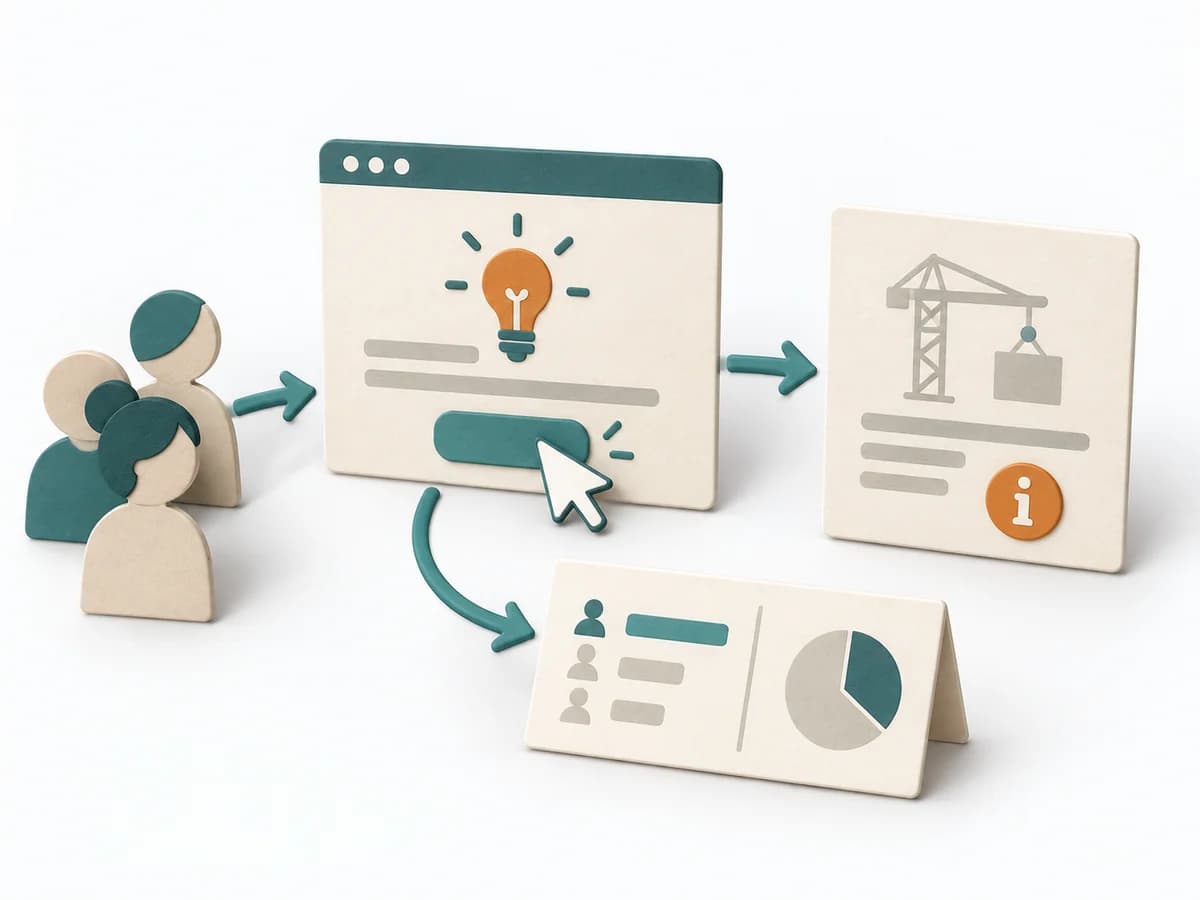 Product Discovery Fake Door Test | 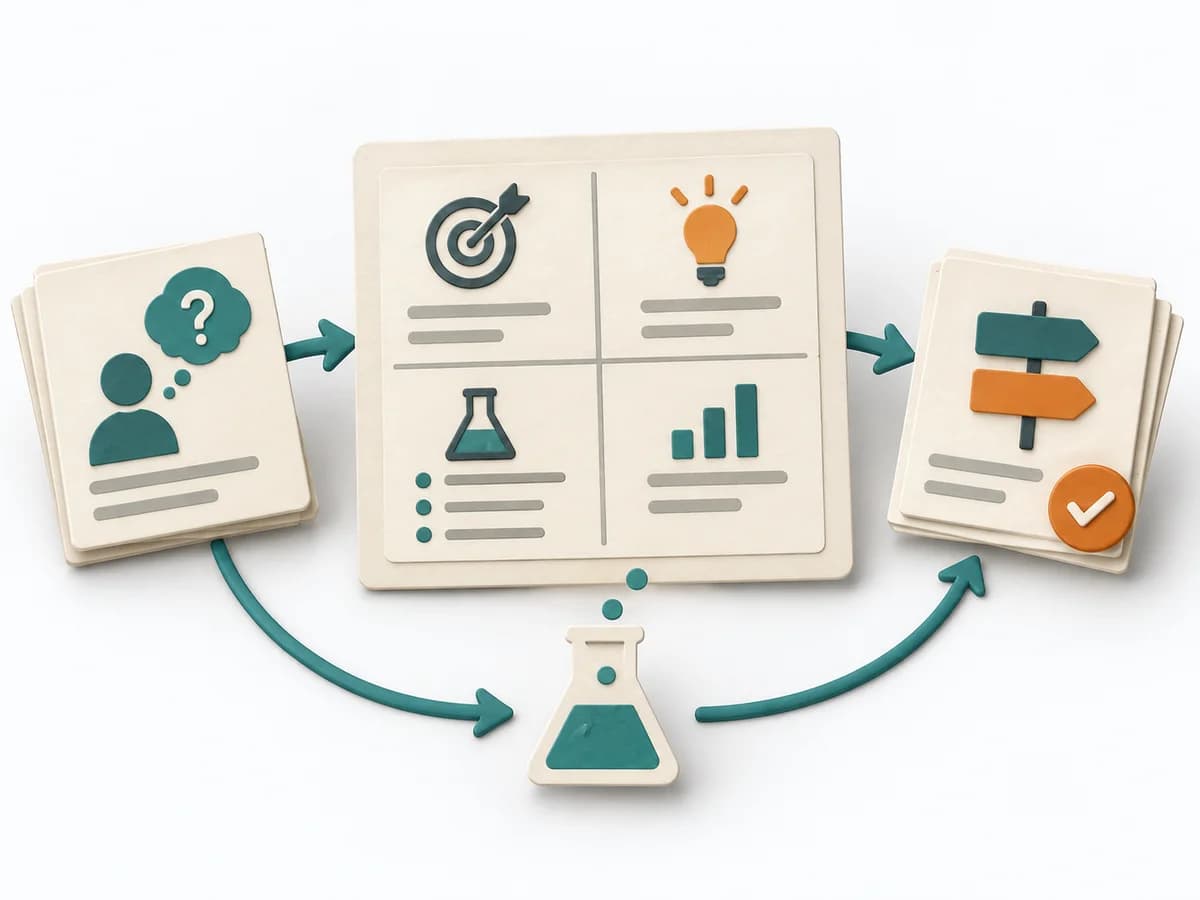 Product Discovery Experiment Canvas | 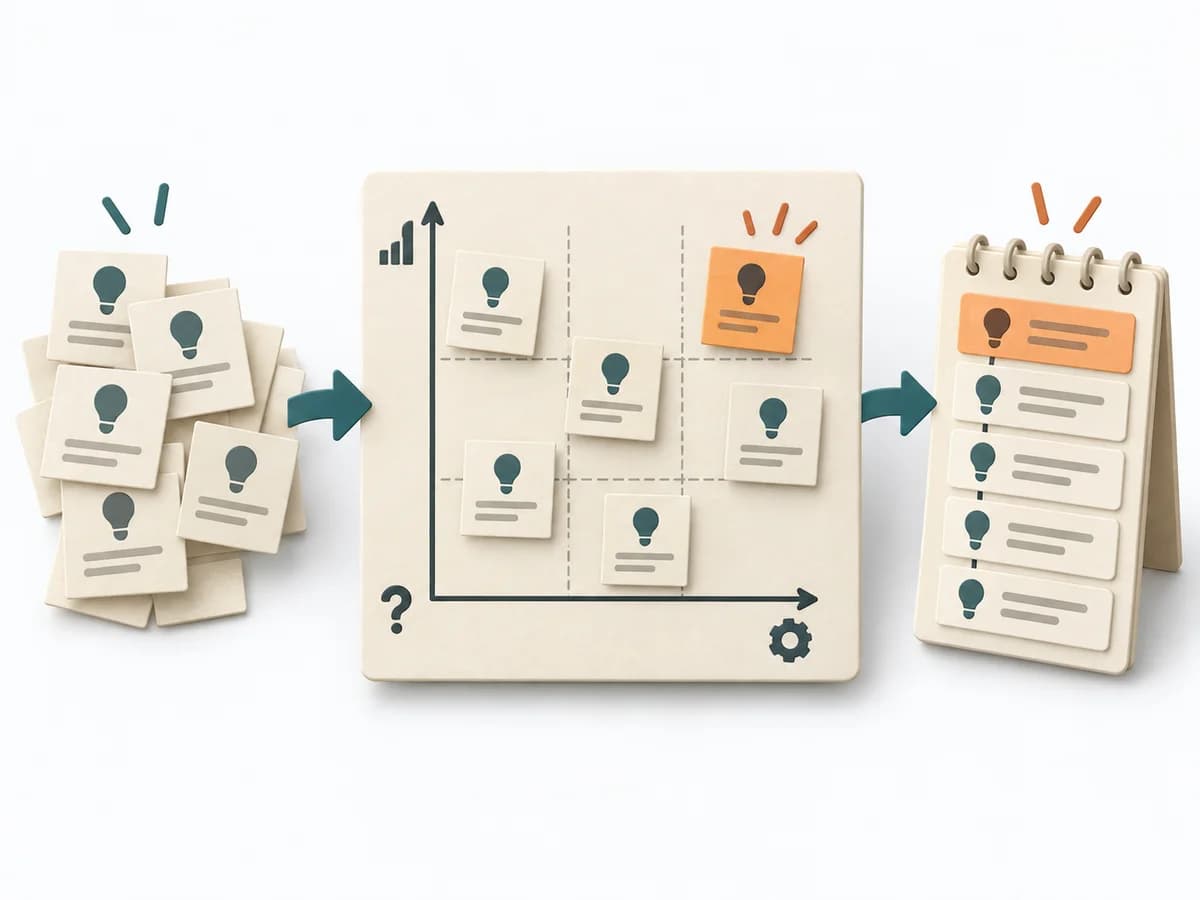 Product Discovery Hypothesis Prioritization Canvas |
|---|---|---|---|---|
Purposedifferent | When teams derive needs only from assumptions and real motives are missing, user interviews give direct access to behavior and meaning. Conversations from the target group's everyday life make patterns, tensions, and open questions solidly visible. | When demand is still unclear, it measures interest in a feature before it is built. It separates real behavior from polite agreement and deliberately keeps build effort small. | When experiments become unreadable after the fact, it arranges hypothesis, signal, and learning goal on a single canvas. It separates problem, assumption, solution, and evidence. The result is captured as a Completed Experiment Canvas and a Success Metric. | When many hypotheses compete for attention, it brings order to their learning sequence and importance. It separates problem, assumption, solution, and evidence. The result is captured as a prioritization canvas and a hypothesis backlog. |
Complexitydifferent | Low | Medium | Low | Medium |
Timedifferent | 30–60 min per interview | 1-5 Tage | 30-60 min | 60-90 min |
Participantsdifferent | 1 participant per interview | Nutzertraffic | 1-5 | 3-8 |
Formatdifferent | Workshop + async | Async | Workshop + async | Workshop |
Outputdifferent | Interview Notes, Themes, Insight Summary | Click Data, Interest Signal, Learning Decision | Completed Experiment Canvas, Success Metric | Prioritization Canvas, Hypothesis Backlog |
Tags1 shared | QualitativeResearchCustomerDiscovery | ValidationExperimentsDemandDiscovery | ExperimentsValidationDiscoveryHypothesis | ExperimentsPrioritizationDiscoveryHypothesis |