View methods side by side.
Choose up to four methods. Add them using the search and share the comparison by copying its link.
| Criterion |  UX Research User Interviews |  Product Strategy DIBB | 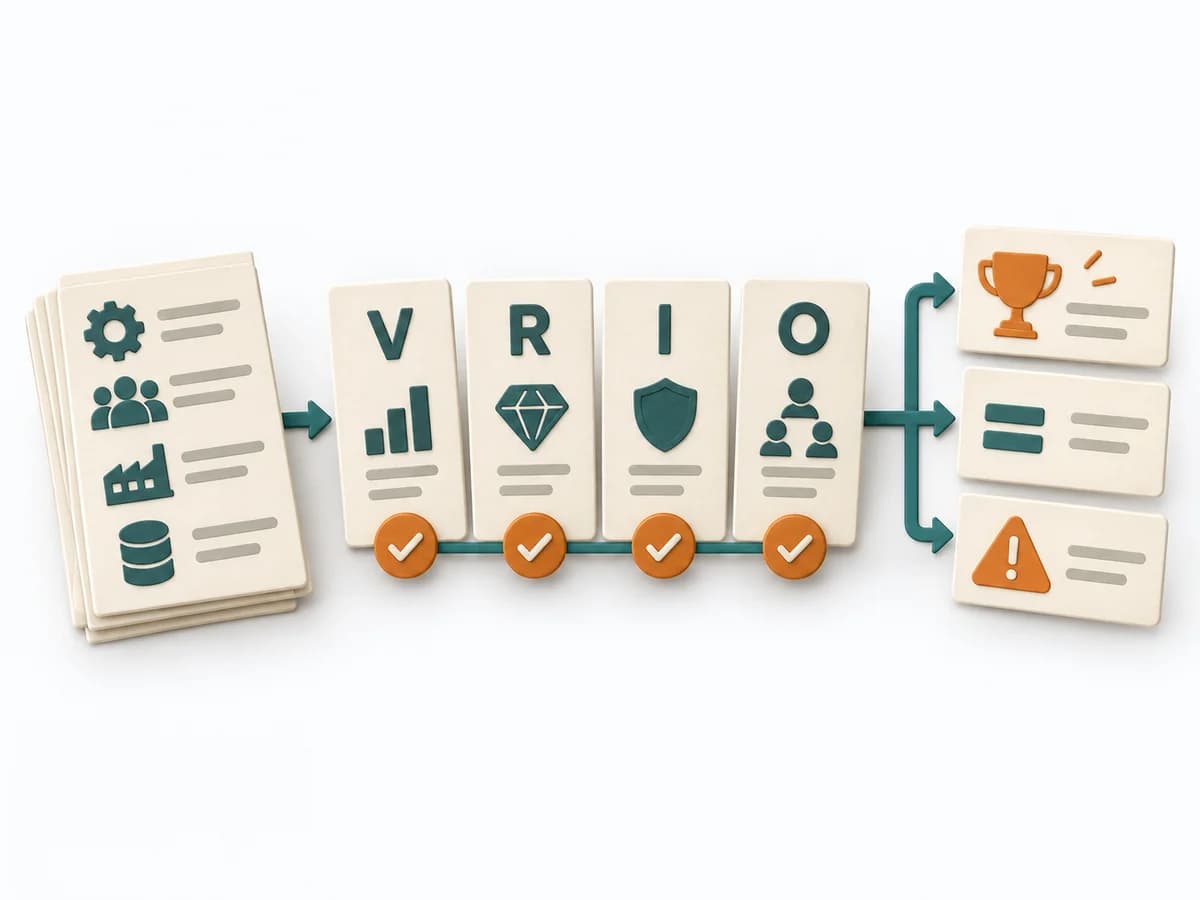 Business Strategy VRIO Framework | 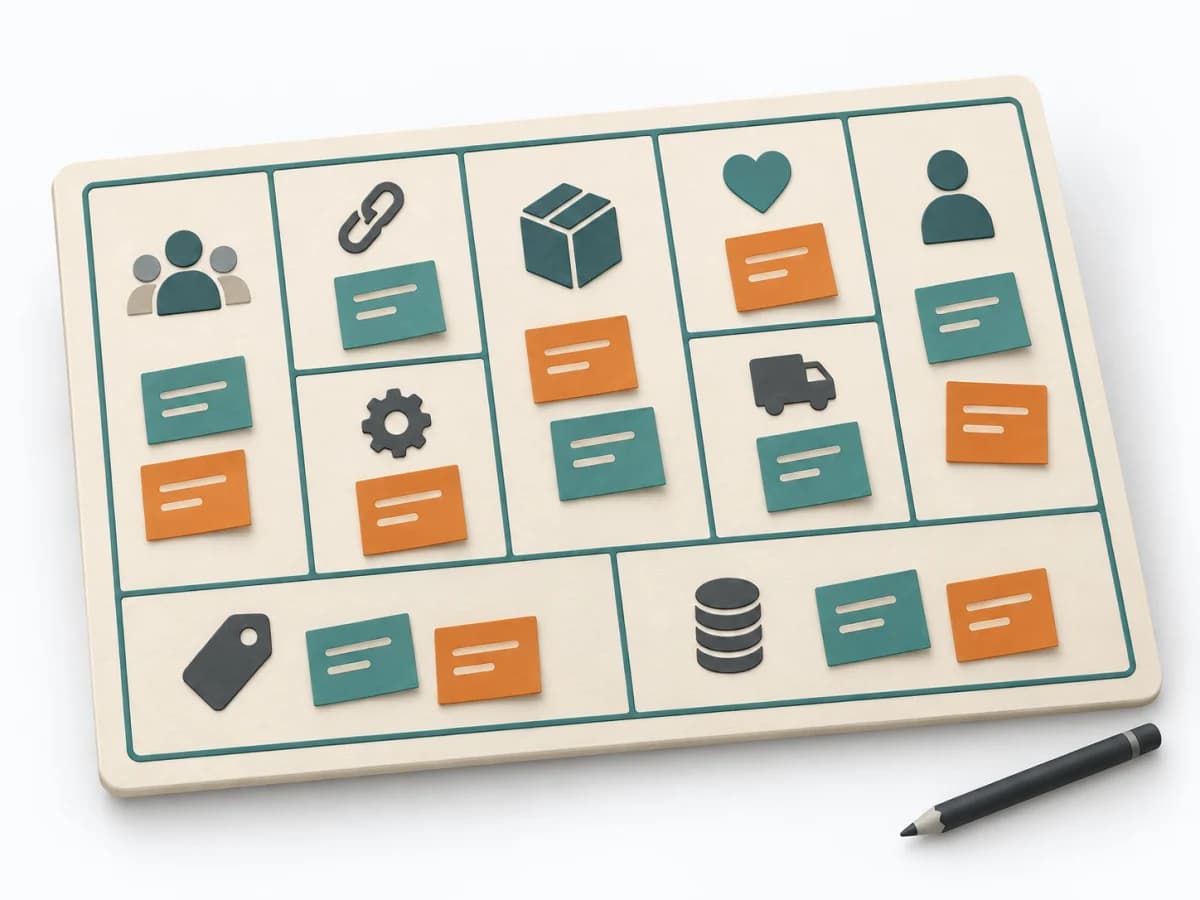 Business Strategy Business Model Canvas |
|---|---|---|---|---|
Purposedifferent | When teams derive needs only from assumptions and real motives are missing, user interviews give direct access to behavior and meaning. Conversations from the target group's everyday life make patterns, tensions, and open questions solidly visible. | DIBB helps clarify target groups, value, goals, and priorities by making the logic behind a decision explicit. It captures results as a DIBB document, belief list, bet list, and learning report. | The VRIO Framework rates resources and capabilities on whether they are Valuable, Rare, Inimitable, and Organized. It compares strengths, risks, market logic, and courses of action. The result is captured as a VRIO table and strategic actions. | The Business Model Canvas condenses a business model to its key building blocks and assumptions. It makes variants quickly comparable and reveals gaps before validation or implementation begins. |
Complexitydifferent | Low | Low | Medium | Medium |
Timedifferent | 30–60 min per interview | 1-2 h | 90-180 min | 1-2 h |
Participantsdifferent | 1 participant per interview | 2-8 | 3-6 | 2-8 |
Formatdifferent | Workshop + async | Workshop + async | Workshop | Workshop + async |
Outputdifferent | Interview Notes, Themes, Insight Summary | DIBB document, Belief list, Bet list, Learning report | VRIO Table, Strategic Actions | Business Model Canvas, Assumption List, Business Hypotheses |
Tagsno overlap | QualitativeResearchCustomerDiscovery | StrategyDecisionAssumptionsHypothesis | StrategyDiagnosisBusiness modelCapability | Business modelStrategyValueInnovation |