View methods side by side.
Choose up to four methods. Add them using the search and share the comparison by copying its link.
| Criterion |  UX Research User Interviews |  Knowledge Modeling Concept Mapping | 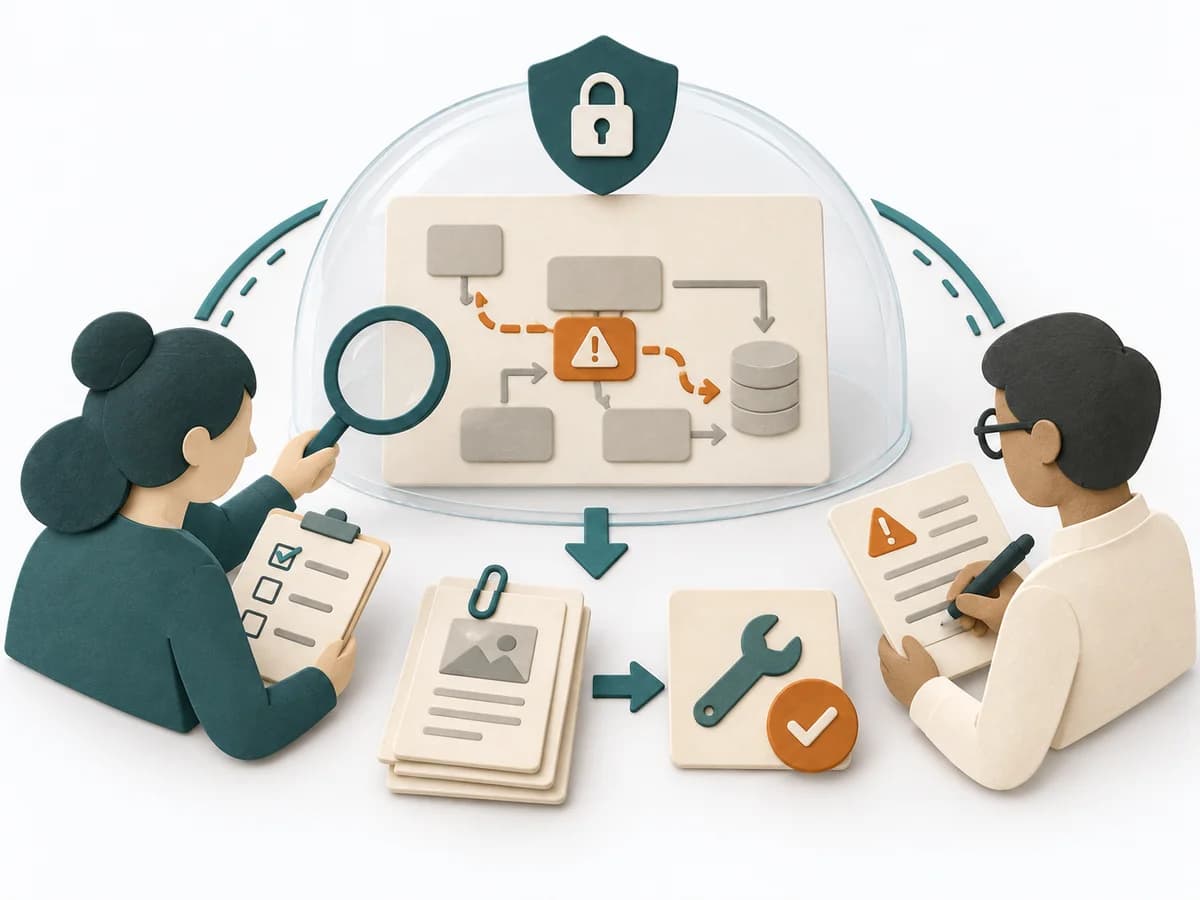 Decision Making Red Teaming | 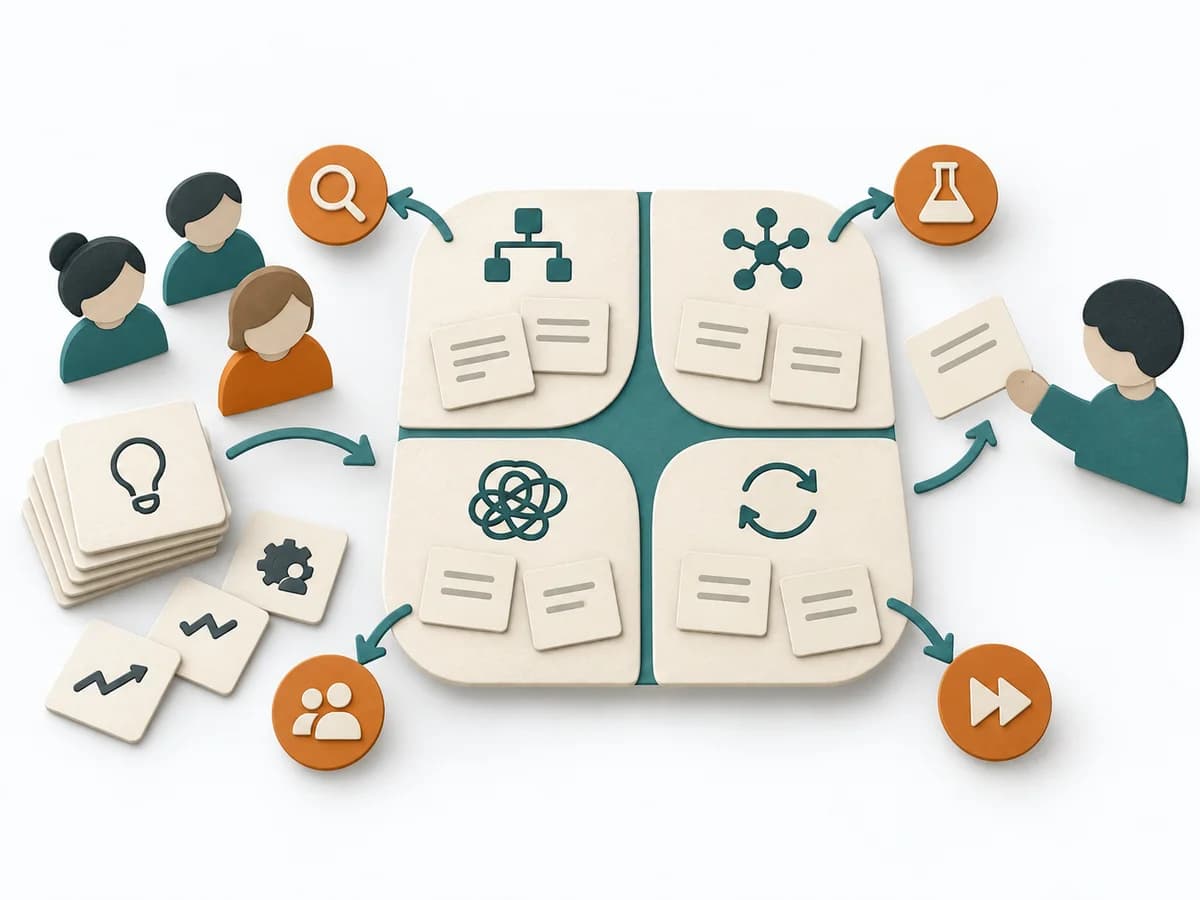 Decision Making Cynefin Workshop |
|---|---|---|---|---|
Purposedifferent | When teams derive needs only from assumptions and real motives are missing, user interviews give direct access to behavior and meaning. Conversations from the target group's everyday life make patterns, tensions, and open questions solidly visible. | Concept Mapping arranges terms and relationships in a network that makes subject-matter connections tangible. It fits when a topic needs to be understood structurally rather than linearly. | For strategic decisions with high reach, agreement and gut feeling are often not enough. Red teaming brings deliberate opposition into the situation and tests where a plan breaks under real counterarguments. | When problems are unclear, chaotic, or only seemingly familiar, standard recipes fall short. A Cynefin Workshop sorts situations by the nature of their problem and connects them with matching action logic. |
Complexitydifferent | Low | Medium | High | Medium |
Timedifferent | 30–60 min per interview | 1-2 h | 1-4 h | 60-180 min |
Participantsdifferent | 1 participant per interview | 1-8 | 3-8 | 4-20 |
Formatdifferent | Workshop + async | Workshop + async | Workshop | Workshop |
Outputdifferent | Interview Notes, Themes, Insight Summary | Concept Map, Relationship Labels, Knowledge Gaps | Challenge Findings, Risk Register, Mitigation Plan | Cynefin Map, Domain-specific Actions, Sensemaking Notes |
Tagsno overlap | QualitativeResearchCustomerDiscovery | KnowledgeConceptsMappingSensemaking | RiskDecisionSensemaking | ComplexitySensemakingDecision |