View methods side by side.
Choose up to four methods. Add them using the search and share the comparison by copying its link.
| Criterion |  UX Research User Interviews |  Facilitation Barcamp | 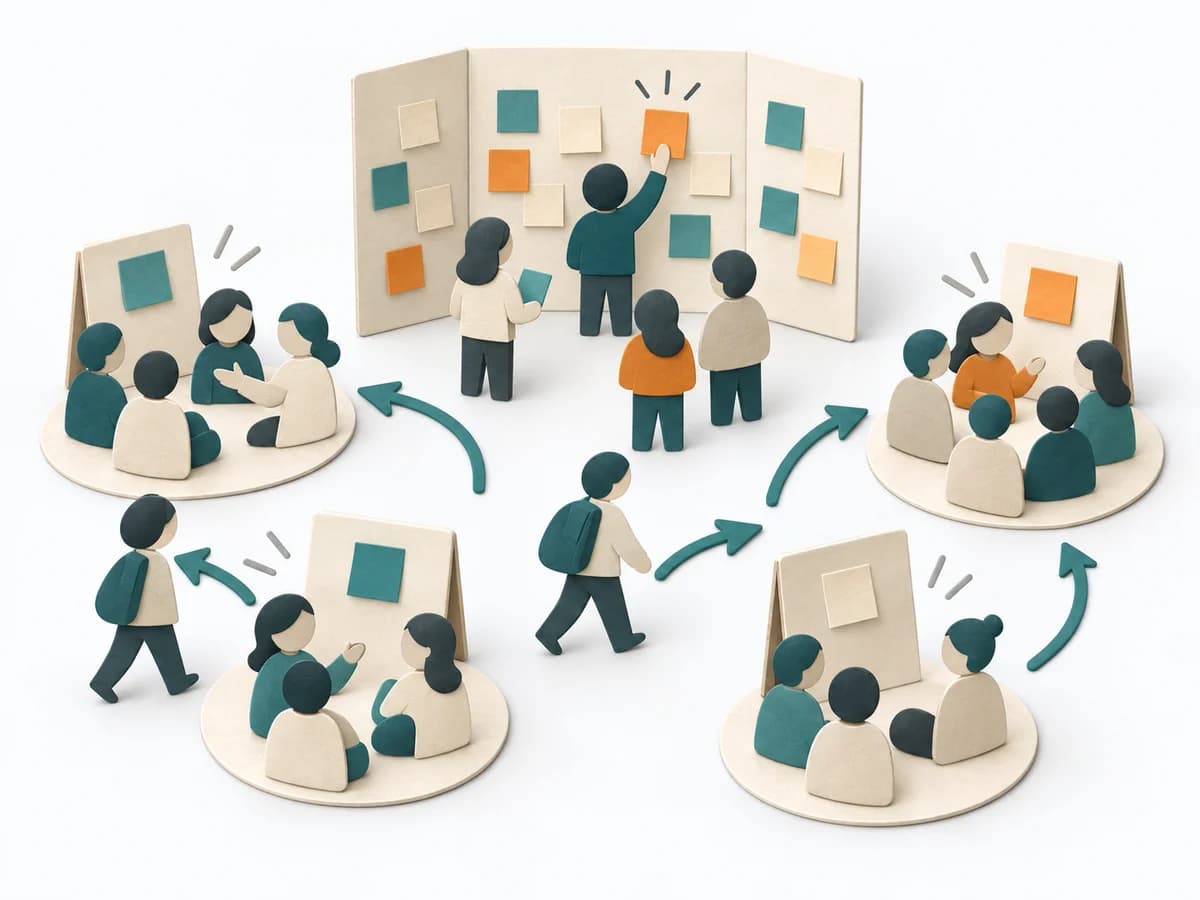 Facilitation Open Space Technology |  Product Discovery Learning Card |
|---|---|---|---|---|
Purposedifferent | When teams derive needs only from assumptions and real motives are missing, user interviews give direct access to behavior and meaning. Conversations from the target group's everyday life make patterns, tensions, and open questions solidly visible. | When many people can contribute knowledge and the flow should stay open, Barcamp provides a framework for self-organized sessions. The format channels energy without defining the content too narrowly in advance. | When a complex topic does not yet have a fitting agenda, Open Space Technology hands topic ownership back to the participants. The format suits questions that only move forward when real interest determines the order. | The Learning Card connects traceable test results to a reasoned next action while keeping the limits of the insight visible. |
Complexitydifferent | Low | Medium | High | Low |
Timedifferent | 30–60 min per interview | Halber Tag bis 2 Tage | 0.5-2 Tage | 25-40 min |
Participantsdifferent | 1 participant per interview | 15-200 | 20-500+ | 1-5 |
Formatdifferent | Workshop + async | Workshop | Workshop | Workshop + async |
Outputdifferent | Interview Notes, Themes, Insight Summary | Session Board, Session Notes, Community Learnings | Session Marketplace, Proceedings, Action Topics | Learning Card with evidence and next action |
Tagsno overlap | QualitativeResearchCustomerDiscovery | FacilitationLarge groupLearning | FacilitationLarge groupAutonomy | ExperimentsValidationDiscoveryLearning |