View methods side by side.
Choose up to four methods. Add them using the search and share the comparison by copying its link.
| Criterion |  UX Research Tree Testing |  Product Strategy Lean Canvas | 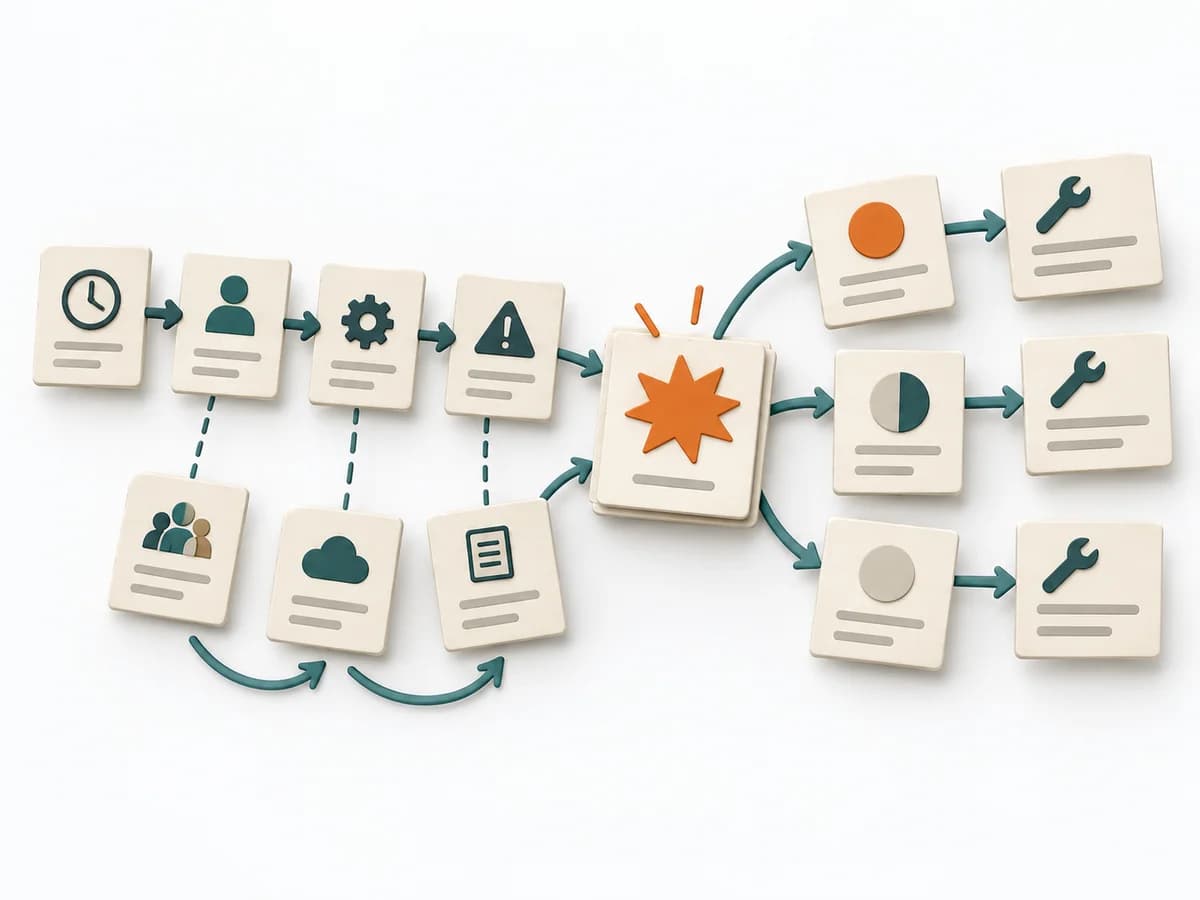 Operations Causal Factor Analysis |  Operations Barrier Analysis |
|---|---|---|---|---|
Purposedifferent | When a navigation exists but search paths still fail, tree testing checks findability without visual distraction. The method shows whether labels, levels, and paths really lead to the intended destination. | When an early product bet still has too many open points, it brings target group, problem, and assumptions into a single view. It condenses the idea so core risks become nameable. | For an event with a complicated course, the method breaks down the contributing factors along the timeline. It shows how conditions, decisions, and reactions together produce a course of events. | For a risk that can only be managed through multiple layers of protection, the method examines the effectiveness of each barrier. It shows where safeguards are missing, too weak, or fail under real conditions. |
Complexitydifferent | Medium | Medium | High | Medium |
Timedifferent | 1-2 Tage | 45-90 min | 2-6 h | 2-4 h |
Participantsdifferent | Based on research question | 1-6 | 3-10 | 2-6 |
Formatdifferent | Async | Workshop + async | Workshop + async | Workshop + async |
Outputdifferent | Findability Metrics, Path Analysis, Revised IA | Lean Canvas, Core Assumptions, Experiment Backlog | Event Timeline, Causal Factor Chart, Cause List, Corrective Actions | Barrier Inventory, Failure Analysis per Barrier, Action Backlog |
Tagsno overlap | Information architectureNavigationFindability | StartupLeanAssumptionsBusiness model | CausalityIncidentRoot causeTimeline | Root causeSafetyIncident |