View methods side by side.
Choose up to four methods. Add them using the search and share the comparison by copying its link.
| Criterion | 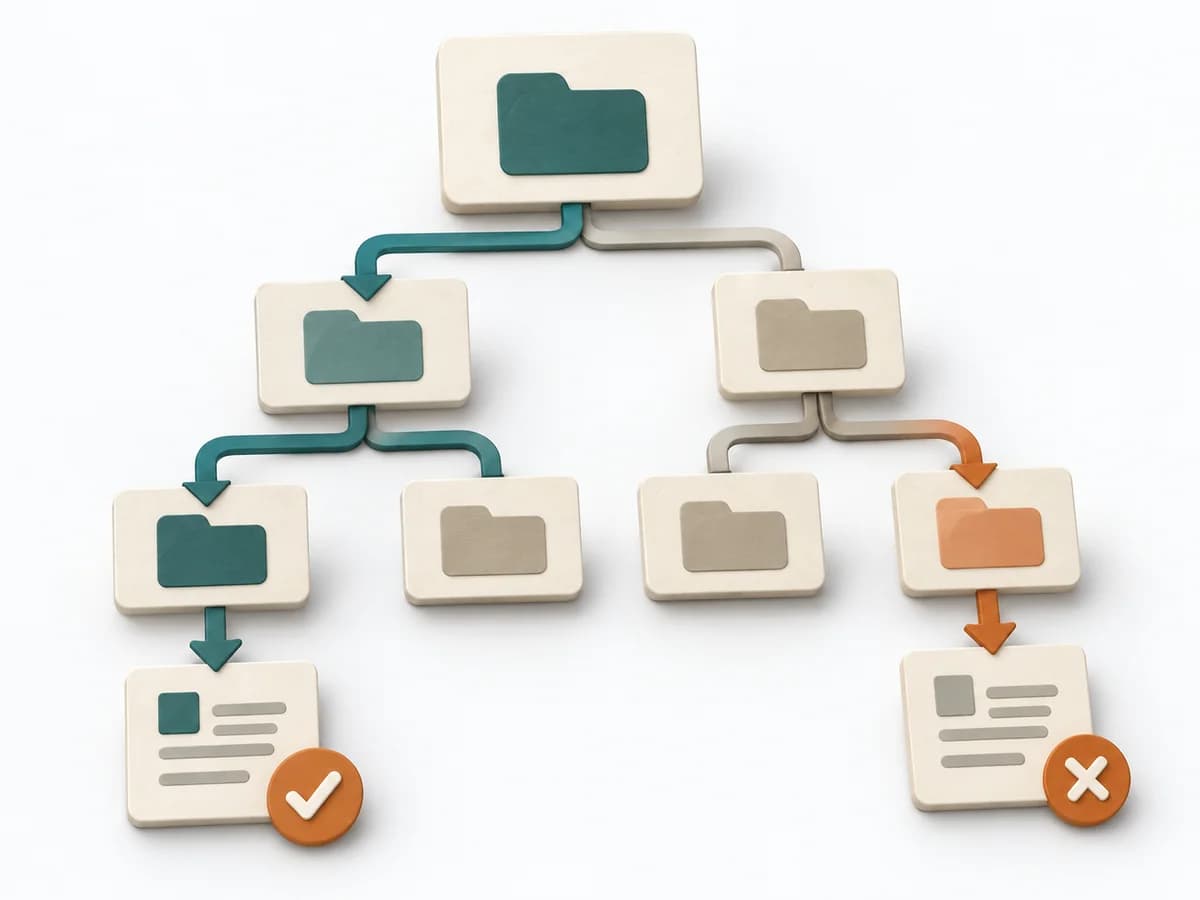 UX Research Tree Testing | 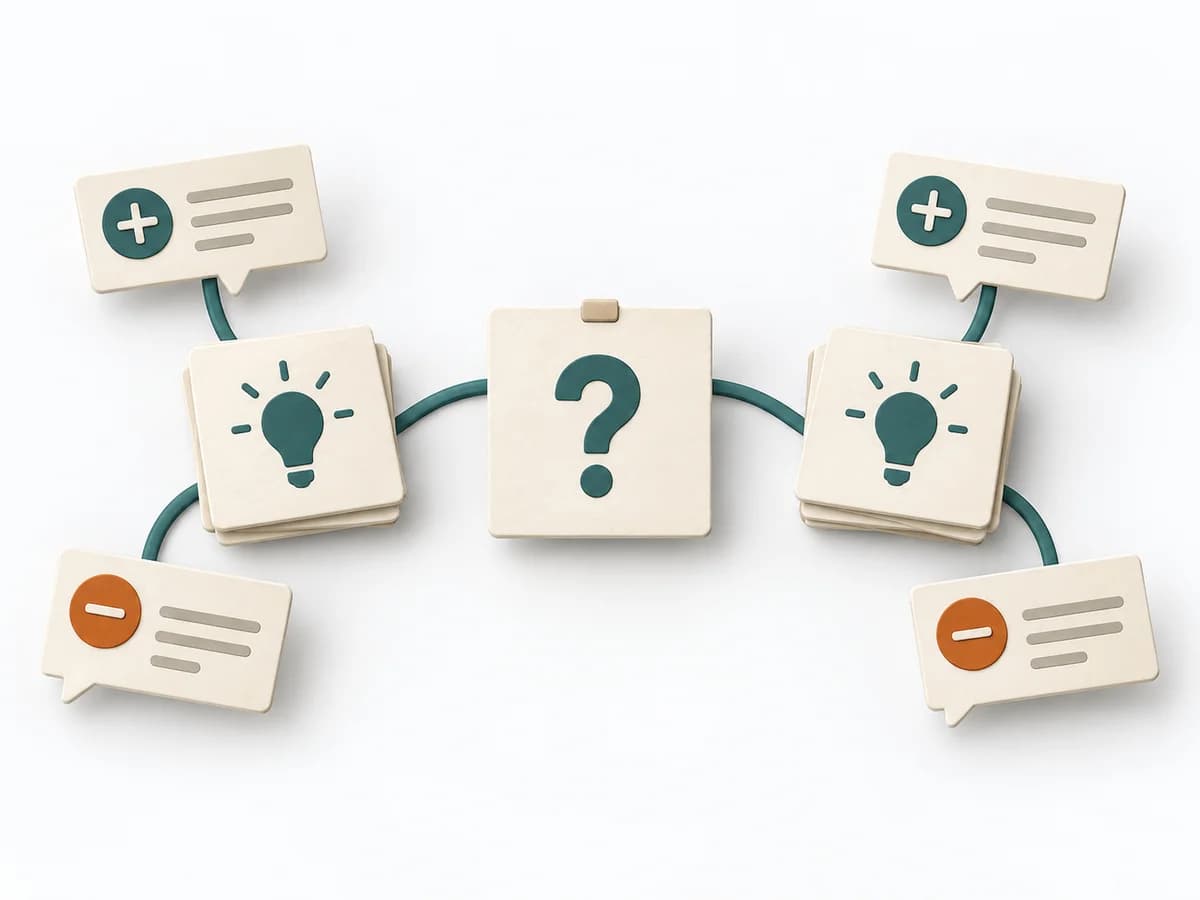 Knowledge Modeling IBIS | 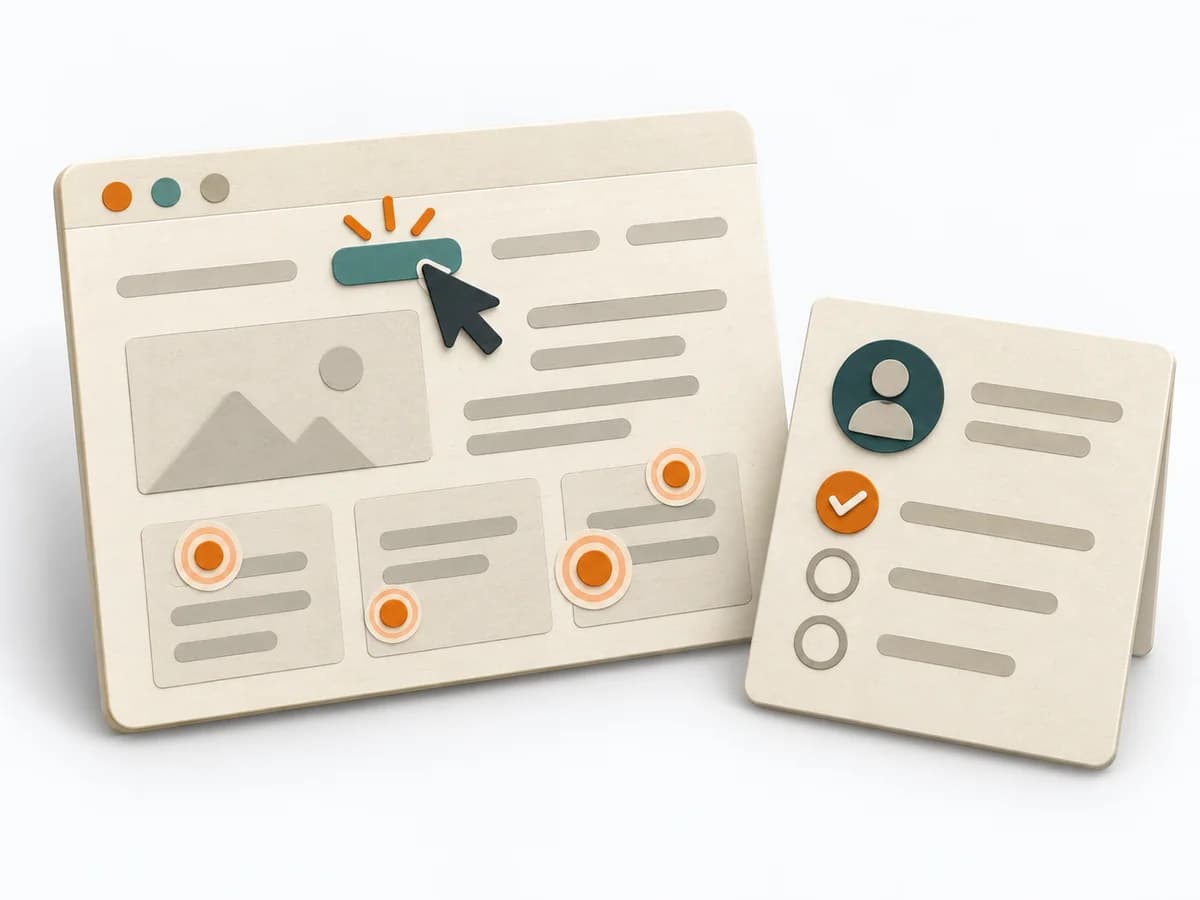 UX Research First-click Testing | 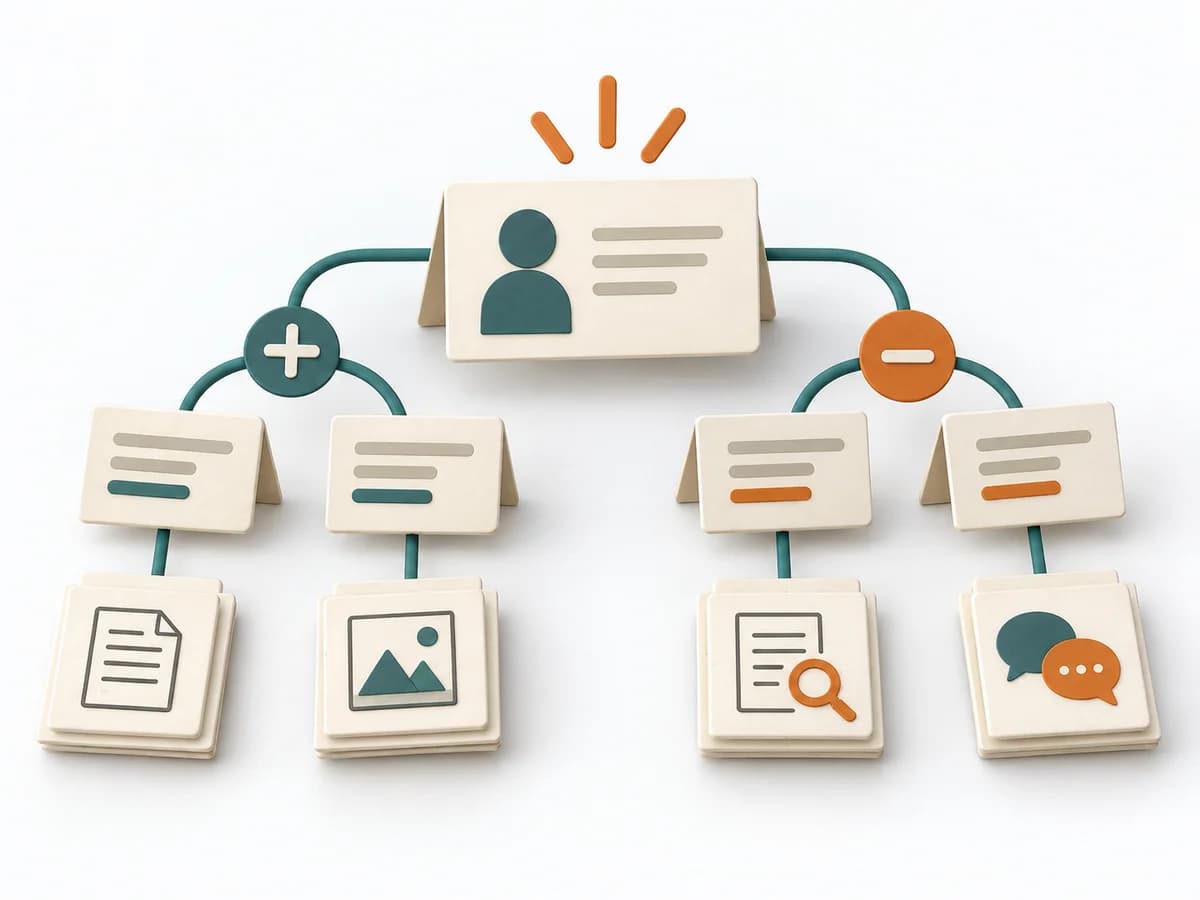 Decision Making Argument Mapping |
|---|---|---|---|---|
Purposedifferent | When a navigation exists but search paths still fail, tree testing checks findability without visual distraction. The method shows whether labels, levels, and paths really lead to the intended destination. | IBIS structures thinking about complex questions as a sequence of issues, ideas, and arguments. The method keeps discussions open without forcing them into premature consensus. | When users immediately turn the wrong way on a screen or wireframe, first click testing checks initial orientation at high speed. The first click shows early whether expectation, labeling, and wayfinding fit together. | When statements, evidence, and counterarguments get mixed up, a debate quickly loses its structure. Argument Mapping breaks a thesis down into its reasoning and makes visible what it really rests on. |
Complexitydifferent | Medium | Medium | Low | Medium |
Timedifferent | 1-2 Tage | 1-3 h | 1-2 Tage | 1-3 h |
Participantsdifferent | Based on research question | 2-8 | 10-30 | 1-8 |
Formatdifferent | Async | Workshop + async | Async | Workshop + async |
Outputdifferent | Findability Metrics, Path Analysis, Revised IA | Issue Map, Positions, Argument Notes | Click Heatmap, Success Rate, Design Recommendations | Argument Map, Evidence Gaps, Decision Rationale |
Tagsno overlap | Information architectureNavigationFindability | RationaleKnowledgeDecision | UXNavigationFindabilityValidation | SensemakingDecisionRationale |