View methods side by side.
Choose up to four methods. Add them using the search and share the comparison by copying its link.
| Criterion | 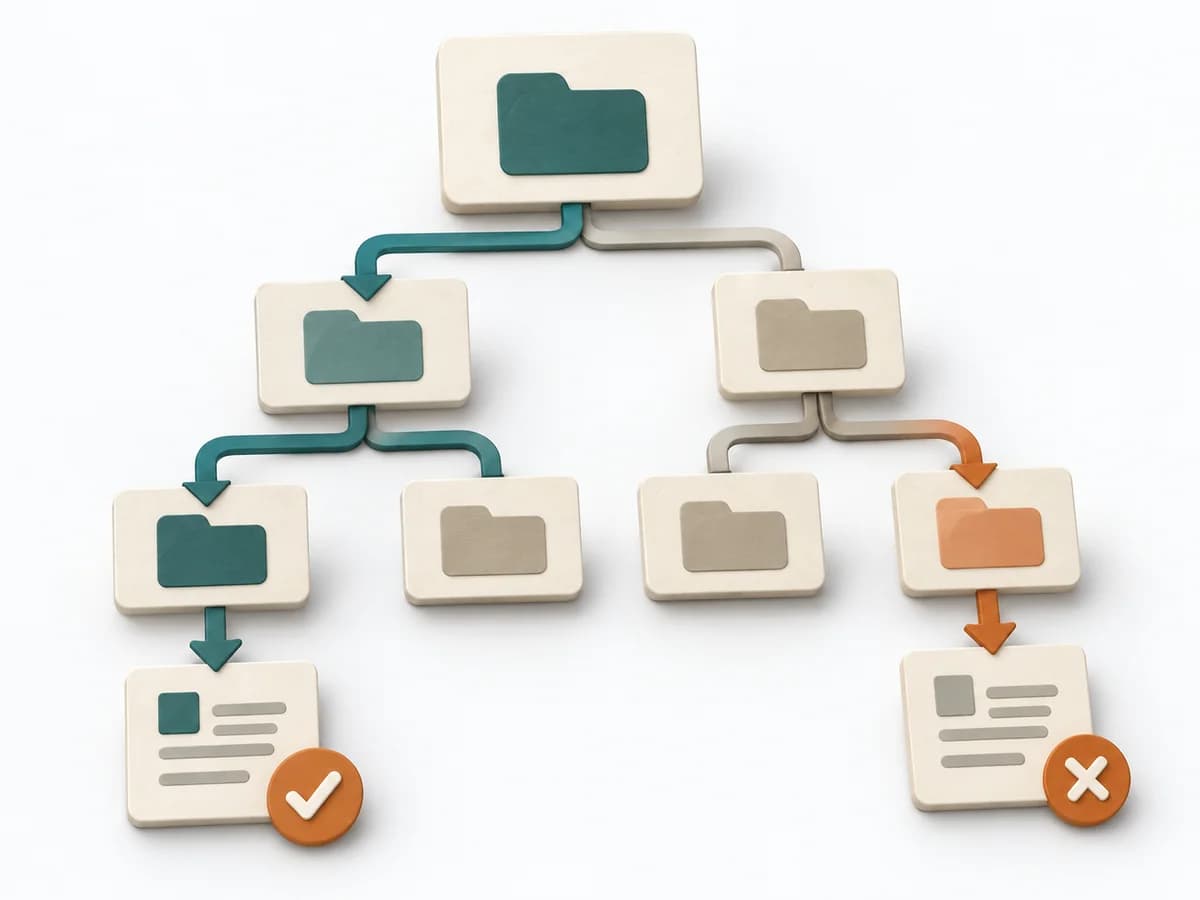 UX Research Tree Testing |  Decision Making Force Field Analysis |  UX Research First-click Testing |  Product Strategy DIBB |
|---|---|---|---|---|
Purposedifferent | When a navigation exists but search paths still fail, tree testing checks findability without visual distraction. The method shows whether labels, levels, and paths really lead to the intended destination. | In change initiatives, supporting and restraining forces sit at the table at the same time. Force Field Analysis makes these tensions explicit and shows where change can be pushed forward by strengthening or relieving. | When users immediately turn the wrong way on a screen or wireframe, first click testing checks initial orientation at high speed. The first click shows early whether expectation, labeling, and wayfinding fit together. | DIBB helps clarify target groups, value, goals, and priorities by making the logic behind a decision explicit. It captures results as a DIBB document, belief list, bet list, and learning report. |
Complexitydifferent | Medium | Low | Low | Low |
Timedifferent | 1-2 Tage | 45-90 min | 1-2 Tage | 1-2 h |
Participantsdifferent | Based on research question | 3-12 | 10-30 | 2-8 |
Formatdifferent | Async | Workshop | Async | Workshop + async |
Outputdifferent | Findability Metrics, Path Analysis, Revised IA | Force Field Map, Change Levers, Risk Notes | Click Heatmap, Success Rate, Design Recommendations | DIBB document, Belief list, Bet list, Learning report |
Tagsno overlap | Information architectureNavigationFindability | ChangeDecisionStrategy | UXNavigationFindabilityValidation | StrategyDecisionAssumptionsHypothesis |