View methods side by side.
Choose up to four methods. Add them using the search and share the comparison by copying its link.
| Criterion | 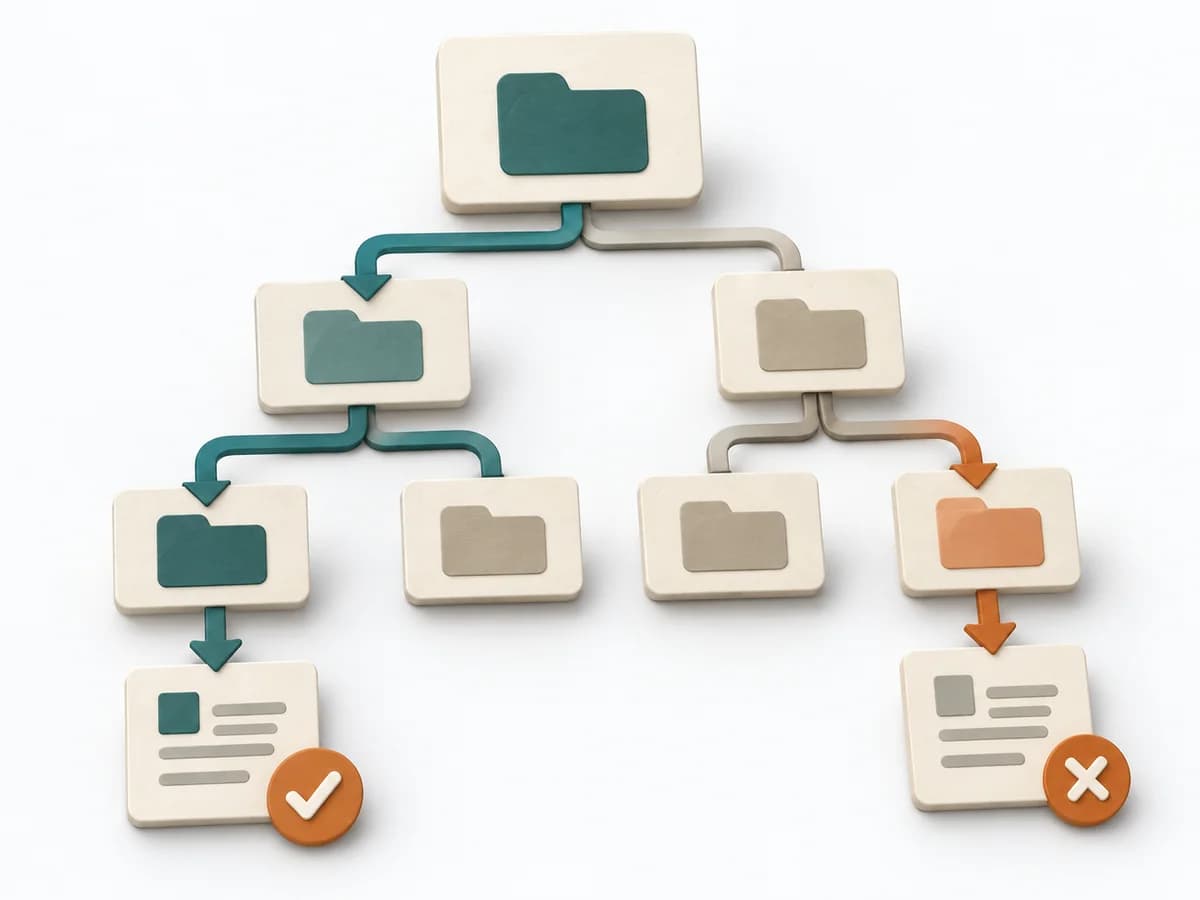 UX Research Tree Testing | 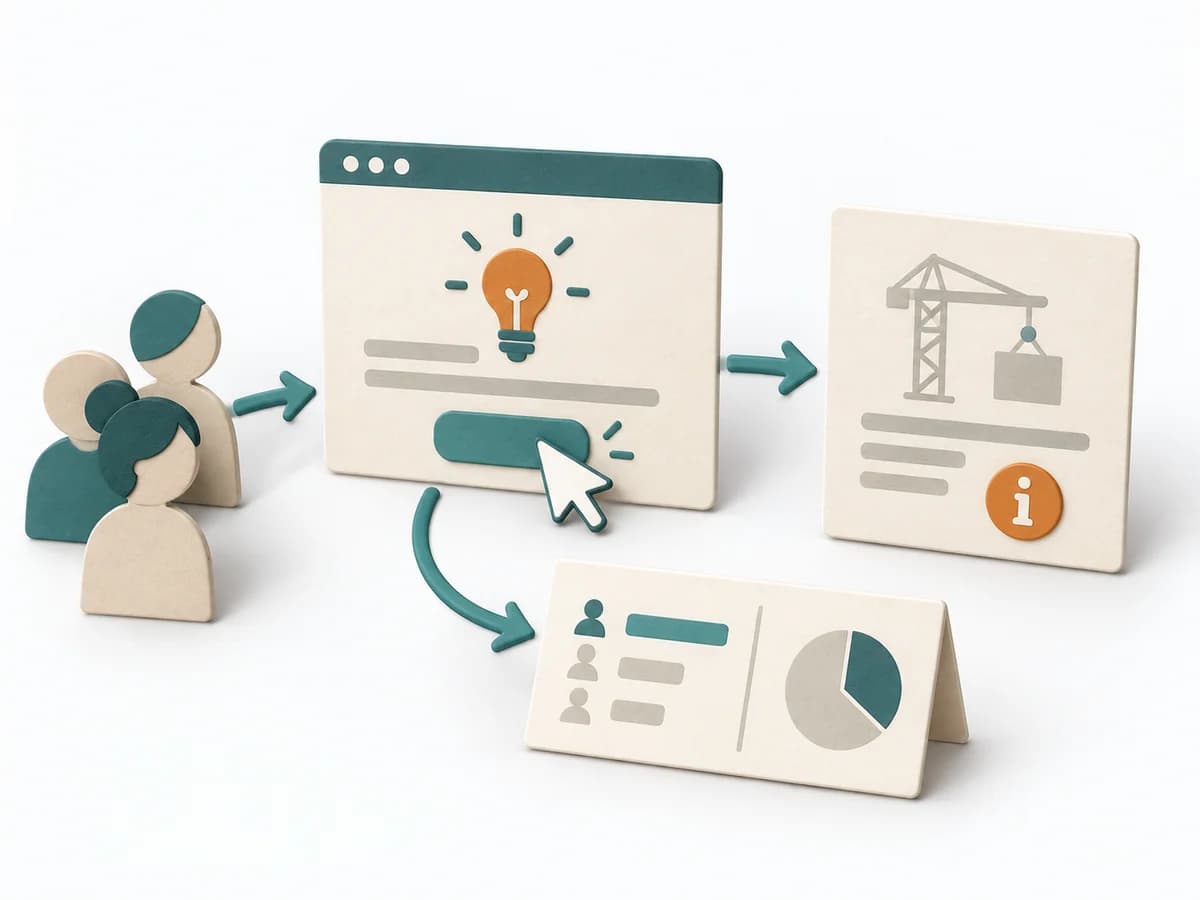 Product Discovery Fake Door Test |  Decision Making Assumption Surfacing |  UX Research First-click Testing |
|---|---|---|---|---|
Purposedifferent | When a navigation exists but search paths still fail, tree testing checks findability without visual distraction. The method shows whether labels, levels, and paths really lead to the intended destination. | When demand is still unclear, it measures interest in a feature before it is built. It separates real behavior from polite agreement and deliberately keeps build effort small. | Plans often contain assumptions that were never openly stated and remain dangerous precisely because of that. Assumption Surfacing makes these silent premises visible and prioritizes which of them carry the initiative or could sink it. | When users immediately turn the wrong way on a screen or wireframe, first click testing checks initial orientation at high speed. The first click shows early whether expectation, labeling, and wayfinding fit together. |
Complexitydifferent | Medium | Medium | Low | Low |
Timedifferent | 1-2 Tage | 1-5 Tage | 45-90 min | 1-2 Tage |
Participantsdifferent | Based on research question | Nutzertraffic | 2-8 | 10-30 |
Formatdifferent | Async | Async | Workshop + async | Async |
Outputdifferent | Findability Metrics, Path Analysis, Revised IA | Click Data, Interest Signal, Learning Decision | Assumption List, Critical Assumptions, Learning Plan | Click Heatmap, Success Rate, Design Recommendations |
Tagsno overlap | Information architectureNavigationFindability | ValidationExperimentsDemandDiscovery | AssumptionsRiskDecisionDiscovery | UXNavigationFindabilityValidation |