View methods side by side.
Choose up to four methods. Add them using the search and share the comparison by copying its link.
| Criterion | 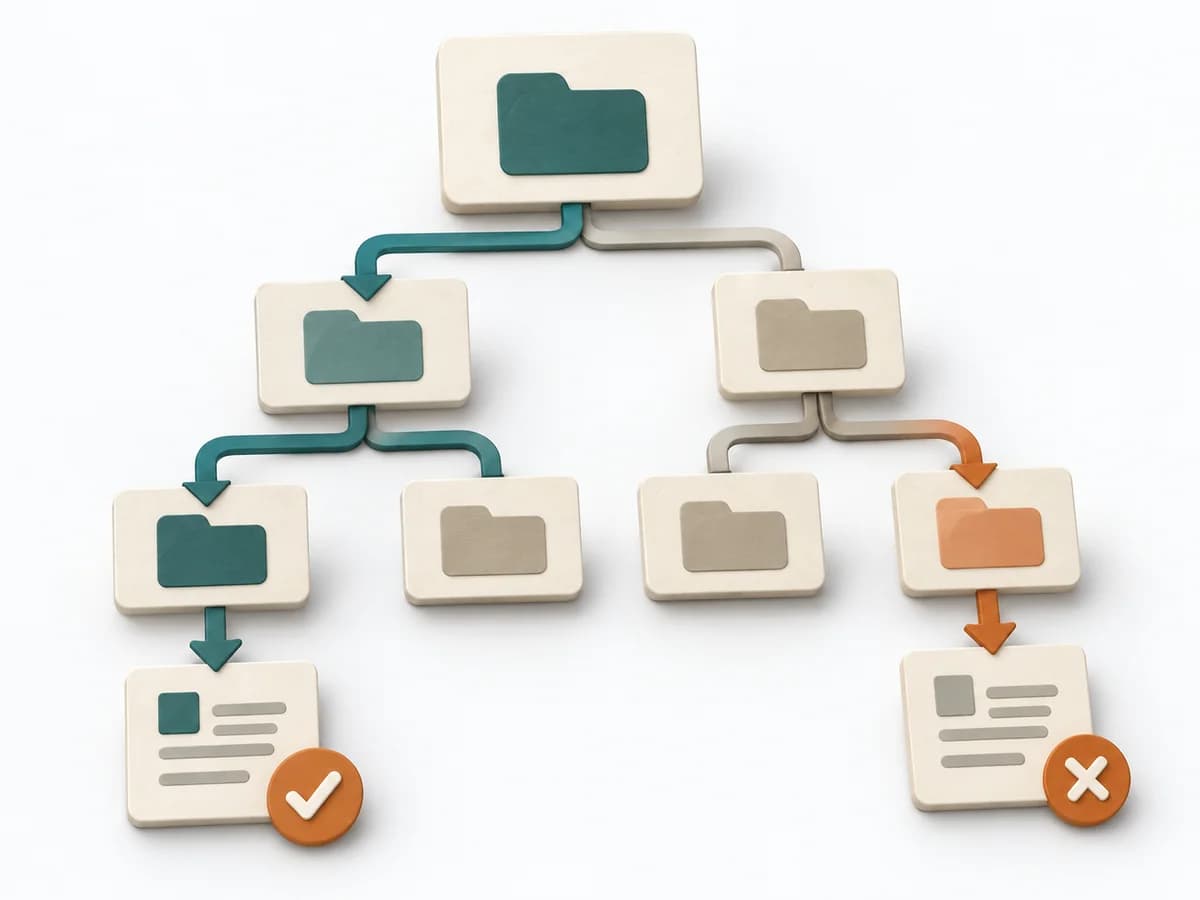 UX Research Tree Testing | 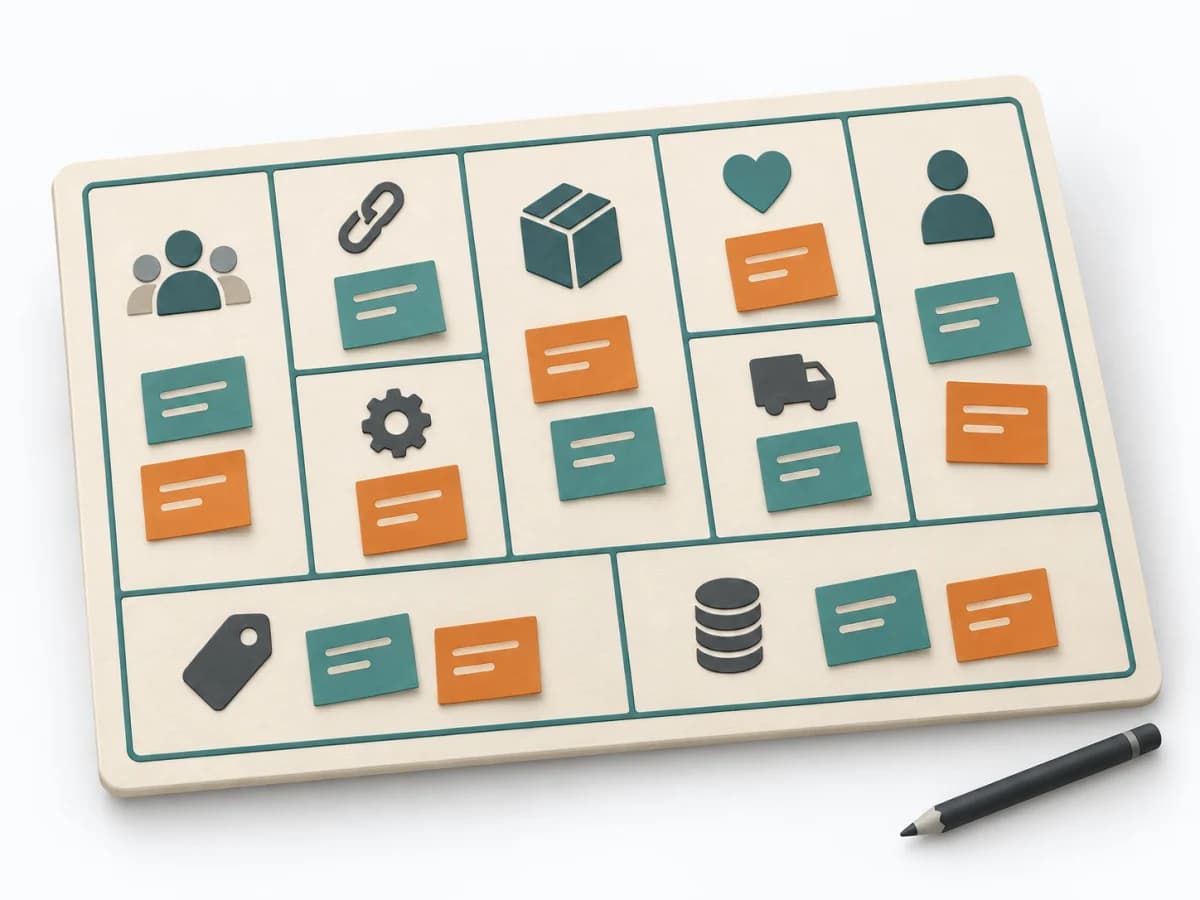 Business Strategy Business Model Canvas | 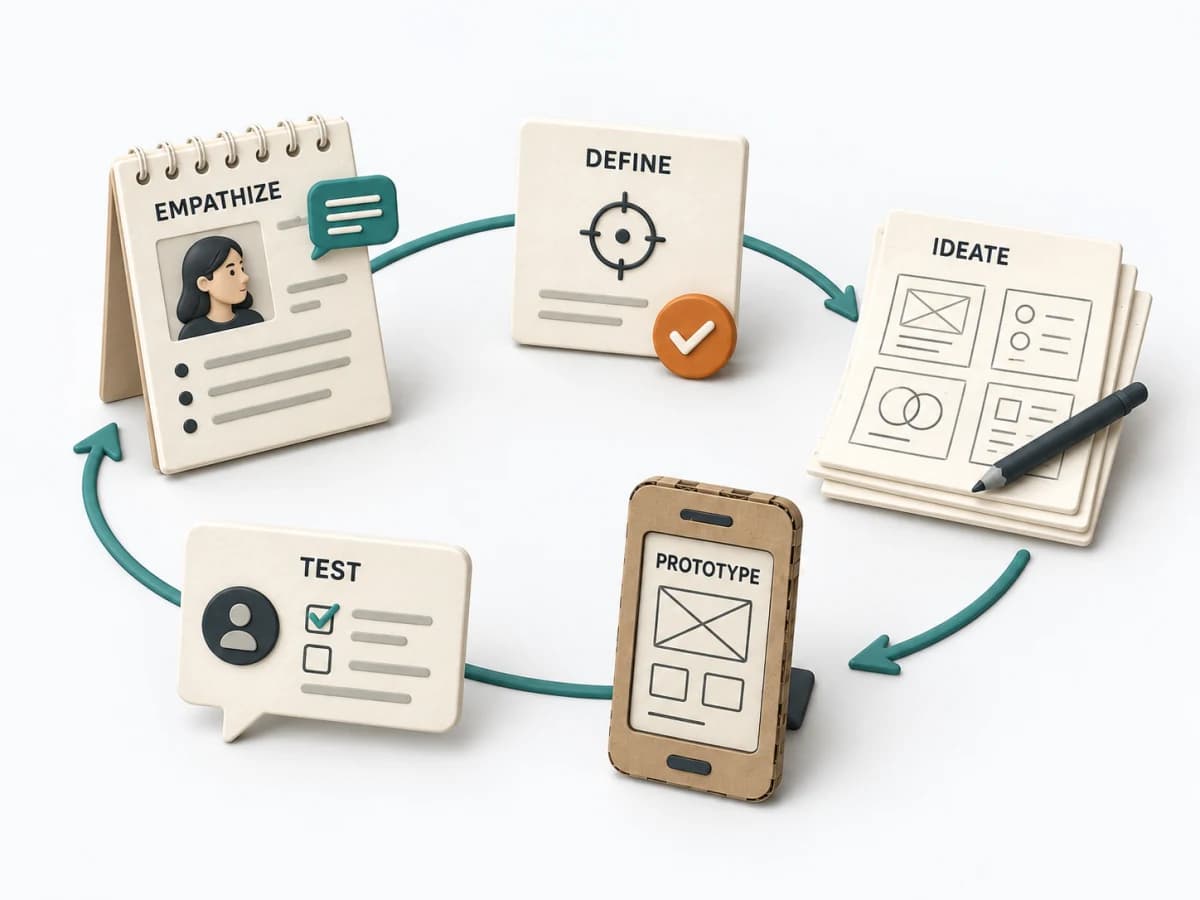 Innovation Design Thinking | 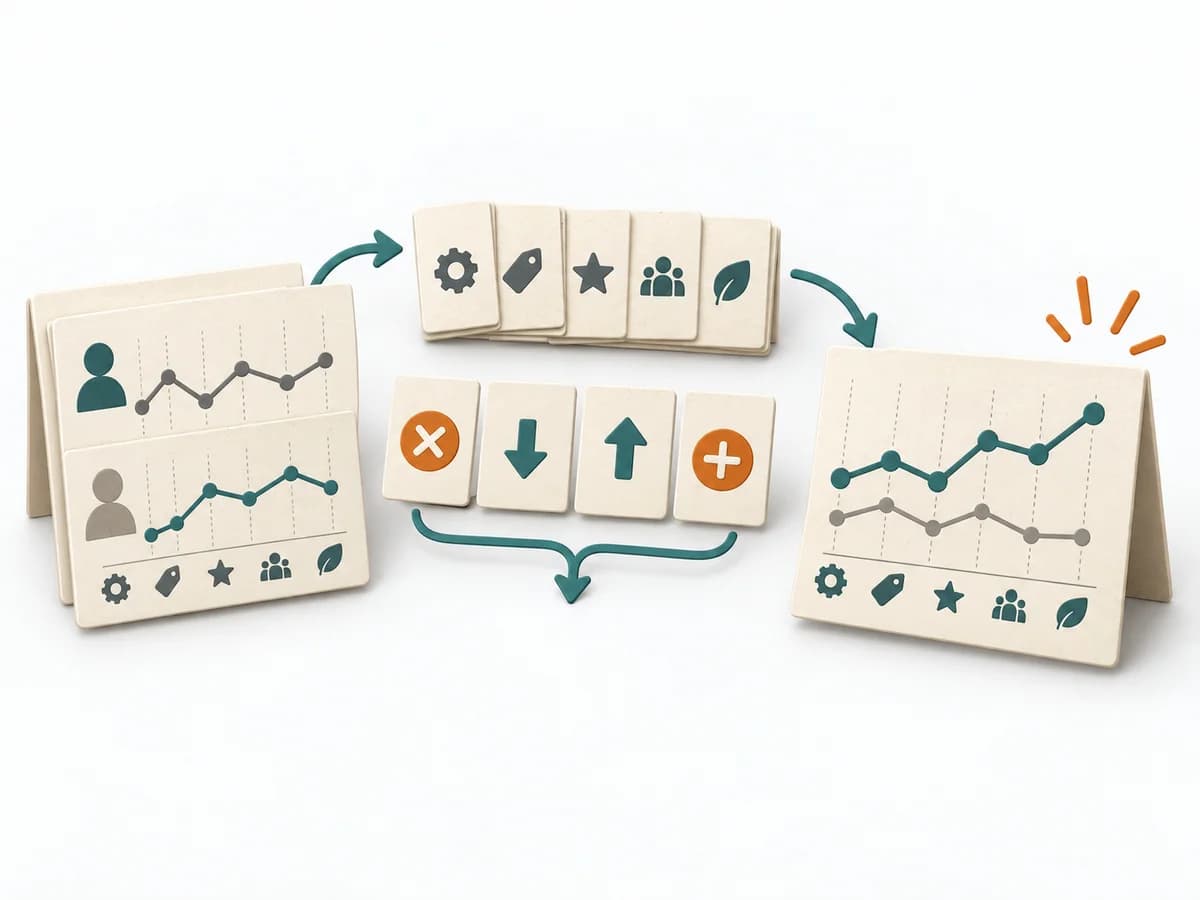 Business Strategy Blue Ocean Strategy Canvas |
|---|---|---|---|---|
Purposedifferent | When a navigation exists but search paths still fail, tree testing checks findability without visual distraction. The method shows whether labels, levels, and paths really lead to the intended destination. | The Business Model Canvas condenses a business model to its key building blocks and assumptions. It makes variants quickly comparable and reveals gaps before validation or implementation begins. | For complex user problems with an uncertain cause, the method connects observation, interpretation, and experiment into a learning cycle. It keeps the focus on real needs and avoids premature solution language. This produces robust decisions for product and service. | The Blue Ocean Strategy Canvas shows how an offering is positioned relative to the market. Differentiation thereby becomes tangible in value factors instead of merely being claimed. |
Complexitydifferent | Medium | Medium | High | Medium |
Timedifferent | 1-2 Tage | 1-2 h | 1 Tag bis mehrere Wochen | 2-4 h |
Participantsdifferent | Based on research question | 2-8 | 4-10 | 3-10 |
Formatdifferent | Async | Workshop + async | Workshop | Workshop |
Outputdifferent | Findability Metrics, Path Analysis, Revised IA | Business Model Canvas, Assumption List, Business Hypotheses | Problem Statement, Prototype, Test Learnings | Strategy Canvas, Value Curve, ERRC Actions |
Tagsno overlap | Information architectureNavigationFindability | Business modelStrategyValueInnovation | InnovationPrototypeResearch | StrategyPositioningInnovationValue |