View methods side by side.
Choose up to four methods. Add them using the search and share the comparison by copying its link.
| Criterion | 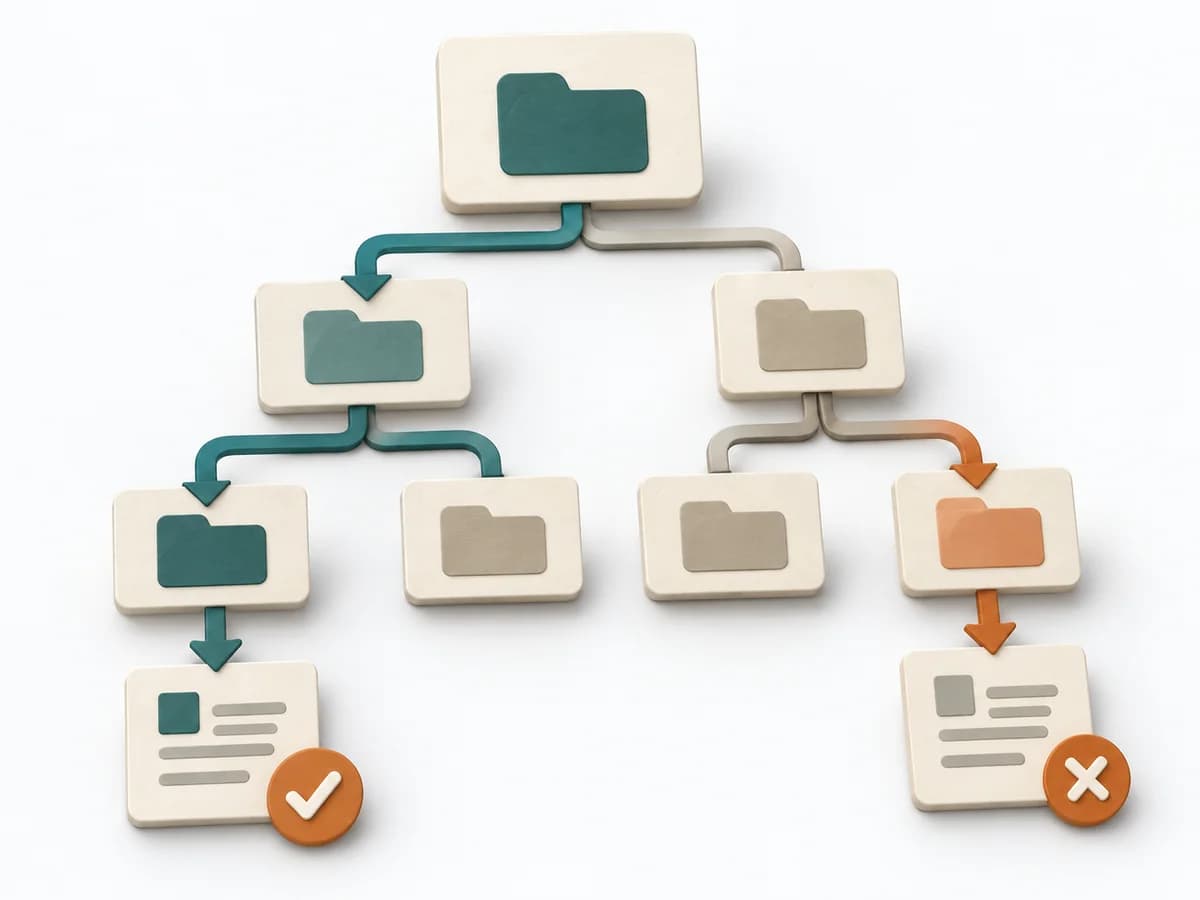 UX Research Tree Testing |  Architecture Architecture Decision Record |  Decision Making DACI |  Decision Making Decision Rights Mapping |
|---|---|---|---|---|
Purposedifferent | When a navigation exists but search paths still fail, tree testing checks findability without visual distraction. The method shows whether labels, levels, and paths really lead to the intended destination. | An ADR permanently records an architecture decision with context, trade-offs, and consequence. It creates continuity for later changes because the decision path stays traceable. | In cross-functional decisions, responsibilities quickly blur between approval, influence, and execution. DACI arranges these roles so decision pressure, contribution, and information stay cleanly separated. | In organizations with many stakeholders, it often blurs who actually decides and who is merely consulted. It separates options, evaluation criteria, and open risks. The result is captured as a Decision Rights matrix and an agreement. |
Complexitydifferent | Medium | Low | Low | Medium |
Timedifferent | 1-2 Tage | 15-45 min | 30-60 min | 90-180 min |
Participantsdifferent | Based on research question | 1-3 | 2-10 | 4-12 |
Formatdifferent | Async | Async | Workshop + async | Workshop |
Outputdifferent | Findability Metrics, Path Analysis, Revised IA | ADR File, Decision Log, Rationale | DACI Matrix, Decision Owner, Decision Log | Decision Rights Matrix, Agreement |
Tagsno overlap | Information architectureNavigationFindability | ArchitectureRationaleDocumentationGovernance | DecisionRolesGovernanceAlignment | DecisionGovernanceAlignmentResponsibility |