View methods side by side.
Choose up to four methods. Add them using the search and share the comparison by copying its link.
| Criterion | 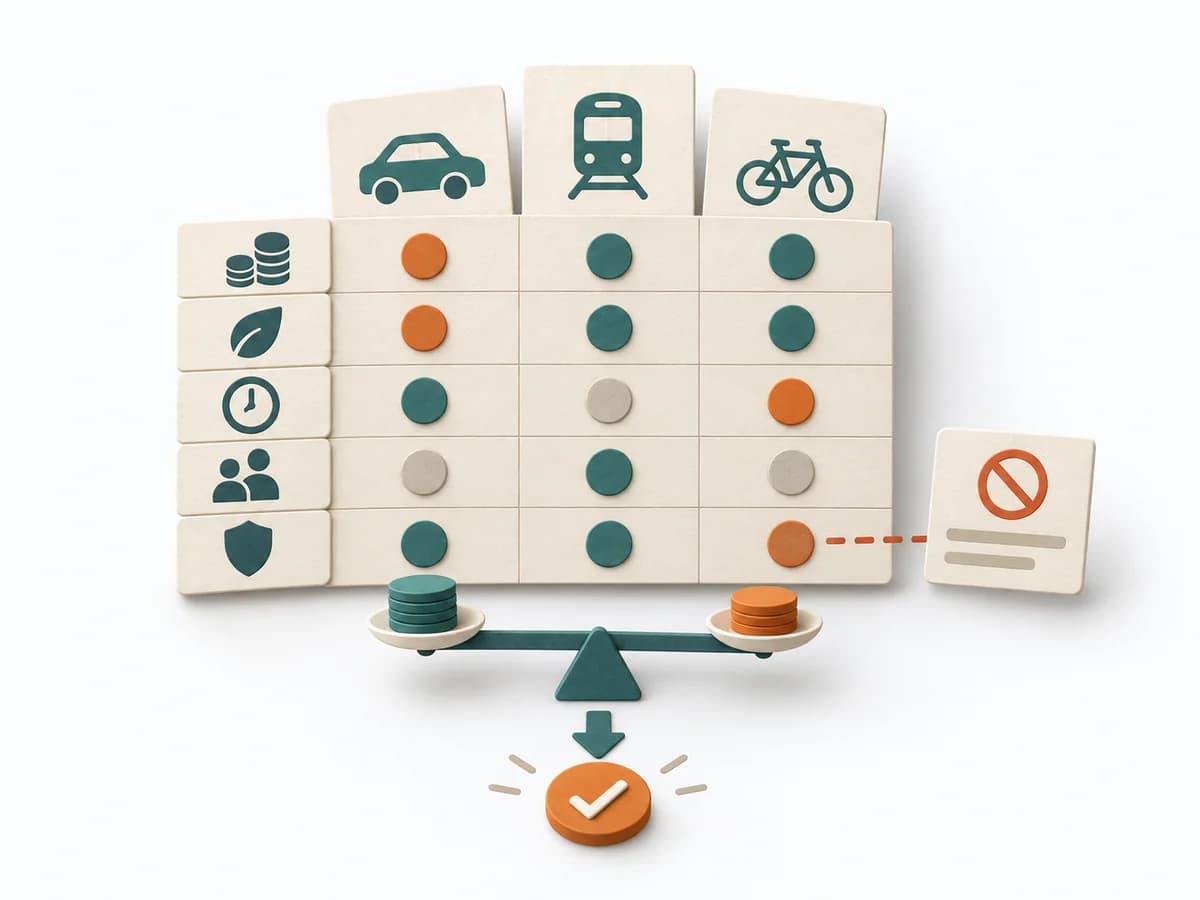 Decision Making Trade-off Analysis | 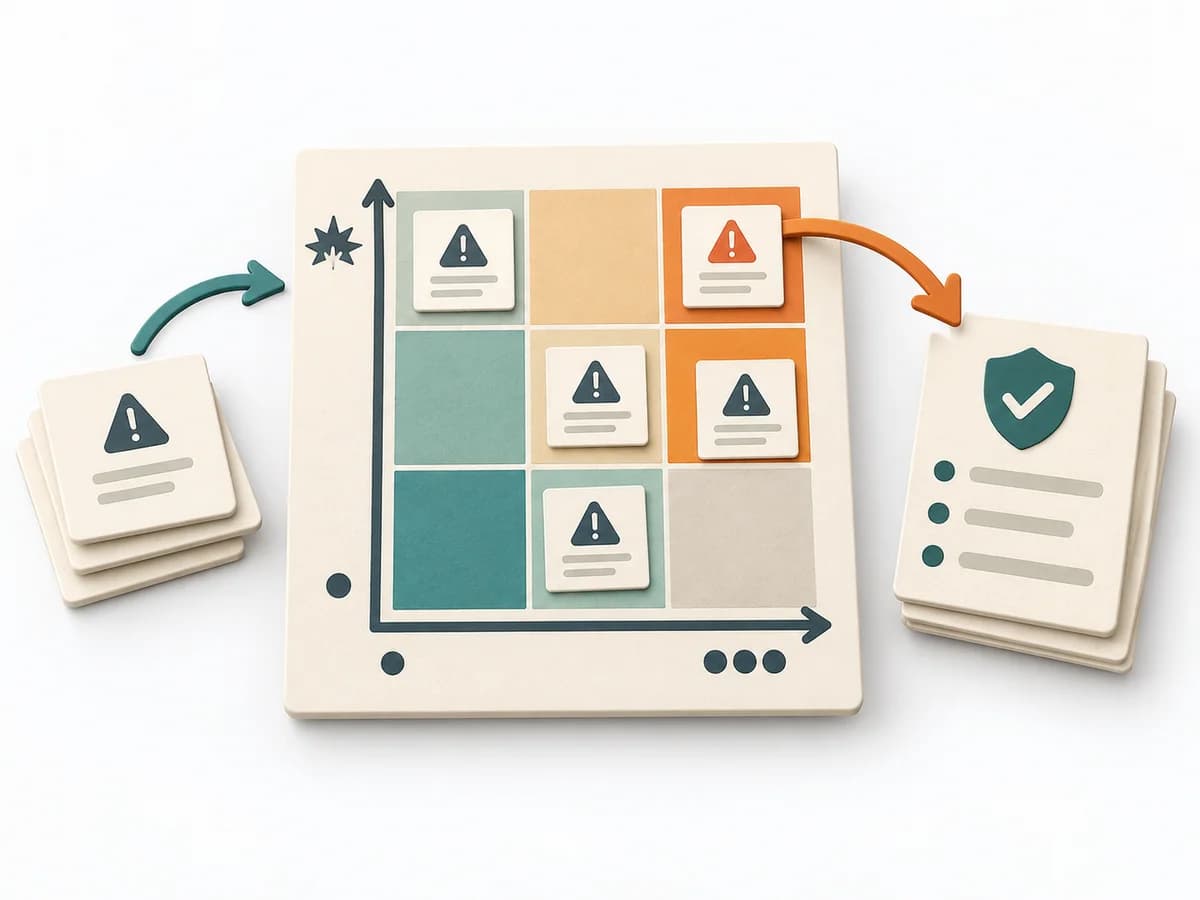 Decision Making Risk Matrix | 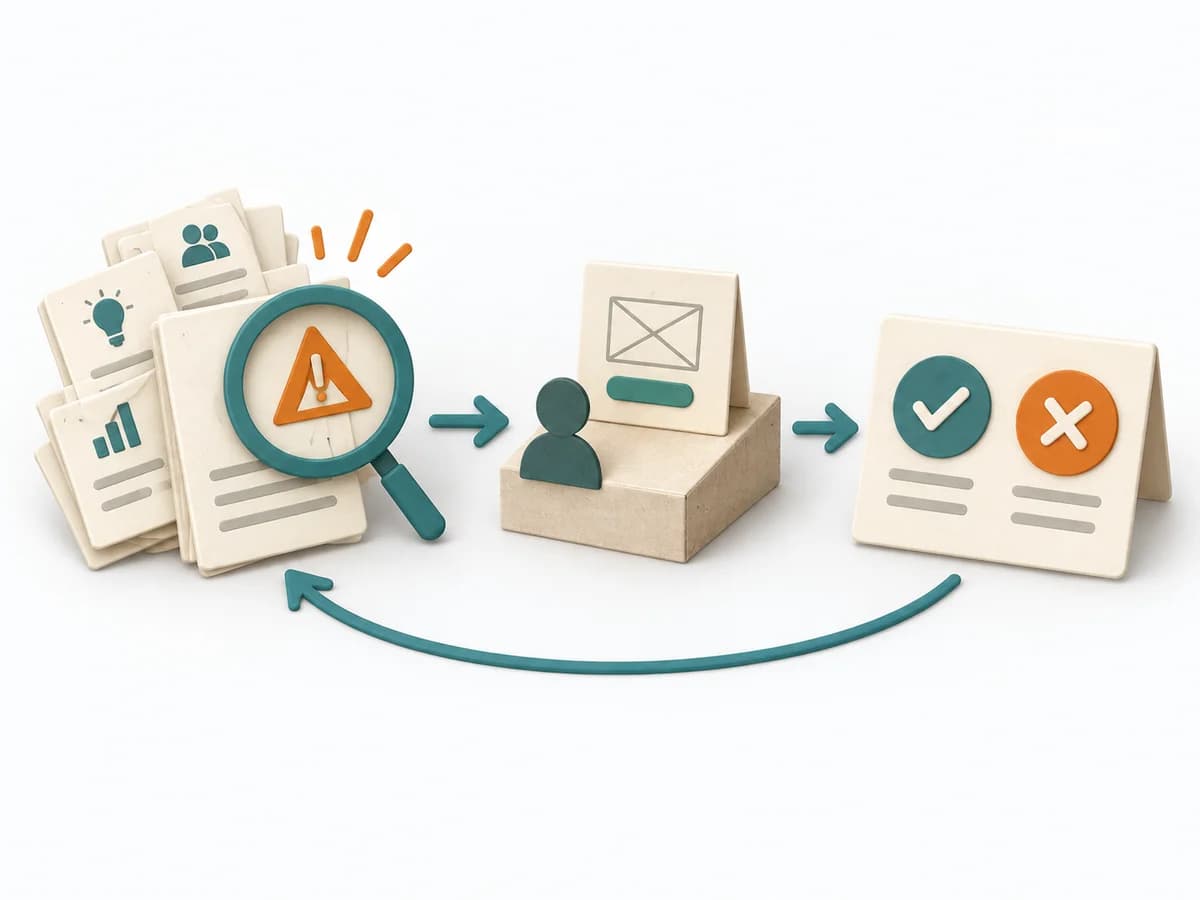 Product Discovery Riskiest Assumption Test | 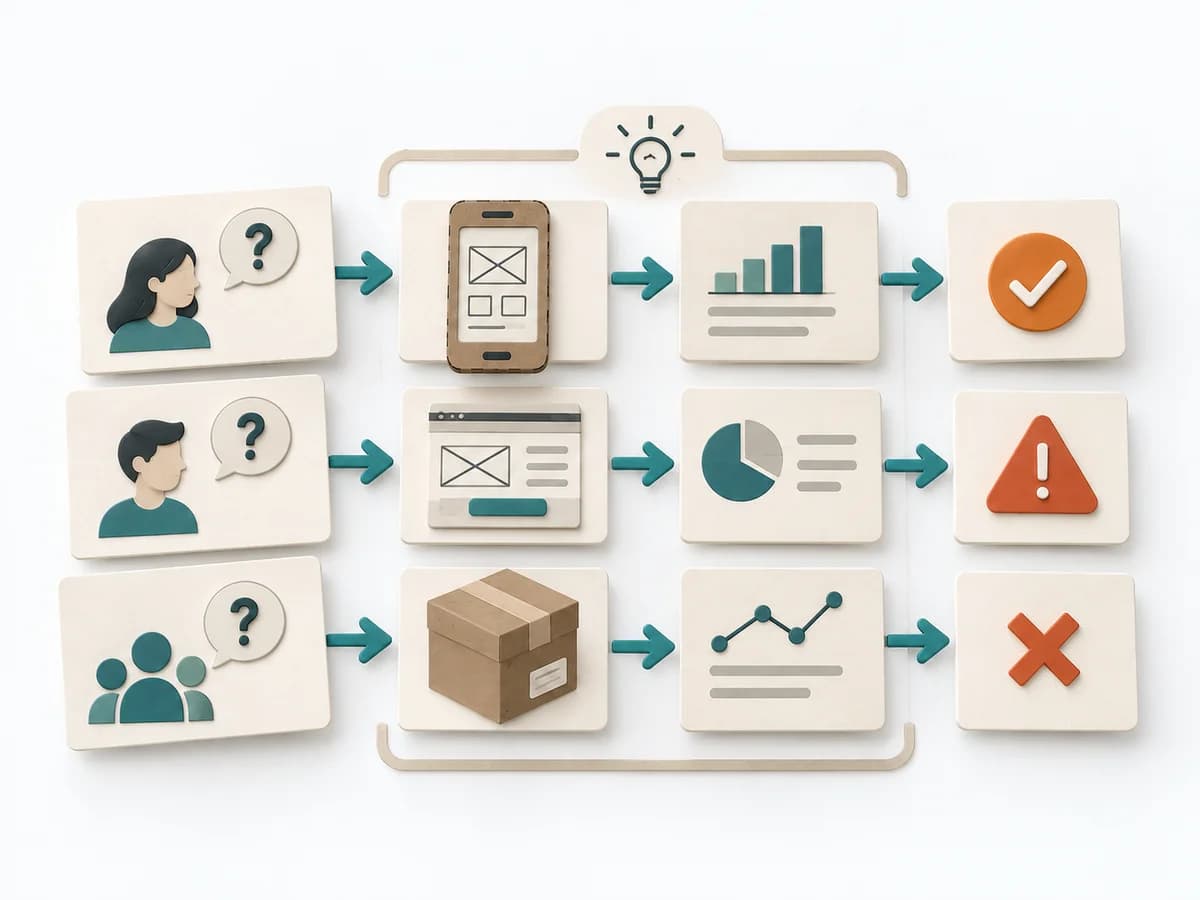 Product Discovery MVP Test Matrix |
|---|---|---|---|---|
Purposedifferent | With limited resources, quality, speed, cost, and risk almost always compete with each other. Trade-off Analysis makes these tensions explicit and prevents decisions from producing hidden side effects. | When a project faces many possible disruptions, it quickly becomes unclear which risks deserve attention first. It separates options, evaluation criteria, and open risks. The result is captured as a Risk Matrix and a Top Risk List. | When an idea hinges on one critical unknown, it prioritizes testing that exact piece of uncertainty first. It separates problem, assumption, solution, and evidence. The result is captured as a prioritized list of assumptions, a test plan, and a result report. | When several minimal variants compete to answer the same question, it makes comparing and choosing between them cleaner. It separates problem, assumption, solution, and evidence. The result is captured as a Test Matrix and a Test Plan. |
Complexitydifferent | Medium | Low | Medium | Medium |
Timedifferent | 45-120 min | 30-60 min | 1-2 Wochen pro Iteration | 45-75 min |
Participantsdifferent | 2-8 | 3-10 | 2-6 | 2-8 |
Formatdifferent | Workshop + async | Workshop + async | Workshop + async | Workshop |
Outputdifferent | Trade-off Matrix, Criteria List, Decision Rationale, Accepted Downsides | Risk Matrix, Top Risk List | Prioritized Assumption List, Test Plan, Results Report | Test Matrix, Test Plan |
Tagsno overlap | TradeoffsDecisionCriteriaOptions | RiskDecisionPrioritizationAssessment | ExperimentsValidationDiscoveryAssumptions | ExperimentsValidationDiscoveryOptions |