View methods side by side.
Choose up to four methods. Add them using the search and share the comparison by copying its link.
| Criterion | 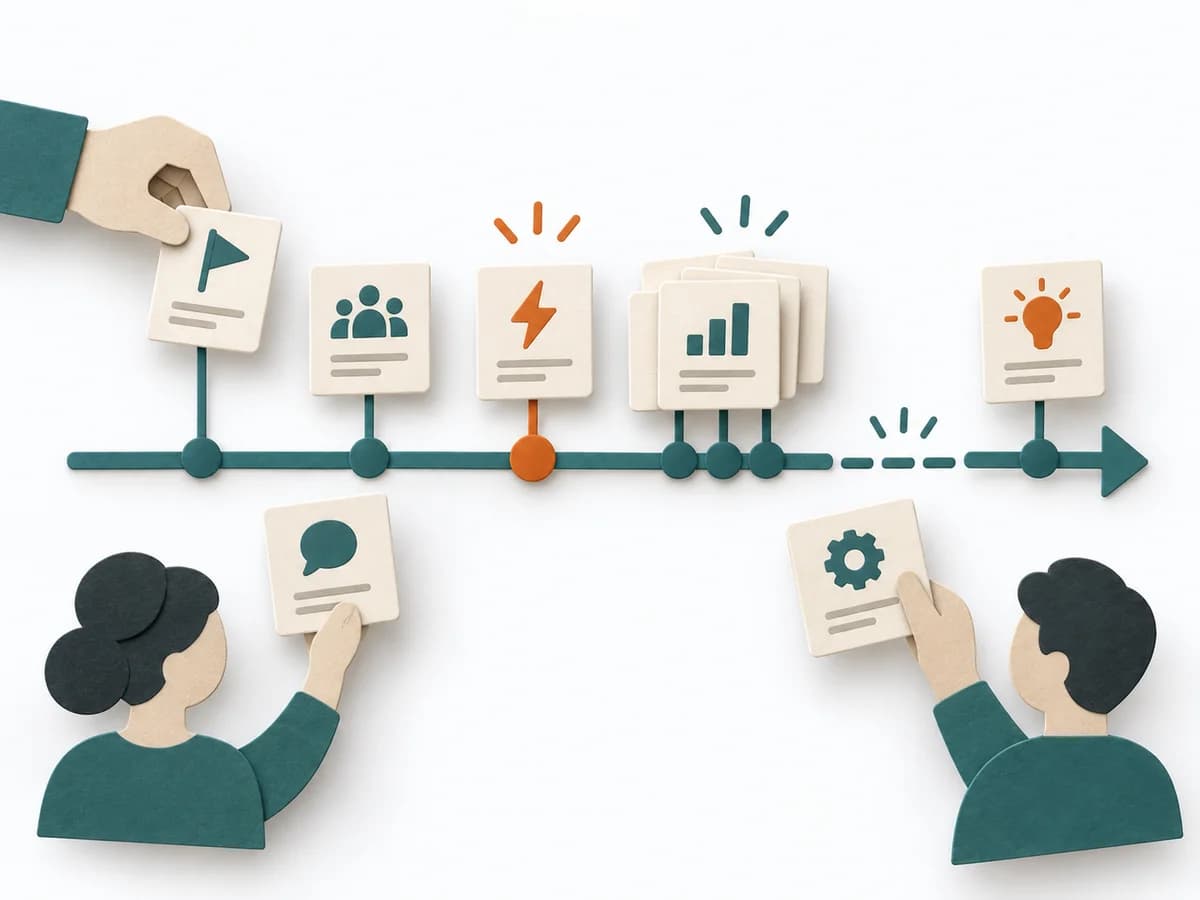 Facilitation Timeline | 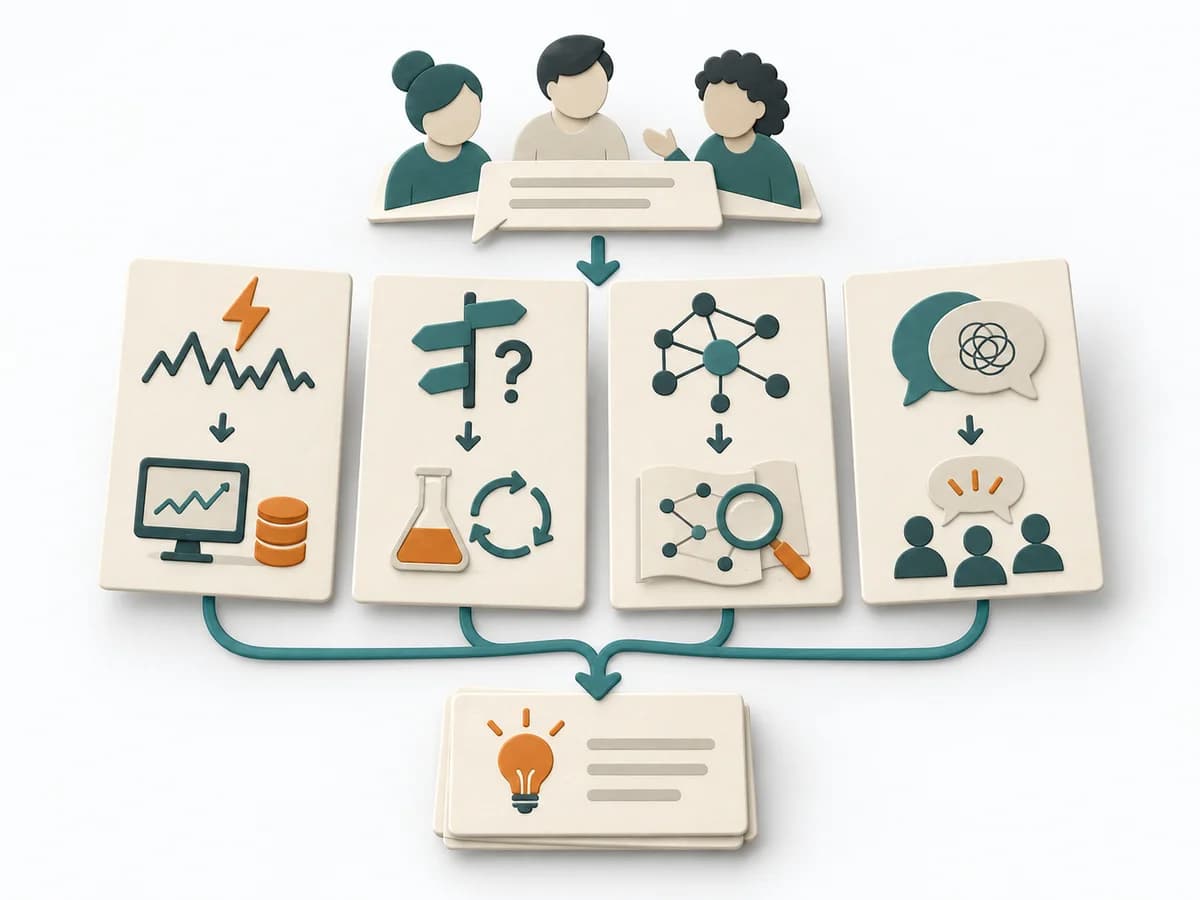 Systems Thinking VUCA Scan | 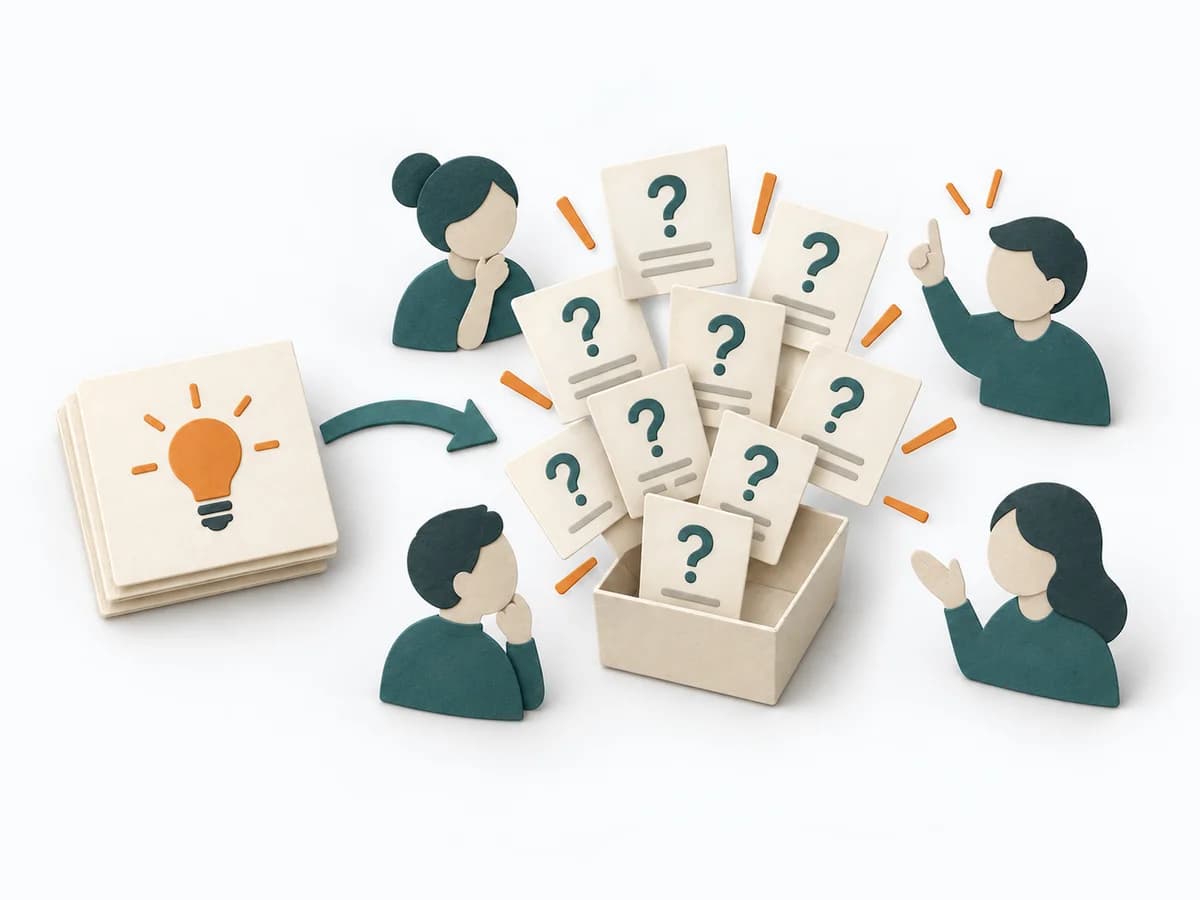 Facilitation Question Burst | 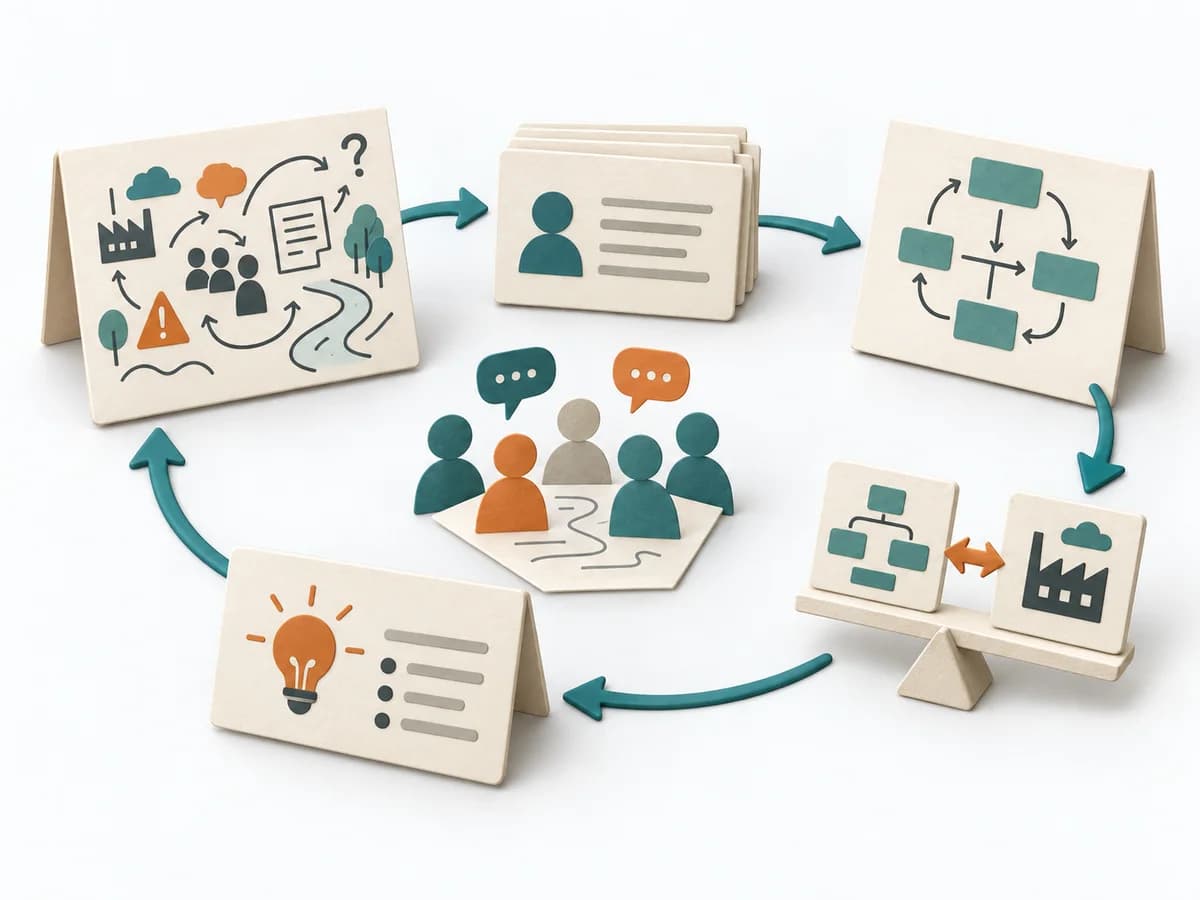 Systems Thinking Soft Systems Methodology |
|---|---|---|---|---|
Purposedifferent | When a project, incident, or change process is only remembered in fragments, Timeline brings the sequence back into a readable form. It makes turning points, precursors, and after-effects recognizable over the course of time. | The VUCA Scan helps read difficult situations more precisely. Instead of treating unclarity as generally complicated, the method separates fast change, missing knowledge, systemic entanglement, and ambiguous interpretation. | When a problem gets covered up too quickly with answers, Question Burst puts the better question at the center. The format opens the thinking space before the group commits to an interpretation. | Soft Systems Methodology helps explore unclear or politically charged problems systematically. Instead of forcing a quick answer, the method builds a shared understanding of perspectives and room for action. |
Complexitydifferent | Low | Low | Low | High |
Timedifferent | 30-90 min | 30-90 min | 15-30 min | 0.5-3 Tage |
Participantsdifferent | 2-12 | 1-10 | 2-8 | 5-15 |
Formatdifferent | Workshop + async | Workshop + async | Workshop | Workshop |
Outputdifferent | Timeline, Milestones, Insight Notes | VUCA Map, Response Options, Signal and Learning Plan | Question List, Reframed Challenge, Learning Prompts | Rich Picture, Root Definitions, Conceptual Models, Change Agenda |
Tagsno overlap | TimelineFacilitationSequence | SensemakingUncertaintyComplexityStrategyForesight | QuestionsReframingFacilitationSensemaking | Soft systemsComplexitySensemakingSystems thinking |