View methods side by side.
Choose up to four methods. Add them using the search and share the comparison by copying its link.
| Criterion | 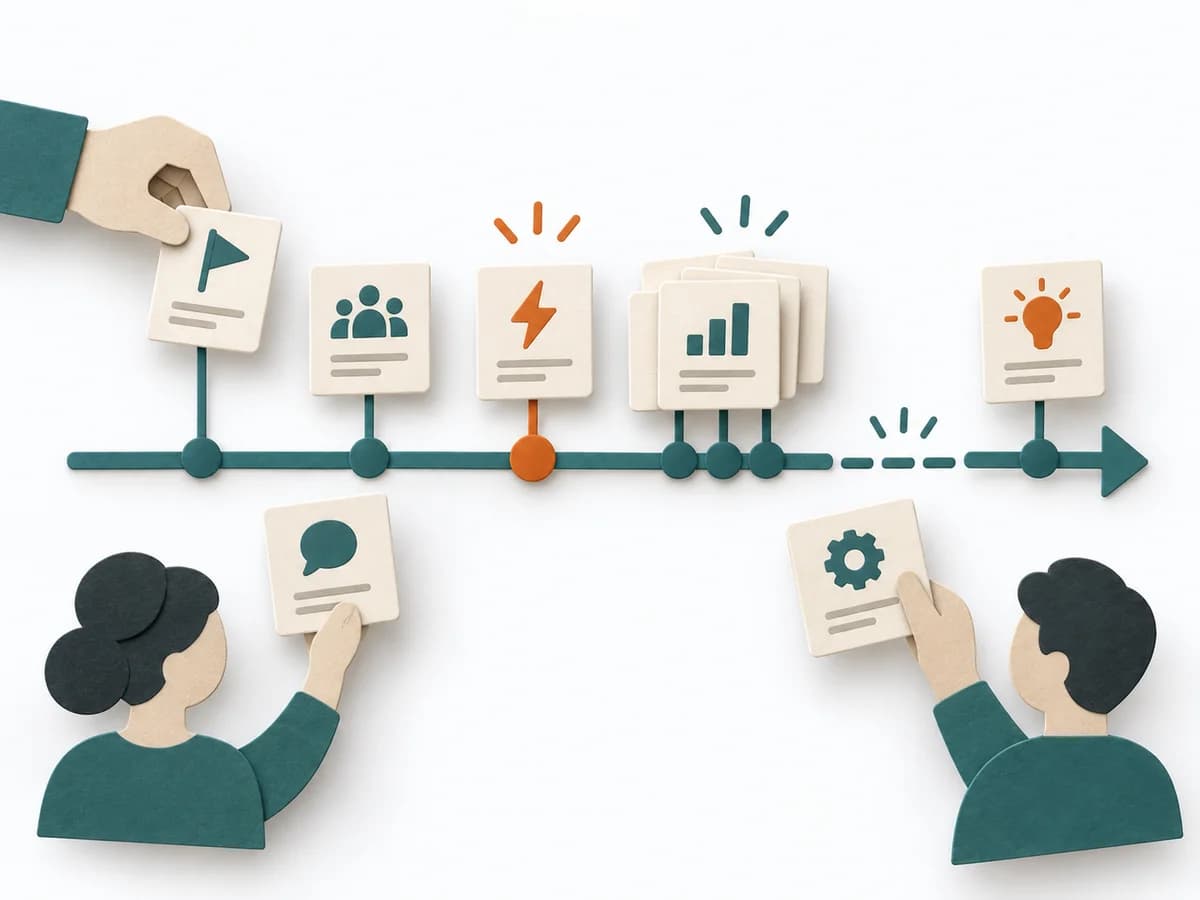 Facilitation Timeline |  UX Research User Interviews |  Facilitation 1-2-4-All |  Facilitation Nominal Group Technique |
|---|---|---|---|---|
Purposedifferent | When a project, incident, or change process is only remembered in fragments, Timeline brings the sequence back into a readable form. It makes turning points, precursors, and after-effects recognizable over the course of time. | When teams derive needs only from assumptions and real motives are missing, user interviews give direct access to behavior and meaning. Conversations from the target group's everyday life make patterns, tensions, and open questions solidly visible. | When many people in a group too rarely get to speak, 1-2-4-All distributes thinking time more fairly. The format builds participation step by step and makes quiet or still-unformed thoughts usable faster. | When loud voices could dominate a round, Nominal Group Technique protects individual thinking time from group effects. It collects ideas separately first and only then enables shared weighting. |
Complexitydifferent | Low | Low | Low | Medium |
Timedifferent | 30-90 min | 30–60 min per interview | 10-20 min | 60-120 min |
Participantsdifferent | 2-12 | 1 participant per interview | 4-100+ | 5-12 |
Formatdifferent | Workshop + async | Workshop + async | Workshop | Workshop |
Outputdifferent | Timeline, Milestones, Insight Notes | Interview Notes, Themes, Insight Summary | Idea List, Shared Insights, Emergent Themes | Ranked Ideas, Clarified Options, Group Priority |
Tagsno overlap | TimelineFacilitationSequence | QualitativeResearchCustomerDiscovery | FacilitationInclusionIdeation | FacilitationPrioritizationVotingInclusion |