View methods side by side.
Choose up to four methods. Add them using the search and share the comparison by copying its link.
| Criterion | 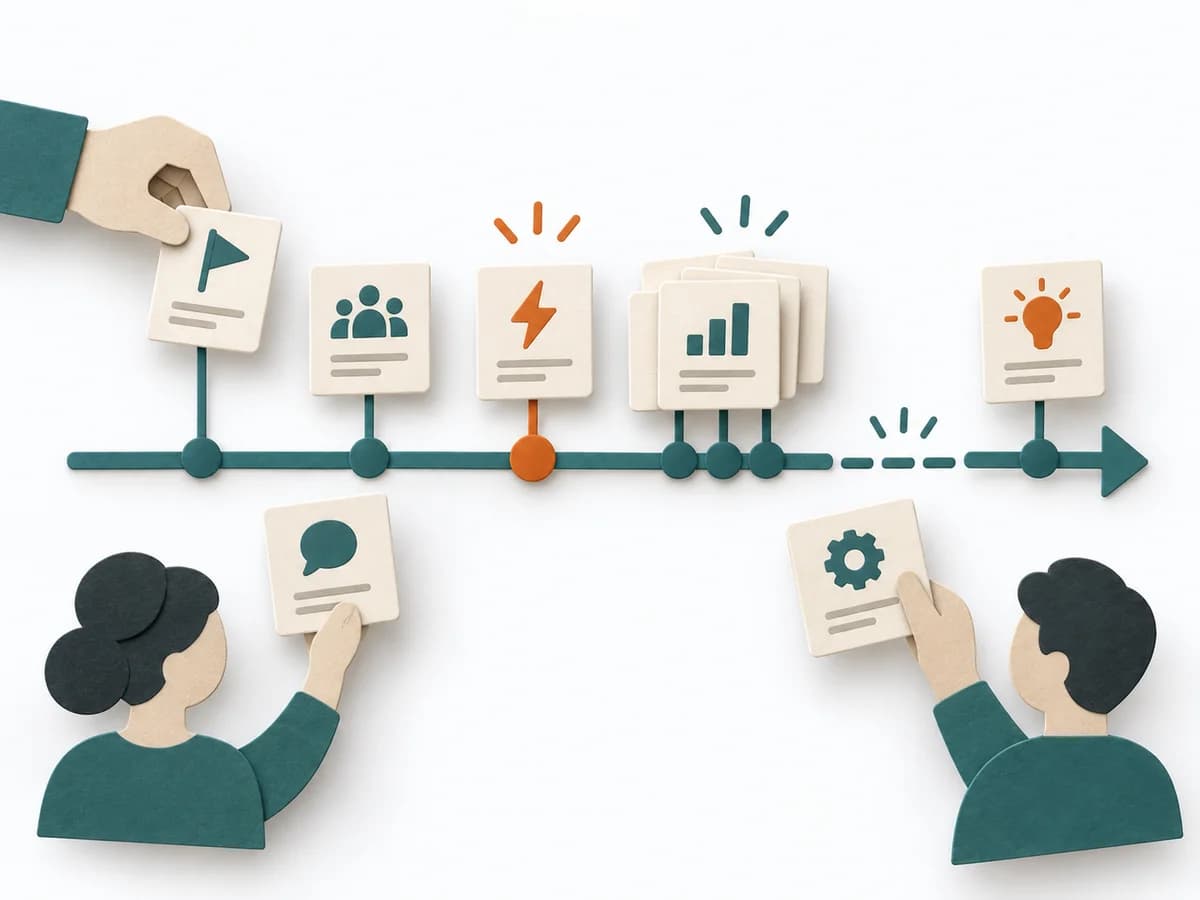 Facilitation Timeline | 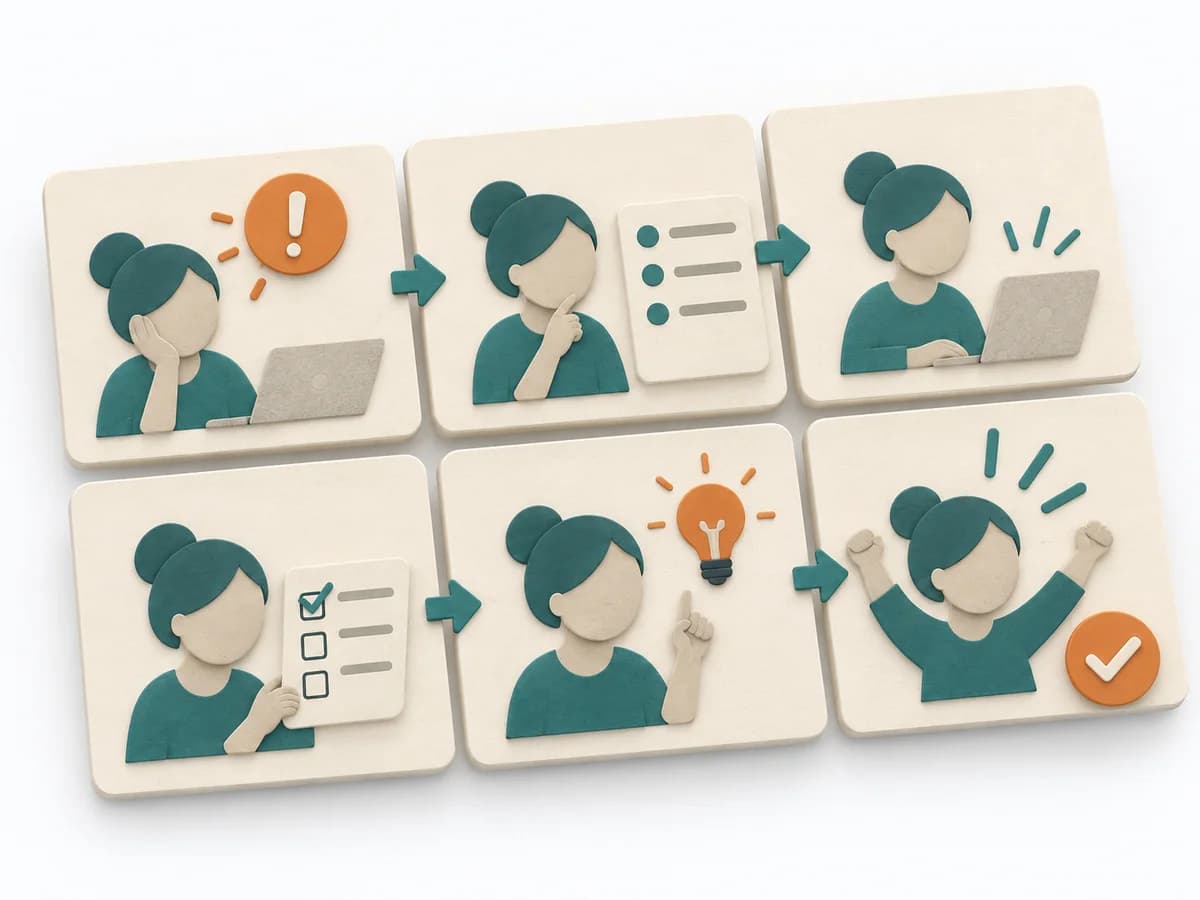 UX Design Storyboarding |  Knowledge Modeling Concept Mapping |  Facilitation Mind Mapping |
|---|---|---|---|---|
Purposedifferent | When a project, incident, or change process is only remembered in fragments, Timeline brings the sequence back into a readable form. It makes turning points, precursors, and after-effects recognizable over the course of time. | When a usage scenario needs to become understandable early, it condenses situations, context, and flow into a legible sequence. It helps check concept ideas before anything gets built. | Concept Mapping arranges terms and relationships in a network that makes subject-matter connections tangible. It fits when a topic needs to be understood structurally rather than linearly. | When a topic is still unclear and too many thoughts surface at once, Mind Mapping creates an open surface for ordering them. It makes connections, subtopics, and starting points visible without fixing them too early. |
Complexitydifferent | Low | Medium | Medium | Low |
Timedifferent | 30-90 min | 30-90 min | 1-2 h | 15-45 min |
Participantsdifferent | 2-12 | 1-8 | 1-8 | 1-10 |
Formatsame | Workshop + async | Workshop + async | Workshop + async | Workshop + async |
Outputdifferent | Timeline, Milestones, Insight Notes | Storyboard, Concept Narrative, Testable Assumptions | Concept Map, Relationship Labels, Knowledge Gaps | Mind Map, Topic Clusters, Open Questions |
Tagsno overlap | TimelineFacilitationSequence | VisualizationConceptsSequencePrototype | KnowledgeConceptsMappingSensemaking | BrainstormingIdeasMappingStructureFacilitation |