View methods side by side.
Choose up to four methods. Add them using the search and share the comparison by copying its link.
| Criterion | 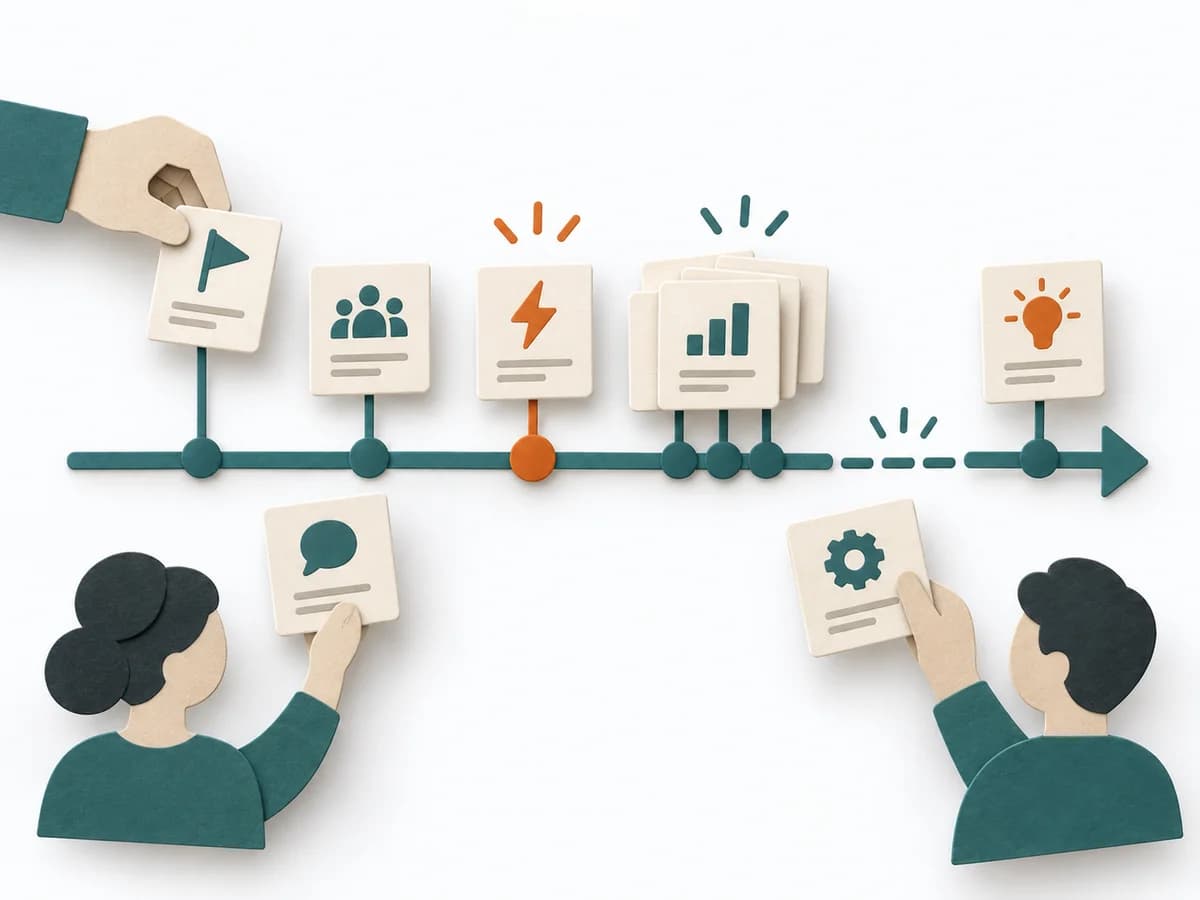 Facilitation Timeline |  Facilitation Stakeholder Salience Model |  Business Strategy SWOT Analysis |  Facilitation Stakeholder Mapping |
|---|---|---|---|---|
Purposedifferent | When a project, incident, or change process is only remembered in fragments, Timeline brings the sequence back into a readable form. It makes turning points, precursors, and after-effects recognizable over the course of time. | When stakeholders appear to matter very differently, the Stakeholder Salience Model rates their actual priority through power, legitimacy, and urgency. It turns individual contributions into a visible selection. The result is captured as a Salience diagram and a class-based strategy. | SWOT Analysis arranges strengths, weaknesses, opportunities, and threats into a compact picture of the situation. It keeps internal capabilities and external influences separate before strategic options emerge from them. | When an initiative depends on many people, interests, and power dynamics, Stakeholder Mapping systematically orders the environment. It shows who influences, who is affected, and where relationship management or safeguarding matters first. |
Complexitydifferent | Low | Medium | Low | Low |
Timedifferent | 30-90 min | 60-90 min | 30-60 min | 60–90 min |
Participantsdifferent | 2-12 | 3-6 | 3-12 | 2-8 |
Formatdifferent | Workshop + async | Workshop | Workshop | Workshop + async |
Outputdifferent | Timeline, Milestones, Insight Notes | Salience Diagram, Strategy per Class | SWOT matrix, Strategic options, Action list | Stakeholder Map, Engagement Plan, Risk Notes |
Tagsno overlap | TimelineFacilitationSequence | StakeholdersFacilitationAlignmentGovernance | StrategyAnalysisMarketPositioning | StakeholdersAlignmentFacilitationChange |