View methods side by side.
Choose up to four methods. Add them using the search and share the comparison by copying its link.
| Criterion | 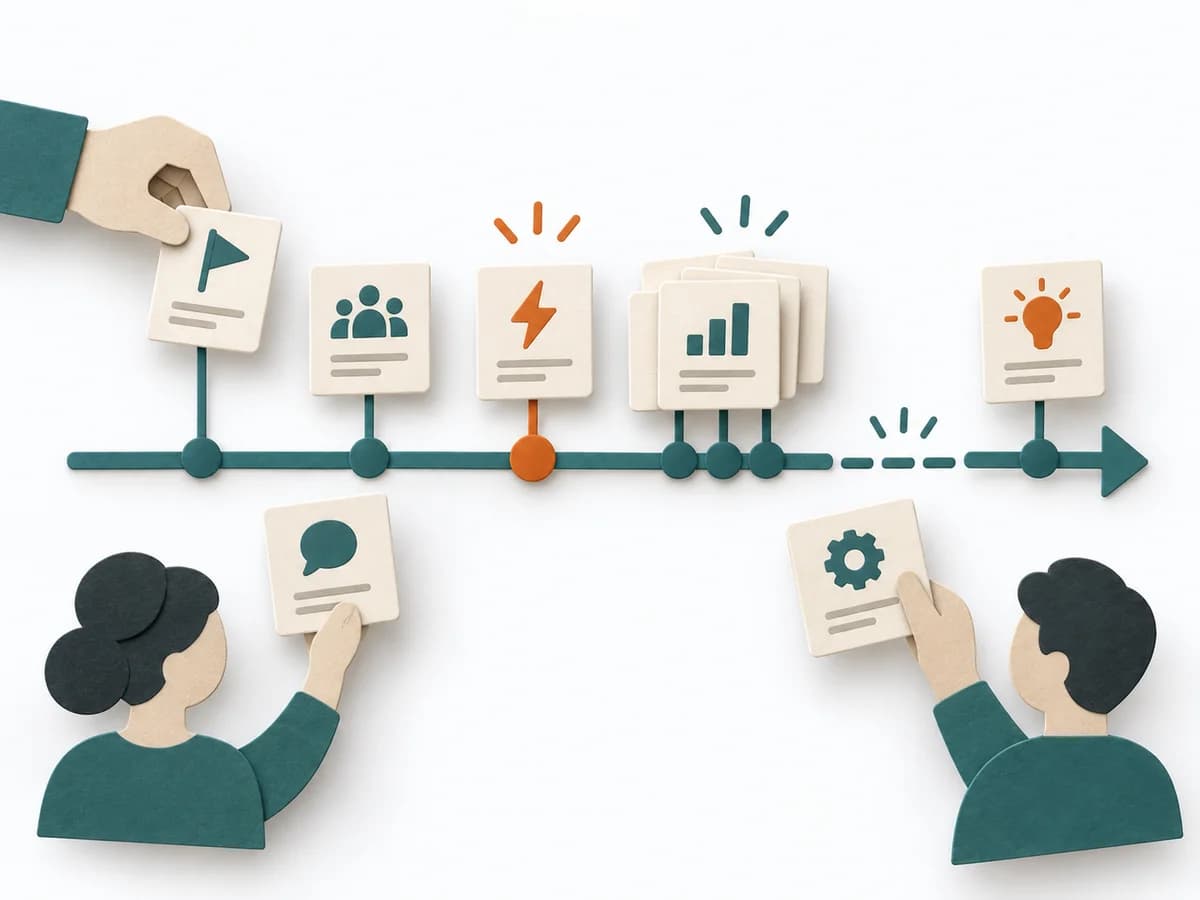 Facilitation Timeline | 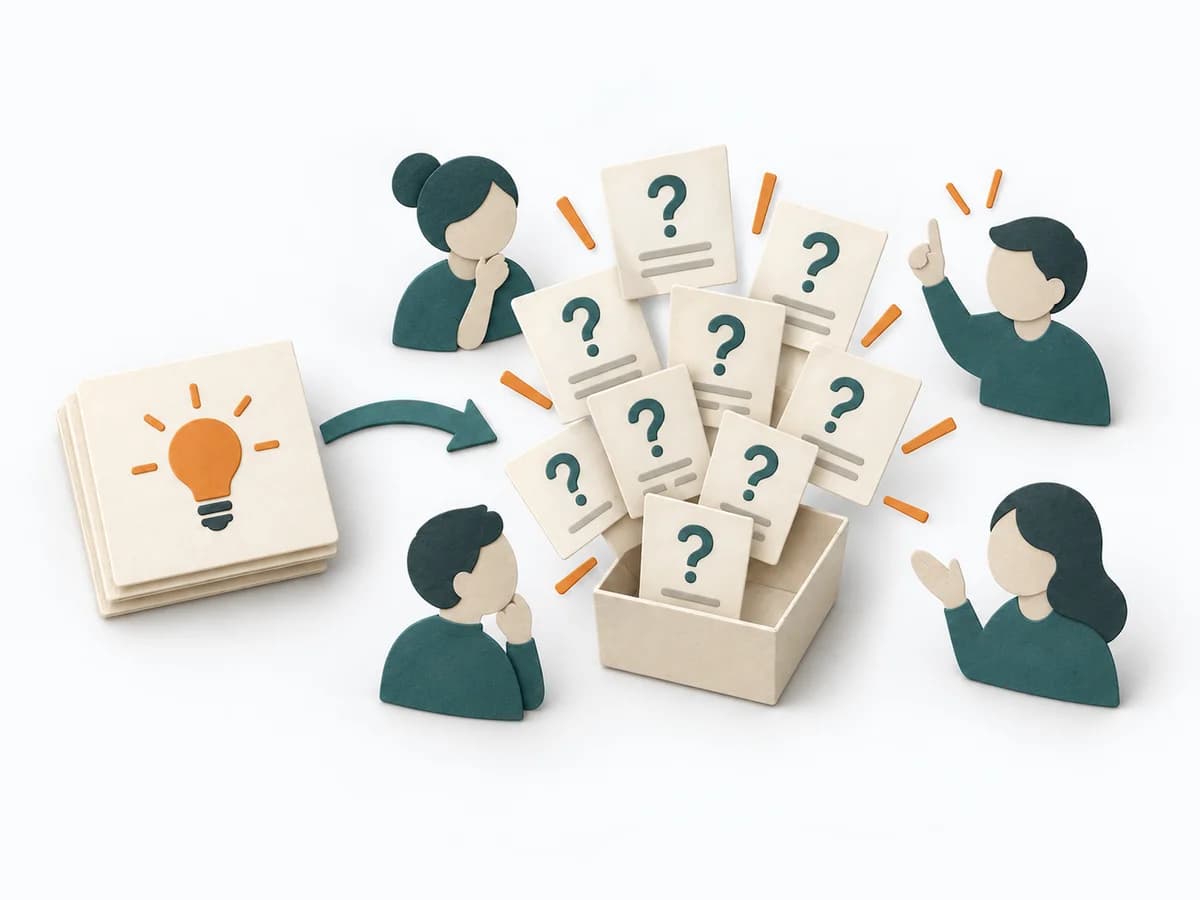 Facilitation Question Burst |  Decision Making Assumption Surfacing |  Decision Making Argument Mapping |
|---|---|---|---|---|
Purposedifferent | When a project, incident, or change process is only remembered in fragments, Timeline brings the sequence back into a readable form. It makes turning points, precursors, and after-effects recognizable over the course of time. | When a problem gets covered up too quickly with answers, Question Burst puts the better question at the center. The format opens the thinking space before the group commits to an interpretation. | Plans often contain assumptions that were never openly stated and remain dangerous precisely because of that. Assumption Surfacing makes these silent premises visible and prioritizes which of them carry the initiative or could sink it. | When statements, evidence, and counterarguments get mixed up, a debate quickly loses its structure. Argument Mapping breaks a thesis down into its reasoning and makes visible what it really rests on. |
Complexitydifferent | Low | Low | Low | Medium |
Timedifferent | 30-90 min | 15-30 min | 45-90 min | 1-3 h |
Participantsdifferent | 2-12 | 2-8 | 2-8 | 1-8 |
Formatdifferent | Workshop + async | Workshop | Workshop + async | Workshop + async |
Outputdifferent | Timeline, Milestones, Insight Notes | Question List, Reframed Challenge, Learning Prompts | Assumption List, Critical Assumptions, Learning Plan | Argument Map, Evidence Gaps, Decision Rationale |
Tagsno overlap | TimelineFacilitationSequence | QuestionsReframingFacilitationSensemaking | AssumptionsRiskDecisionDiscovery | SensemakingDecisionRationale |