View methods side by side.
Choose up to four methods. Add them using the search and share the comparison by copying its link.
| Criterion | 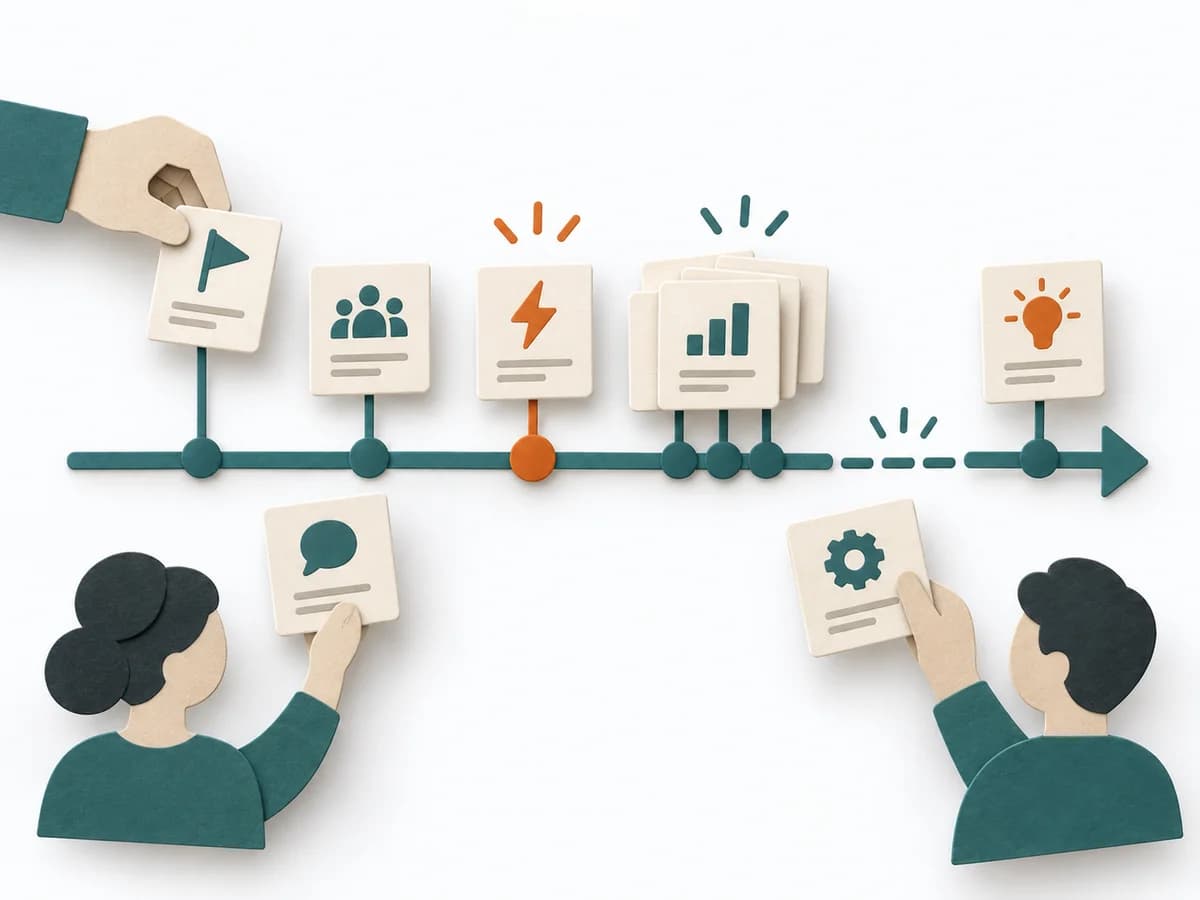 Facilitation Timeline | 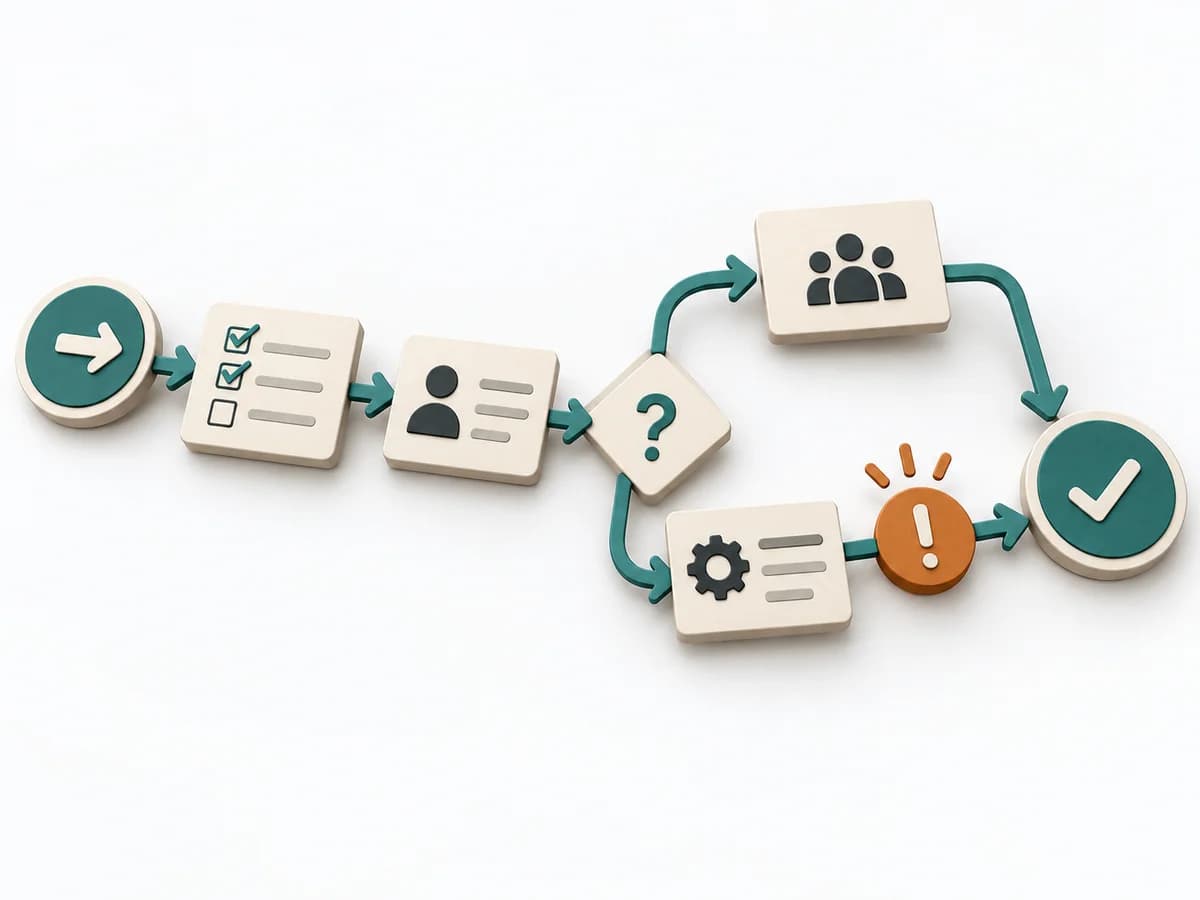 Operations Process Mapping | 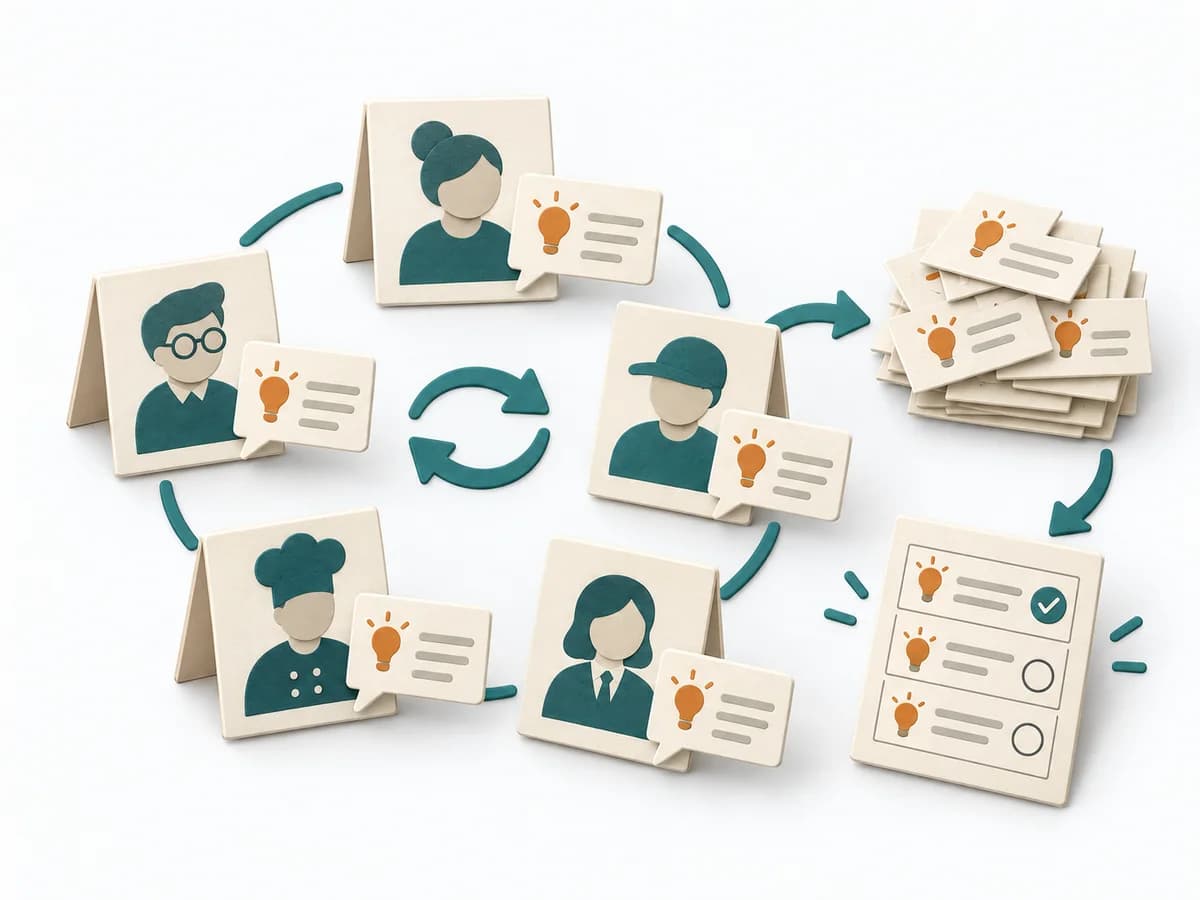 Innovation Rolestorming |  Innovation Reverse Brainstorming |
|---|---|---|---|---|
Purposedifferent | When a project, incident, or change process is only remembered in fragments, Timeline brings the sequence back into a readable form. It makes turning points, precursors, and after-effects recognizable over the course of time. | With a confusing workflow that has many handoffs, the method makes the actual process visible. It shows where work is passed on, delayed, or duplicated, so improvement targets the right spots. | When a search for ideas stalls, switching roles helps people step outside their own perspective and activate new logics of action. The method reduces habit because contributions arise from a different stance. This brings unfamiliar, often fitting solution approaches into play. | For persistent errors or blockages, the method shifts the view to the opposite of the desired effect. It exposes the mechanics of failure and makes hidden causes easier to grasp. This makes improvement more concrete and the problem clearer. |
Complexitydifferent | Low | Medium | Low | Low |
Timedifferent | 30-90 min | 1-3 h | 30-60 min | 30-60 min |
Participantsdifferent | 2-12 | 3-10 | 3-12 | 3-12 |
Formatdifferent | Workshop + async | Workshop | Workshop | Workshop |
Outputdifferent | Timeline, Milestones, Insight Notes | Process Map, Handoff List, Improvement Backlog | Rollenkarten, Ideenpool pro Rolle, Konsolidierte Shortlist | Reverse Ideas, Risk Themes, Solution Ideas |
Tagsno overlap | TimelineFacilitationSequence | ProcessOperationsImprovement | BrainstormingIdeationCreativity | BrainstormingIdeationCreativityRisk |