View methods side by side.
Choose up to four methods. Add them using the search and share the comparison by copying its link.
| Criterion | 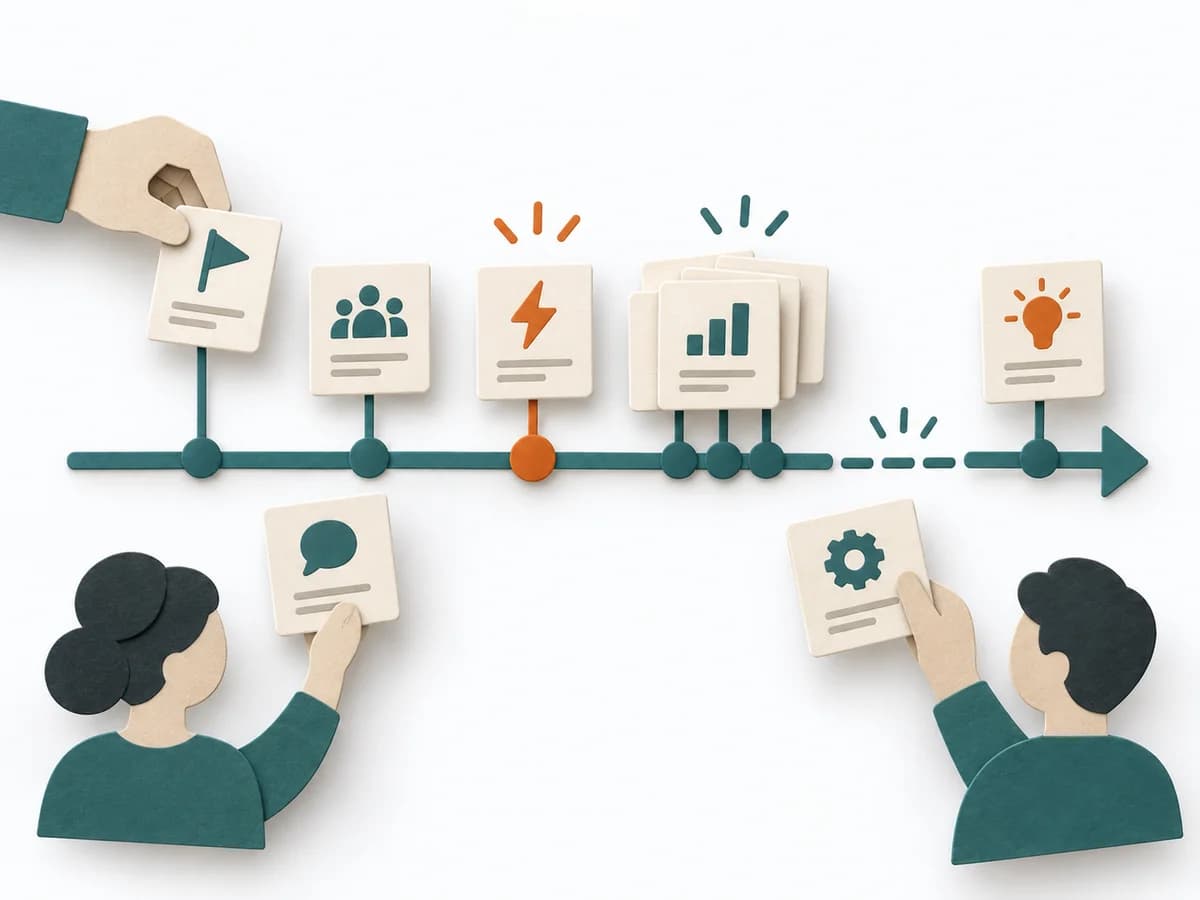 Facilitation Timeline | 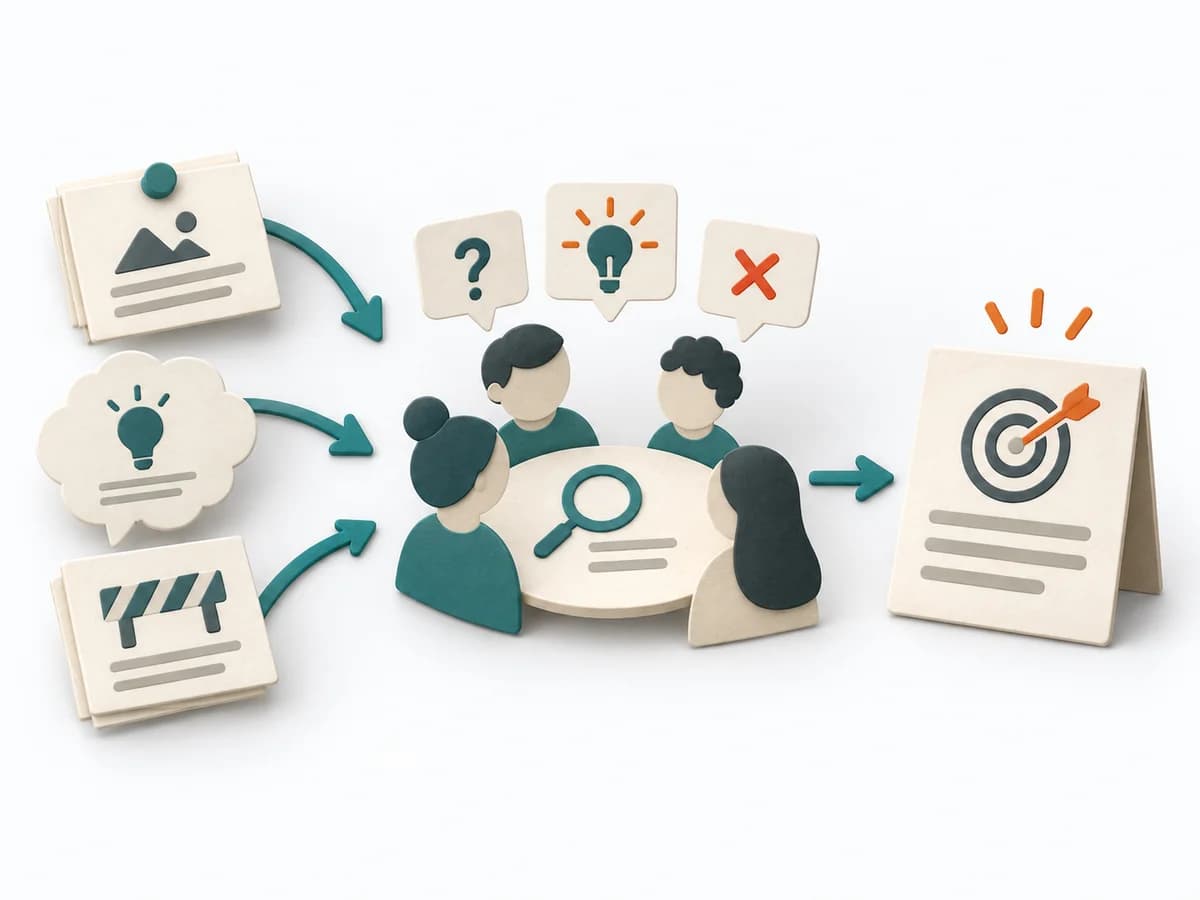 Facilitation Problem Framing Workshop |  Decision Making Assumption Surfacing |  Facilitation Alignment Mapping |
|---|---|---|---|---|
Purposedifferent | When a project, incident, or change process is only remembered in fragments, Timeline brings the sequence back into a readable form. It makes turning points, precursors, and after-effects recognizable over the course of time. | When a team works on symptoms but the real question stays fuzzy, a Problem Framing Workshop sharpens the view of the right problem. It separates observation, interpretation, and target picture from each other. | Plans often contain assumptions that were never openly stated and remain dangerous precisely because of that. Assumption Surfacing makes these silent premises visible and prioritizes which of them carry the initiative or could sink it. | When several people work toward one goal but hold different mental maps, Alignment Mapping makes the discrepancies visible. It arranges goals, assumptions, and priorities so shared direction becomes verifiable. |
Complexitydifferent | Low | Low | Low | Medium |
Timedifferent | 30-90 min | 60-120 min | 45-90 min | 1-2 h |
Participantsdifferent | 2-12 | 4-10 | 2-8 | 4-12 |
Formatdifferent | Workshop + async | Workshop | Workshop + async | Workshop |
Outputdifferent | Timeline, Milestones, Insight Notes | Problem Statement, Scope Boundaries, Assumption List, Next Analysis Questions | Assumption List, Critical Assumptions, Learning Plan | Alignment Map, Open Issues, Decision Questions |
Tagsno overlap | TimelineFacilitationSequence | FacilitationAlignmentDiscovery | AssumptionsRiskDecisionDiscovery | AlignmentStakeholdersStrategyFacilitation |