View methods side by side.
Choose up to four methods. Add them using the search and share the comparison by copying its link.
| Criterion | 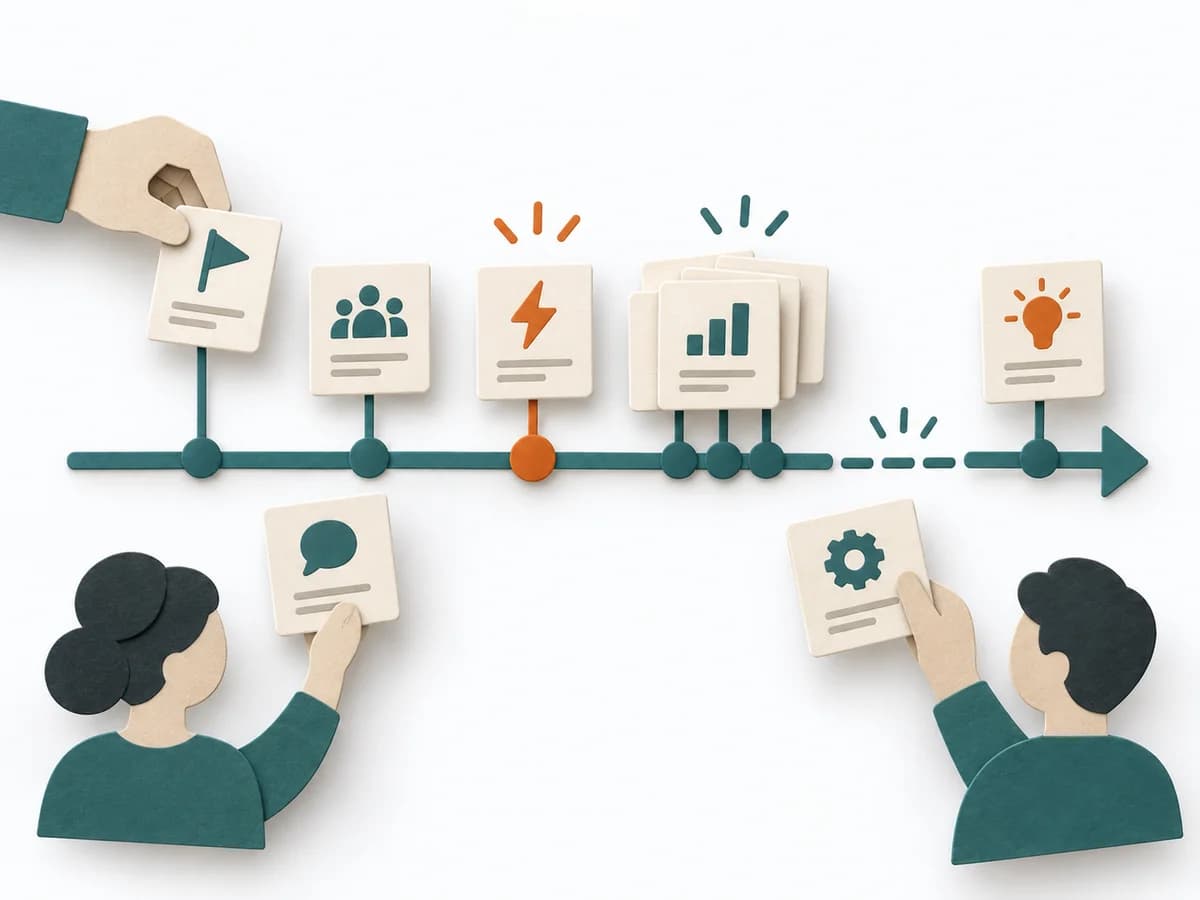 Facilitation Timeline | 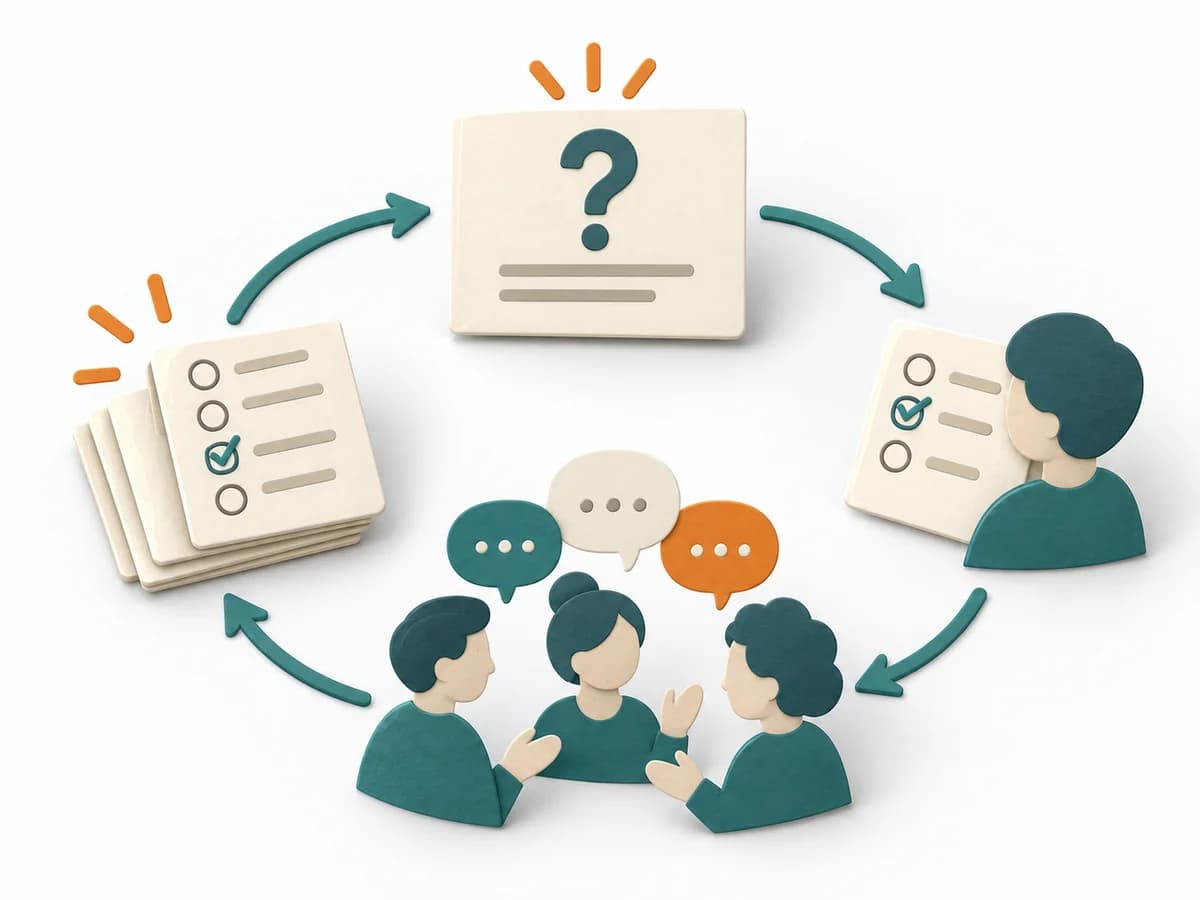 Knowledge Modeling Peer Instruction |  Operations Kepner-Tregoe |  Operations A3 Problem Solving |
|---|---|---|---|---|
Purposedifferent | When a project, incident, or change process is only remembered in fragments, Timeline brings the sequence back into a readable form. It makes turning points, precursors, and after-effects recognizable over the course of time. | Peer Instruction uses group thinking to clarify difficult terms or concepts faster. The method combines individual reflection with social correction and shared precision. | For a disturbance that's hard to pin down, the method cleanly separates problem, cause, and decision. It reduces mixing when symptoms allow several interpretations. | For a complex deviation with several people involved, the method bundles problem, analysis, and decision onto one page. It creates a shared working space where causes, countermeasures, and follow-up fit together. |
Complexitydifferent | Low | Medium | High | Medium |
Timedifferent | 30-90 min | 10-20 min je Frage | 2-8 h | 45-90 min |
Participantsdifferent | 2-12 | 6-50 | 2-8 | 2-5 |
Formatdifferent | Workshop + async | Workshop | Workshop + async | Workshop + async |
Outputdifferent | Timeline, Milestones, Insight Notes | Concept Questions, Vote Results, Learning Notes | Problem Analysis, Decision Analysis, Risk Plan | A3 Report, Action Plan, Root Cause Analysis |
Tagsno overlap | TimelineFacilitationSequence | LearningDialogueFacilitation | Problem solvingRoot causeDecisionOperations | LeanProblem solvingCoachingOperations |