View methods side by side.
Choose up to four methods. Add them using the search and share the comparison by copying its link.
| Criterion | 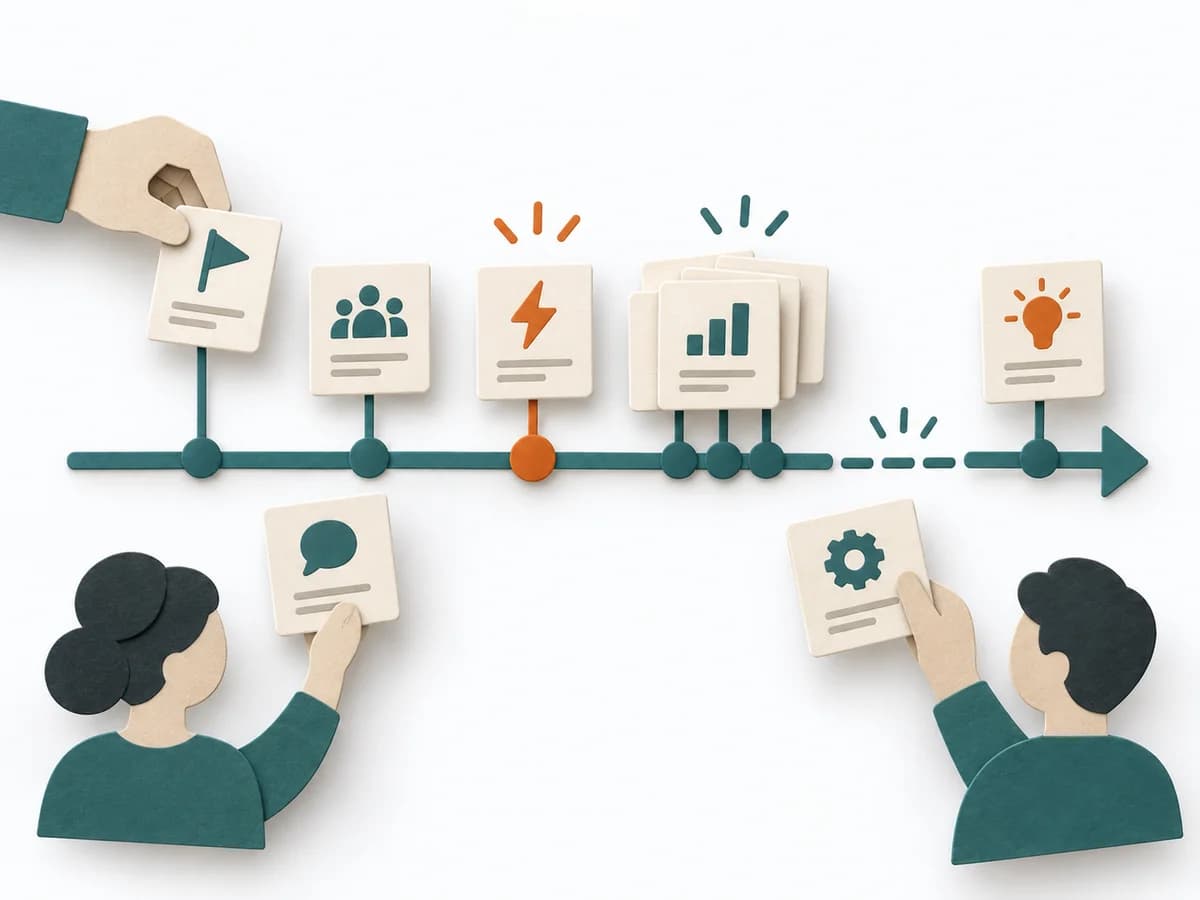 Facilitation Timeline |  Facilitation Nominal Group Technique | 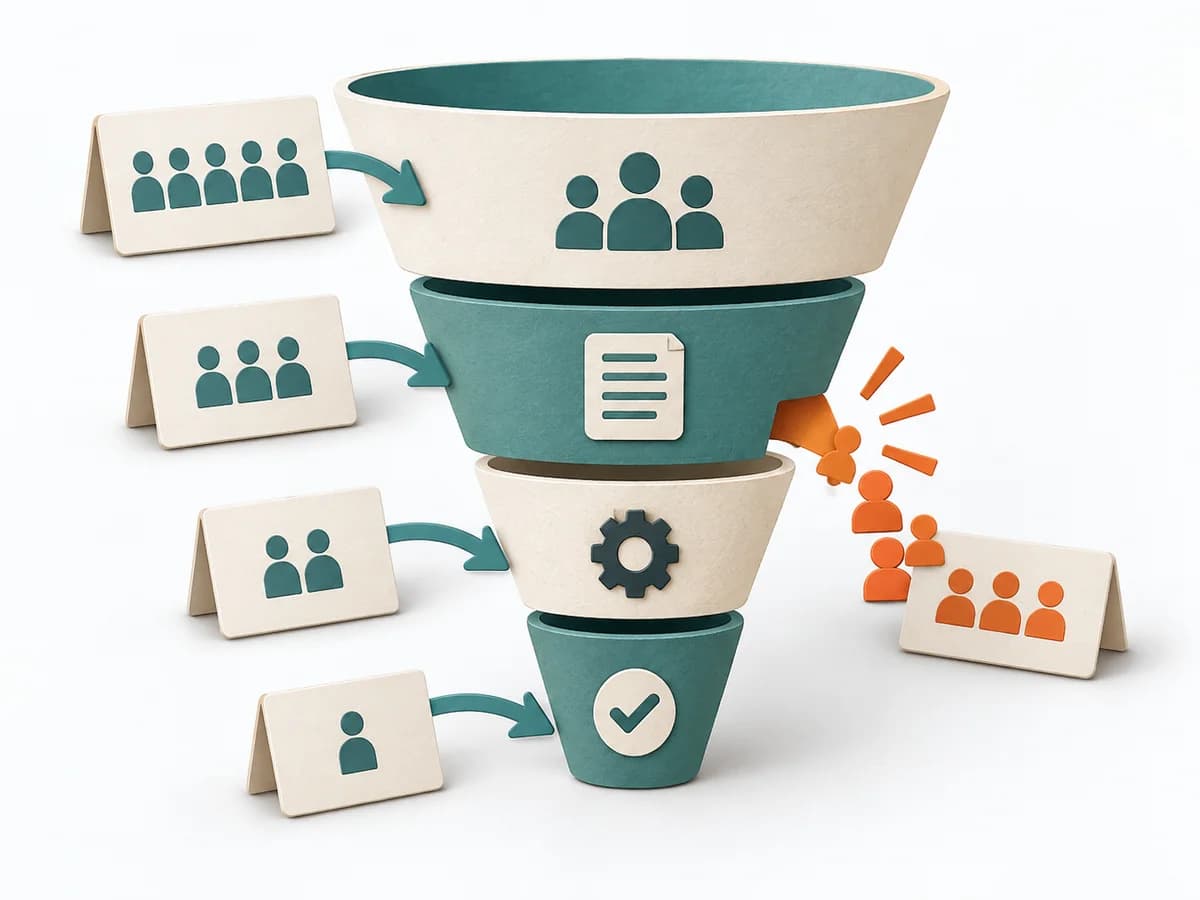 Growth Funnel Analysis |  Growth Flywheel |
|---|---|---|---|---|
Purposedifferent | When a project, incident, or change process is only remembered in fragments, Timeline brings the sequence back into a readable form. It makes turning points, precursors, and after-effects recognizable over the course of time. | When loud voices could dominate a round, Nominal Group Technique protects individual thinking time from group effects. It collects ideas separately first and only then enables shared weighting. | When many visitors or users drop off along the way, the reason behind the number often stays hidden. Funnel Analysis exposes these transitions and makes visible exactly where the path collapses. | Growth often breaks down where a reinforcing mechanism builds up too much friction. A Flywheel shows the cycle of value, repetition, and reinforcement meant to sustain growth. |
Complexitydifferent | Low | Medium | Medium | Medium |
Timedifferent | 30-90 min | 60-120 min | 1-3 h | 60-120 min |
Participantsdifferent | 2-12 | 5-12 | 1-5 | 3-8 |
Formatdifferent | Workshop + async | Workshop | Async | Workshop |
Outputdifferent | Timeline, Milestones, Insight Notes | Ranked Ideas, Clarified Options, Group Priority | Funnel report, Drop-off analysis, Optimization hypotheses | Flywheel Map, Friction Points, Growth Levers, Experiment Backlog |
Tagsno overlap | TimelineFacilitationSequence | FacilitationPrioritizationVotingInclusion | AnalyticsConversionGrowth | GrowthRetentionConversion |