View methods side by side.
Choose up to four methods. Add them using the search and share the comparison by copying its link.
| Criterion | 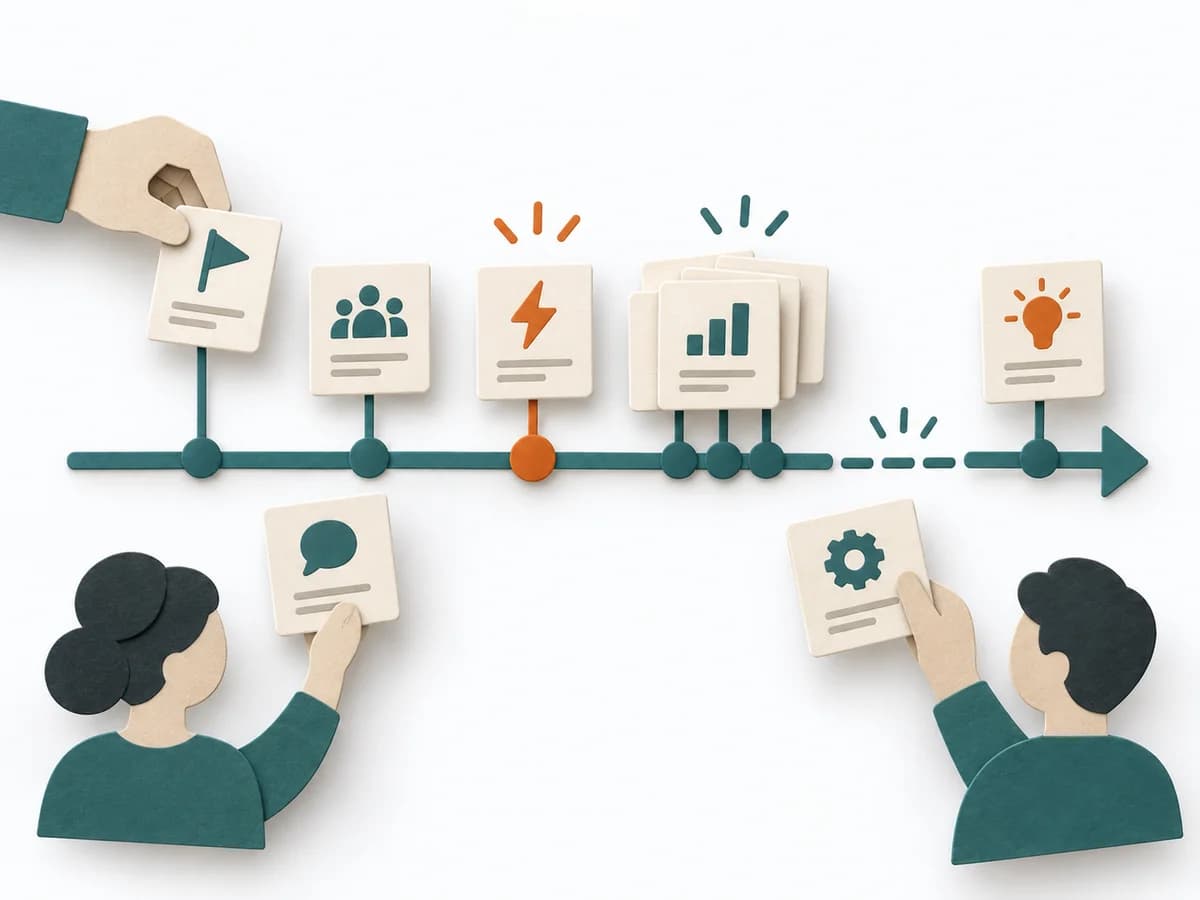 Facilitation Timeline |  UX Design Lean UX Canvas | 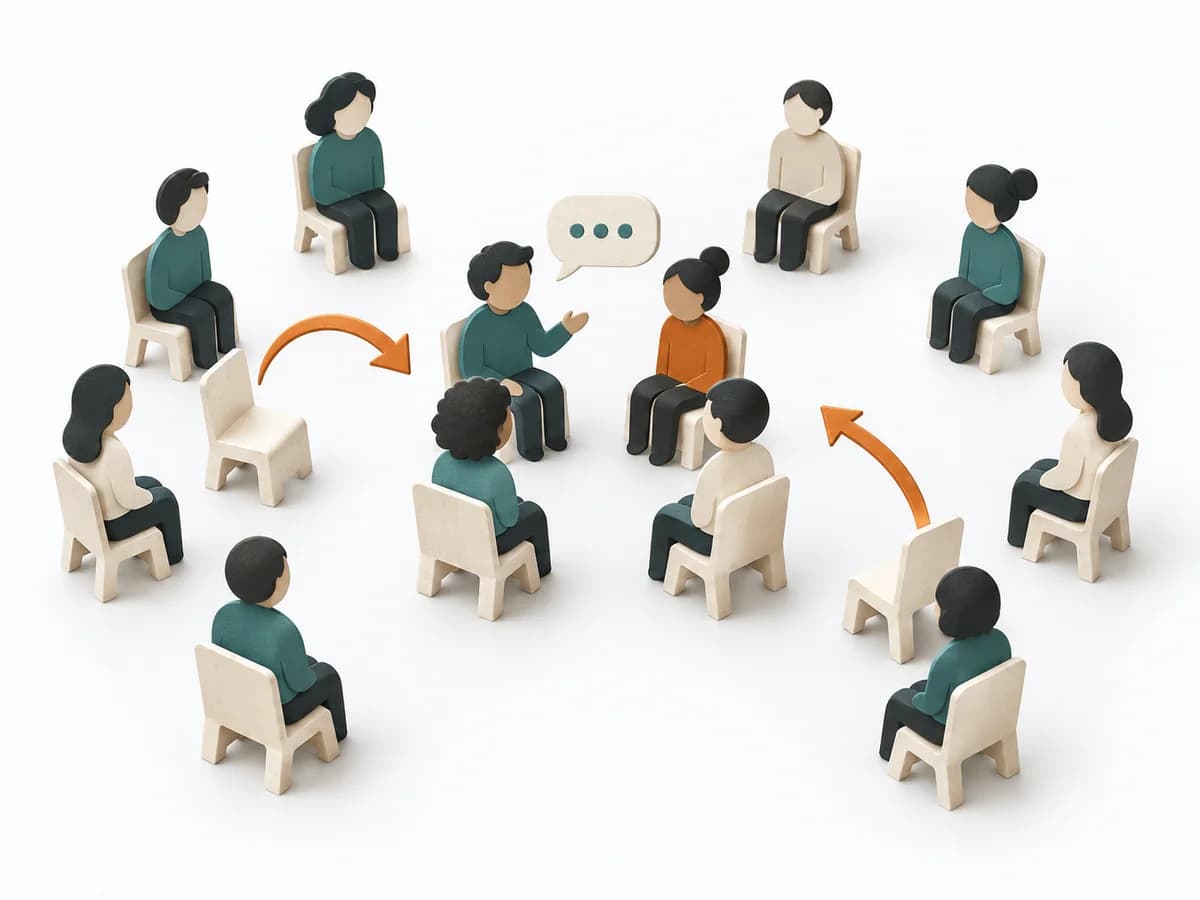 Facilitation Fishbowl Discussion |  Product Discovery Experiment Canvas |
|---|---|---|---|---|
Purposedifferent | When a project, incident, or change process is only remembered in fragments, Timeline brings the sequence back into a readable form. It makes turning points, precursors, and after-effects recognizable over the course of time. | The Lean UX Canvas helps clarify user behavior, touchpoints, and concept decisions. It makes assumptions and desired outcomes visible and captures the result as a completed canvas, hypothesis list, and first experiment. | When a controversial topic needs depth and discipline at the same time, Fishbowl Discussion makes the structure of the conversation transparent. The format keeps the core small enough for real dialogue and open enough for controlled turnover. | When experiments become unreadable after the fact, it arranges hypothesis, signal, and learning goal on a single canvas. It separates problem, assumption, solution, and evidence. The result is captured as a Completed Experiment Canvas and a Success Metric. |
Complexitydifferent | Low | Medium | Medium | Low |
Timedifferent | 30-90 min | 2-3 h | 45-90 min | 30-60 min |
Participantsdifferent | 2-12 | 3-8 | 8-80 | 1-5 |
Formatdifferent | Workshop + async | Workshop + async | Workshop | Workshop + async |
Outputdifferent | Timeline, Milestones, Insight Notes | Completed Lean UX Canvas, Hypothesis list, First experiment | Discussion Insights, Observed Tensions, Follow-up Questions | Completed Experiment Canvas, Success Metric |
Tagsno overlap | TimelineFacilitationSequence | CanvasHypothesisOutcomesDiscovery | FacilitationDialogueLarge group | ExperimentsValidationDiscoveryHypothesis |