View methods side by side.
Choose up to four methods. Add them using the search and share the comparison by copying its link.
| Criterion | 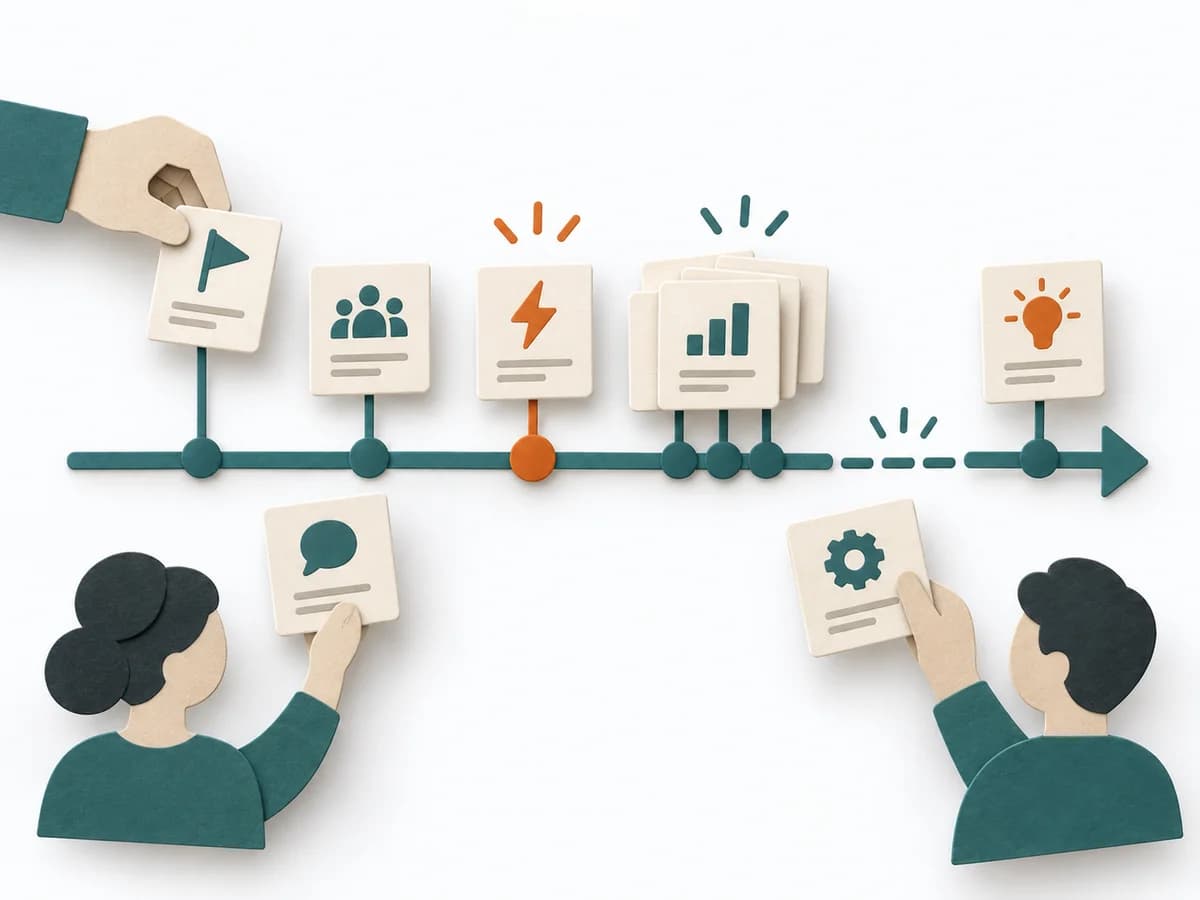 Facilitation Timeline | 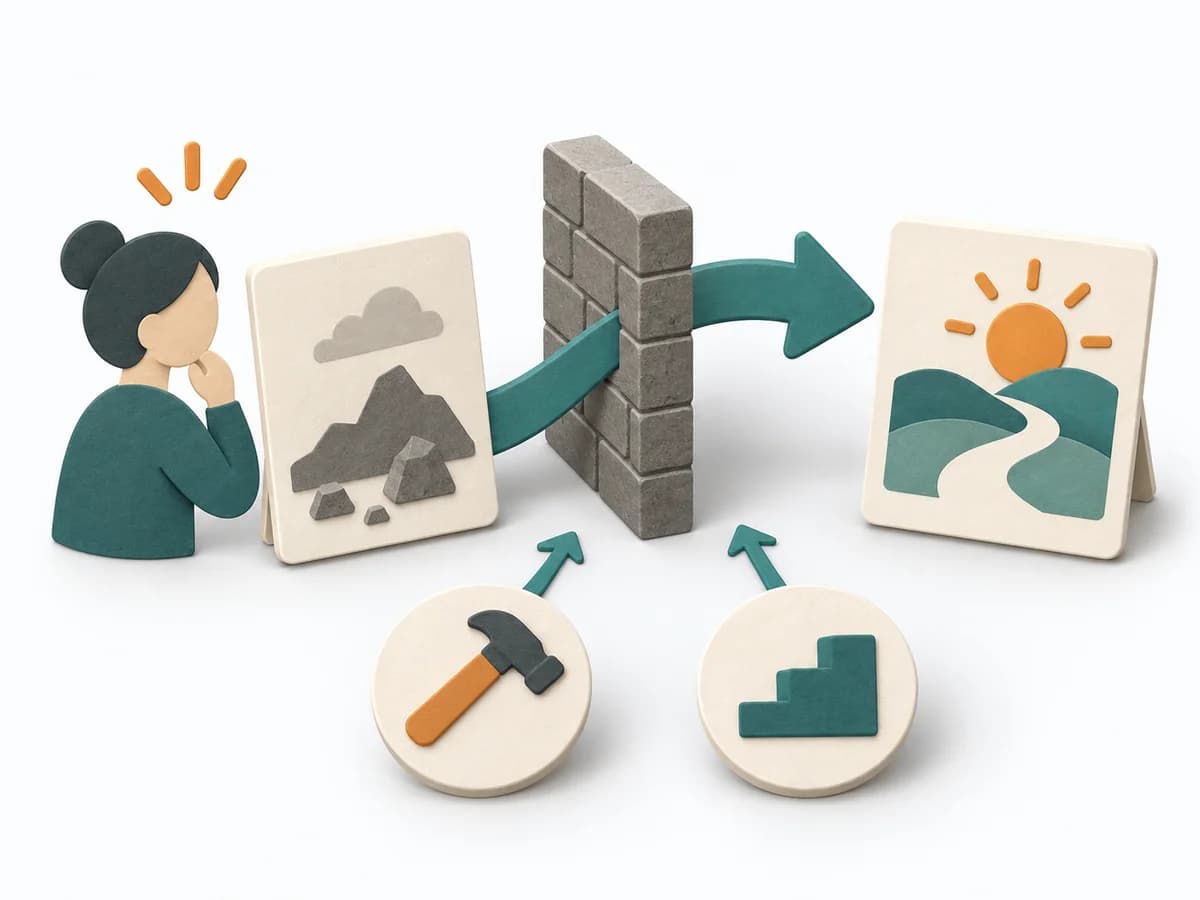 Product Discovery Jobs to Be Done | 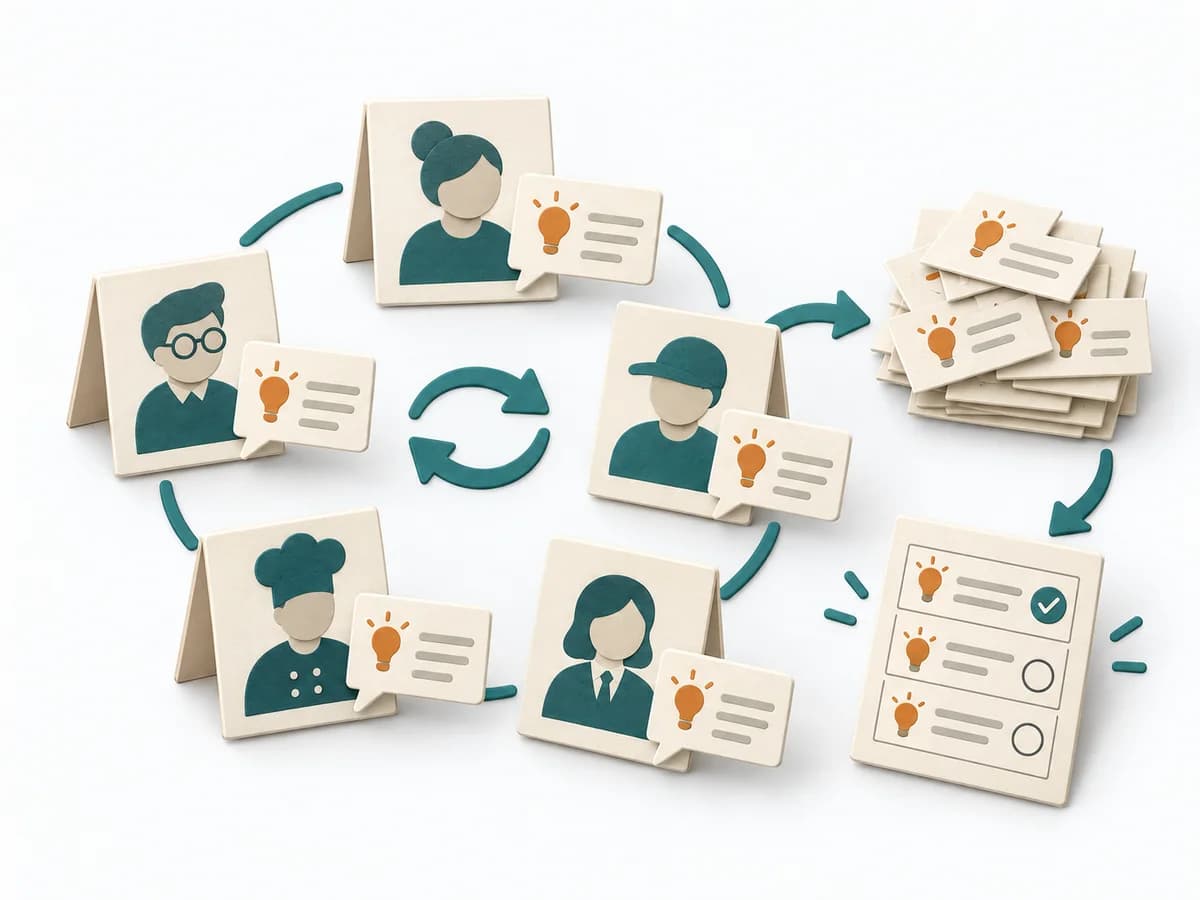 Innovation Rolestorming |  Innovation Lotus Blossom |
|---|---|---|---|---|
Purposedifferent | When a project, incident, or change process is only remembered in fragments, Timeline brings the sequence back into a readable form. It makes turning points, precursors, and after-effects recognizable over the course of time. | When switching motives and progress are unclear, it reconstructs the situation from real customer circumstances. It shows why a switch happens and what kind of progress is being sought. | When a search for ideas stalls, switching roles helps people step outside their own perspective and activate new logics of action. The method reduces habit because contributions arise from a different stance. This brings unfamiliar, often fitting solution approaches into play. | When a central question feels too large, the method breaks it into neighboring topic fields with their own depth of ideation. It holds structure and openness at the same time, so adjacent perspectives don't get lost. This grows an idea space out of a core problem. |
Complexitydifferent | Low | Medium | Low | Low |
Timedifferent | 30-90 min | 1-3 Wochen | 30-60 min | 45-90 min |
Participantsdifferent | 2-12 | 5-12 Interviews | 3-12 | 3-10 |
Formatdifferent | Workshop + async | Workshop + async | Workshop | Workshop |
Outputdifferent | Timeline, Milestones, Insight Notes | Job Stories, Outcome Statements, Opportunity List | Rollenkarten, Ideenpool pro Rolle, Konsolidierte Shortlist | Lotus Diagram, Idea Themes, Shortlist |
Tagsno overlap | TimelineFacilitationSequence | CustomerOutcomesNeeds | BrainstormingIdeationCreativity | BrainstormingIdeationCreativityDivergenceWorkshop |