View methods side by side.
Choose up to four methods. Add them using the search and share the comparison by copying its link.
| Criterion | 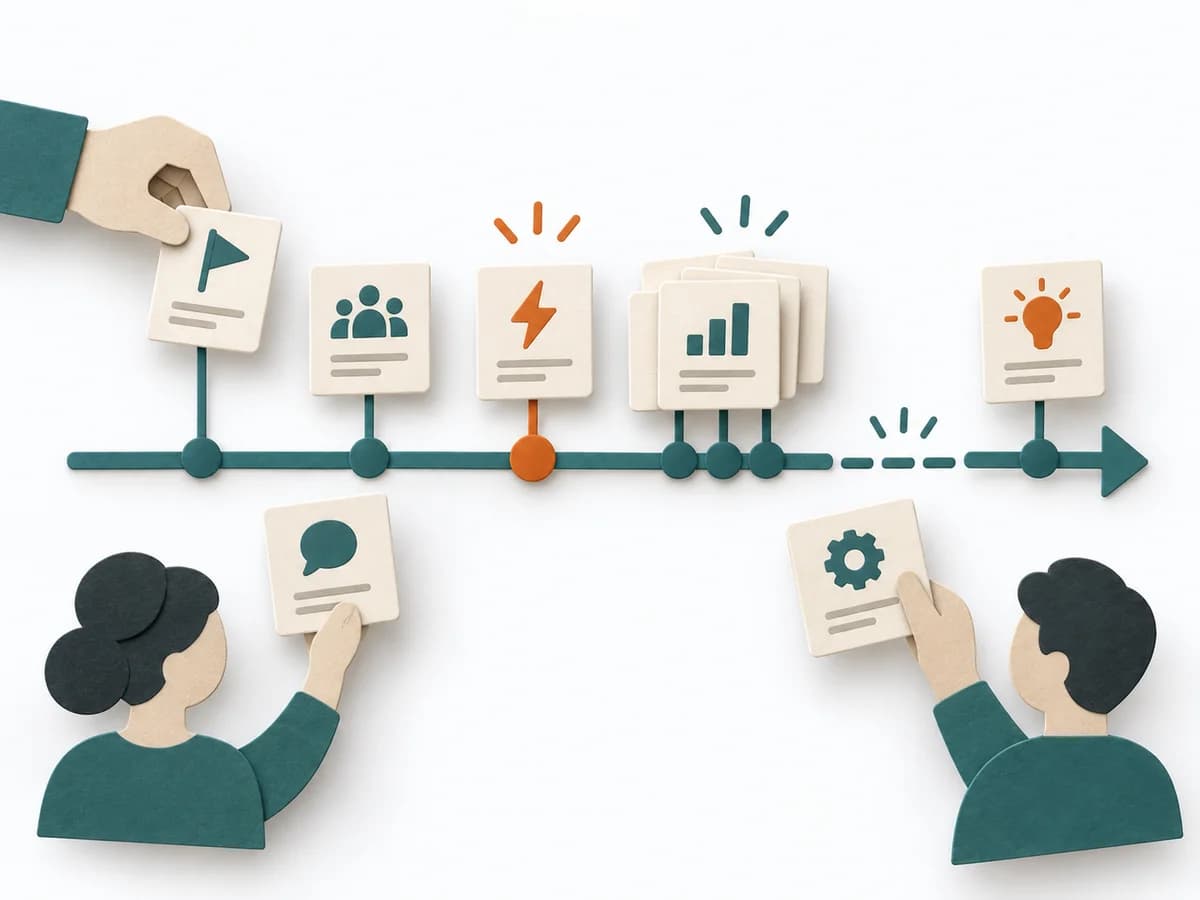 Facilitation Timeline | 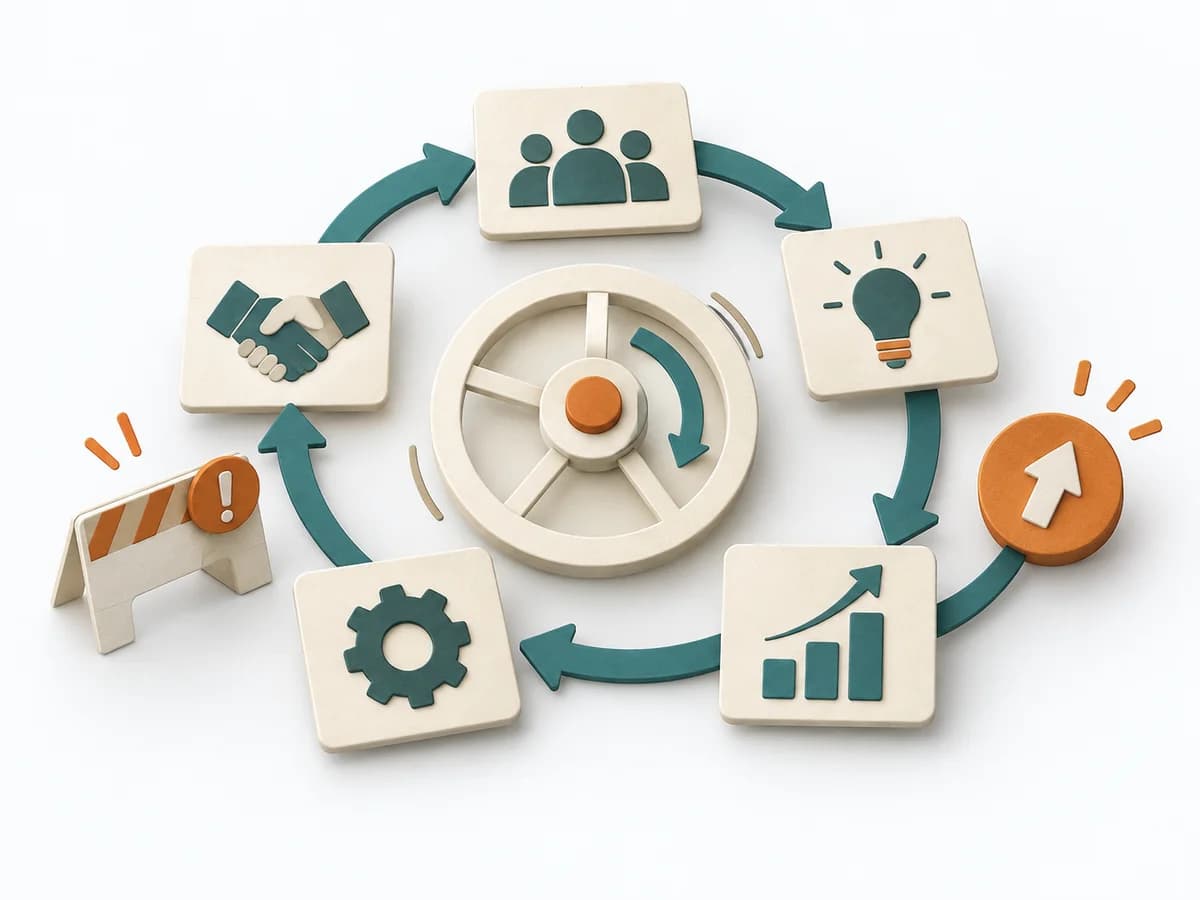 Growth Flywheel | 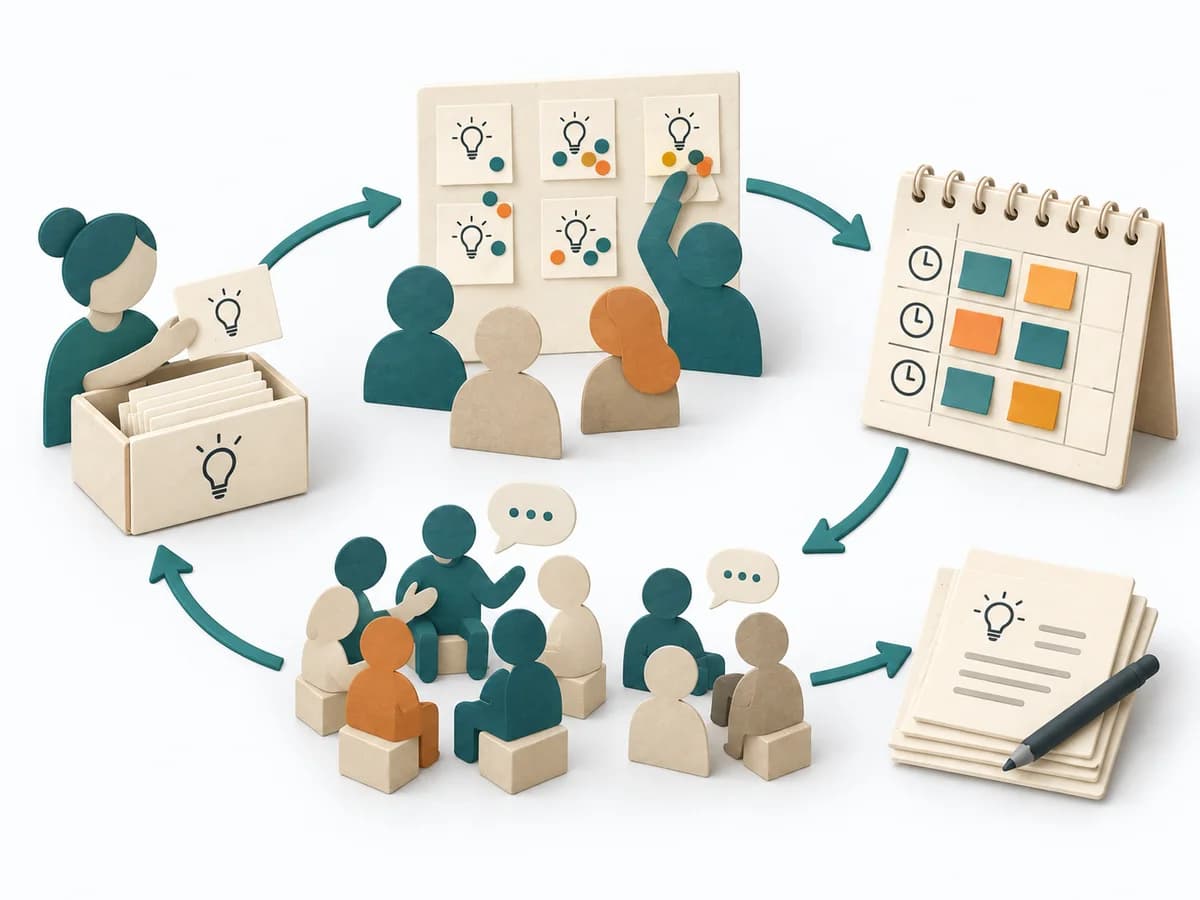 Facilitation Barcamp | 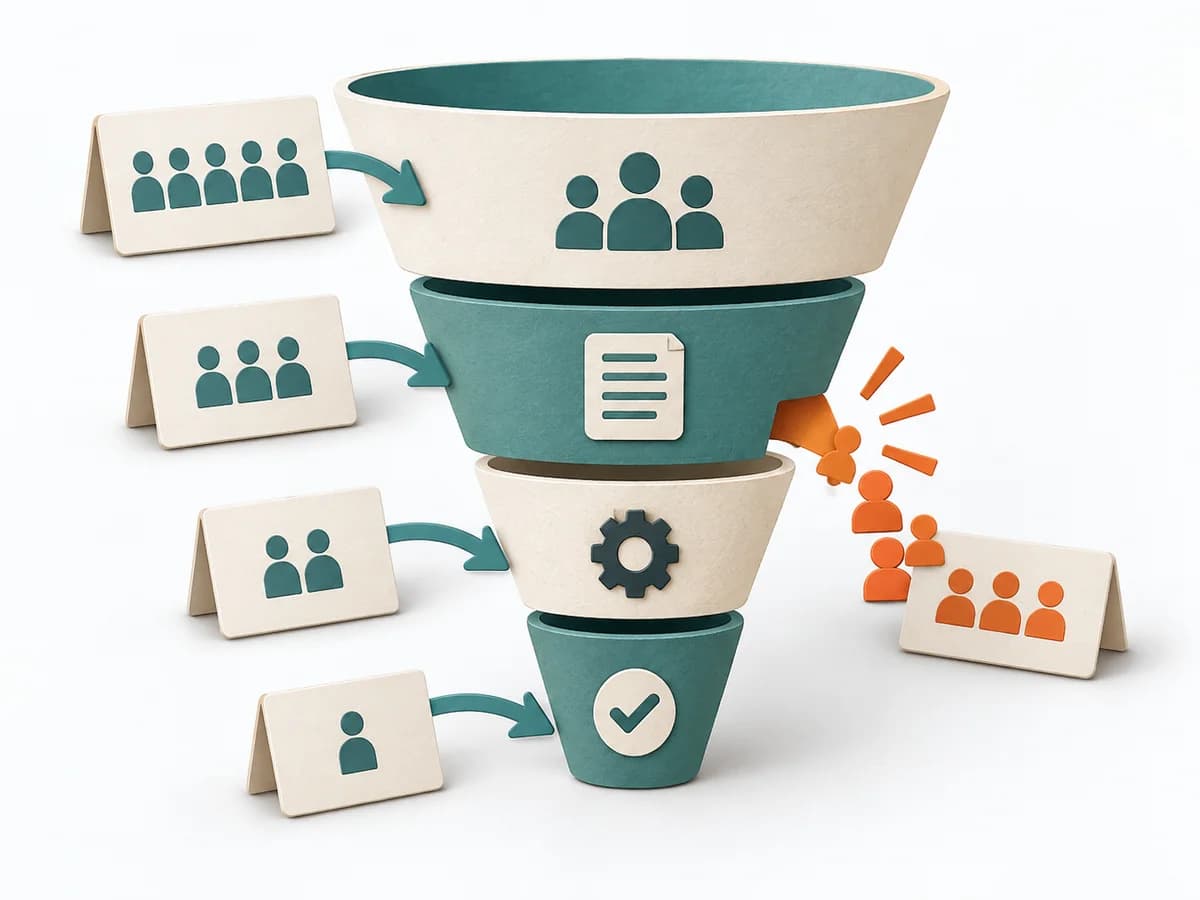 Growth Funnel Analysis |
|---|---|---|---|---|
Purposedifferent | When a project, incident, or change process is only remembered in fragments, Timeline brings the sequence back into a readable form. It makes turning points, precursors, and after-effects recognizable over the course of time. | Growth often breaks down where a reinforcing mechanism builds up too much friction. A Flywheel shows the cycle of value, repetition, and reinforcement meant to sustain growth. | When many people can contribute knowledge and the flow should stay open, Barcamp provides a framework for self-organized sessions. The format channels energy without defining the content too narrowly in advance. | When many visitors or users drop off along the way, the reason behind the number often stays hidden. Funnel Analysis exposes these transitions and makes visible exactly where the path collapses. |
Complexitydifferent | Low | Medium | Medium | Medium |
Timedifferent | 30-90 min | 60-120 min | Halber Tag bis 2 Tage | 1-3 h |
Participantsdifferent | 2-12 | 3-8 | 15-200 | 1-5 |
Formatdifferent | Workshop + async | Workshop | Workshop | Async |
Outputdifferent | Timeline, Milestones, Insight Notes | Flywheel Map, Friction Points, Growth Levers, Experiment Backlog | Session Board, Session Notes, Community Learnings | Funnel report, Drop-off analysis, Optimization hypotheses |
Tagsno overlap | TimelineFacilitationSequence | GrowthRetentionConversion | FacilitationLarge groupLearning | AnalyticsConversionGrowth |