View methods side by side.
Choose up to four methods. Add them using the search and share the comparison by copying its link.
| Criterion | 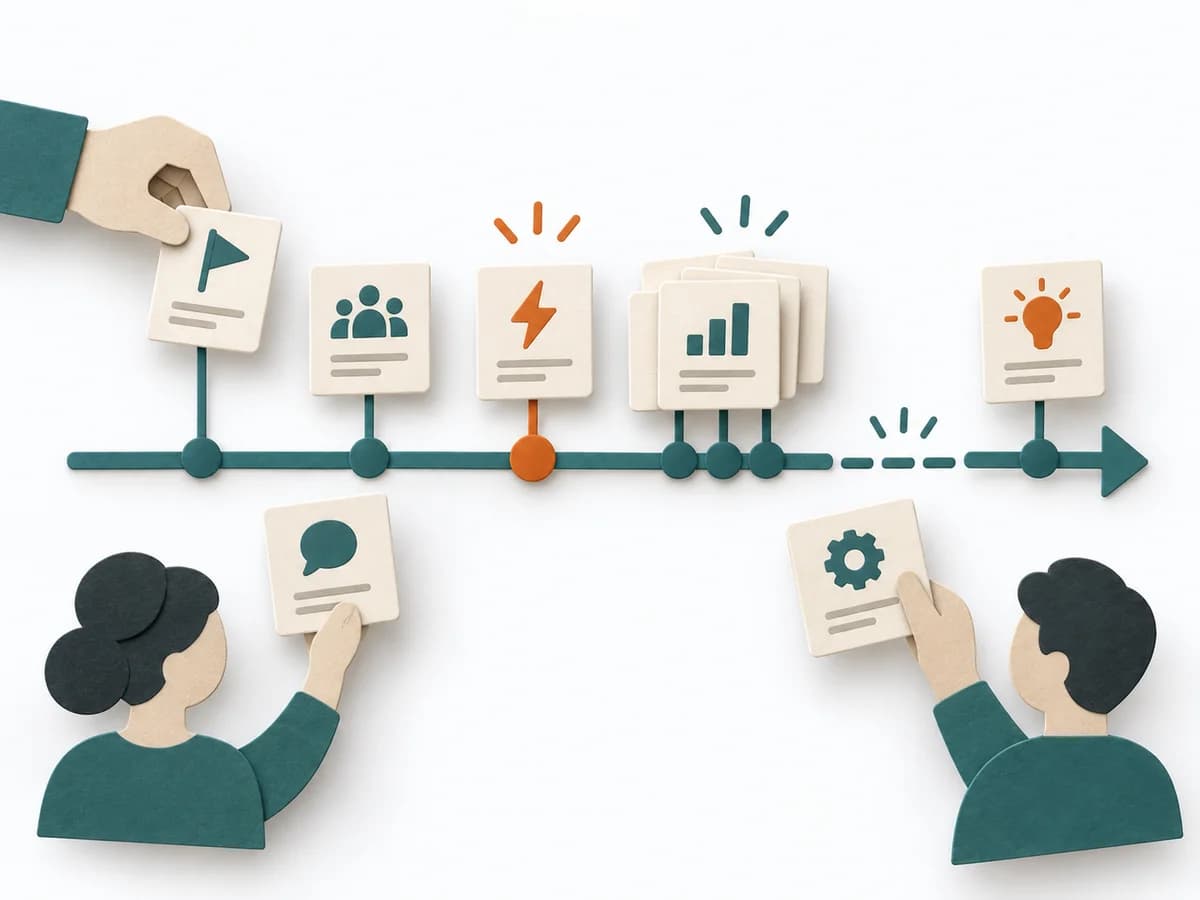 Facilitation Timeline | 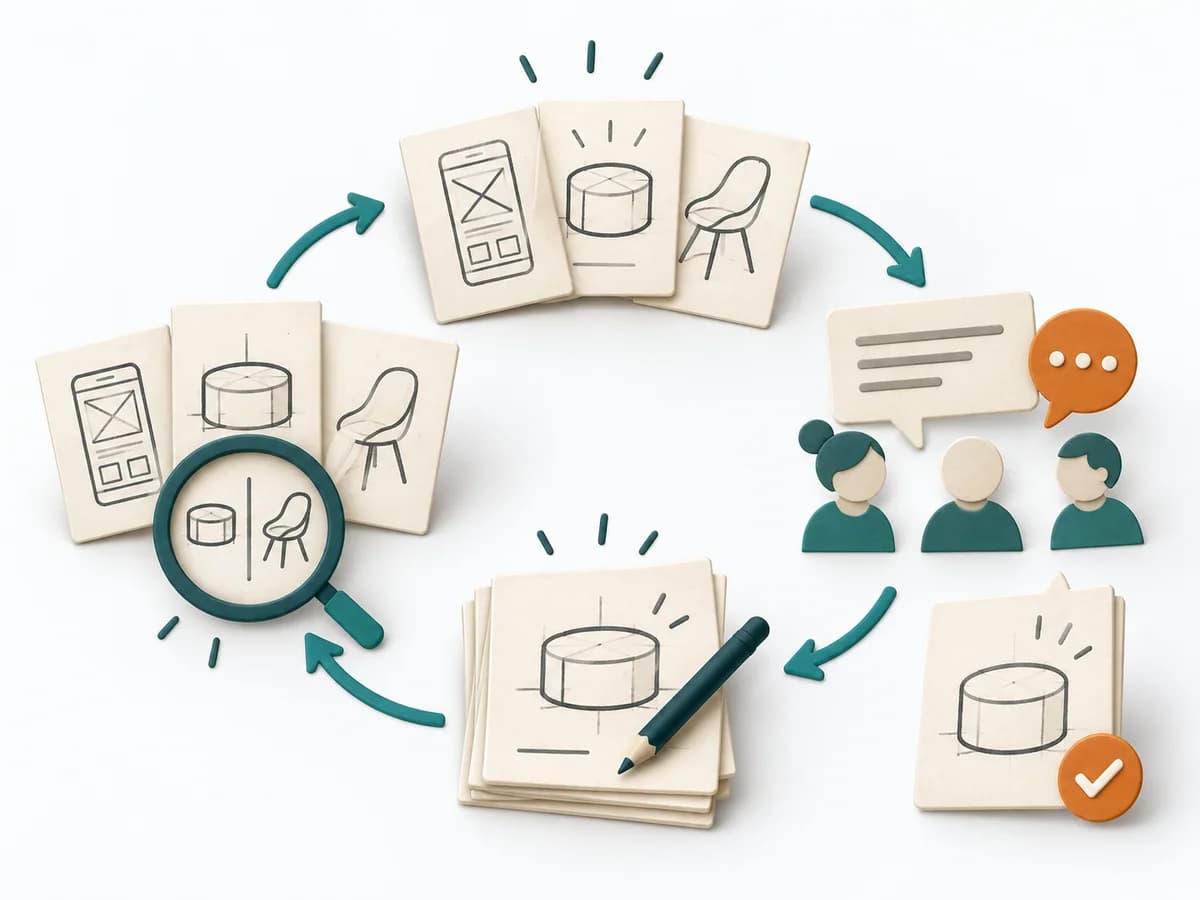 UX Design Design Studio | 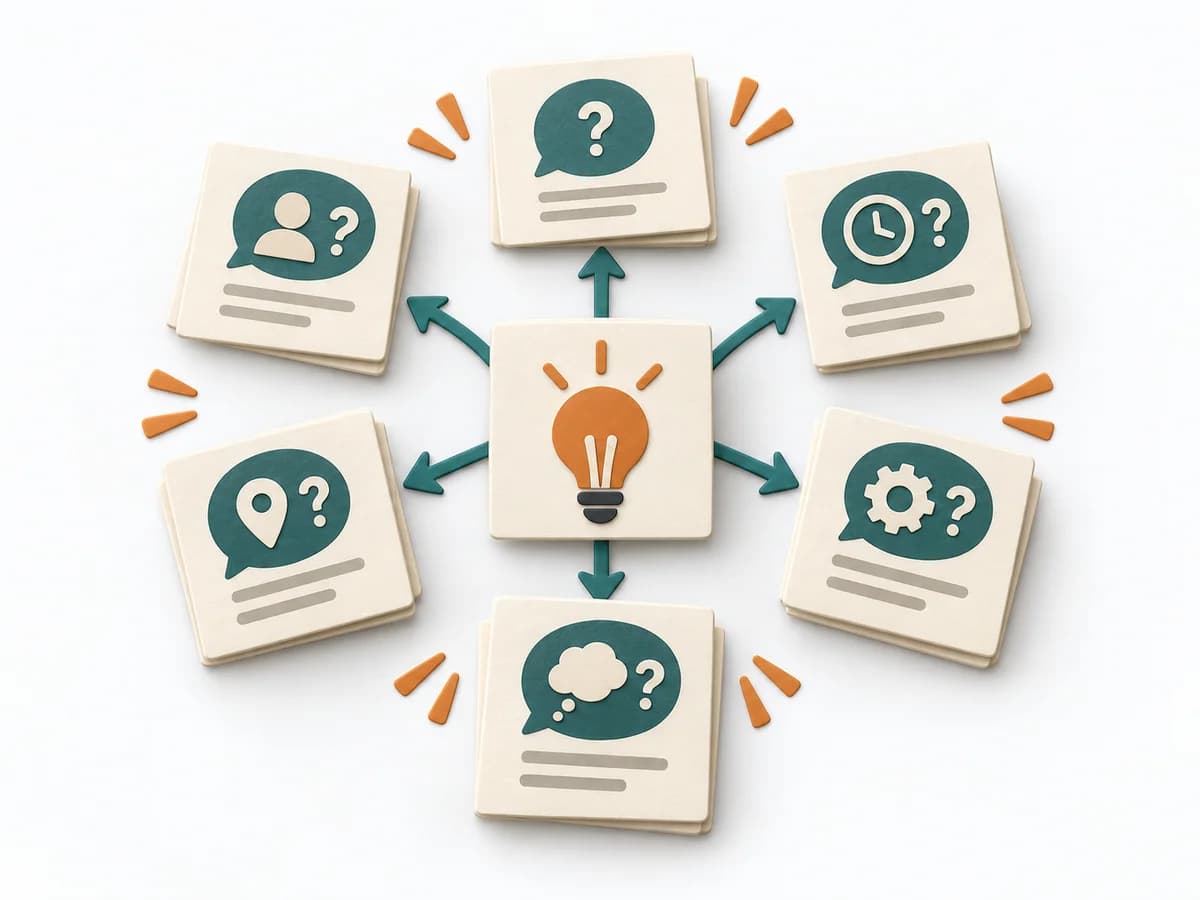 Innovation Starbursting |  Innovation Lotus Blossom |
|---|---|---|---|---|
Purposedifferent | When a project, incident, or change process is only remembered in fragments, Timeline brings the sequence back into a readable form. It makes turning points, precursors, and after-effects recognizable over the course of time. | When several designs need to be quickly put in relation to each other, it makes ideas visible and comparable. It encourages early variants instead of long upfront debates. | Helps clarify ideas, open questions, and testable next steps in concrete terms. It opens the thinking space, collects ideas, and leads to testable options. The result is captured as a star-shaped question map, question list, and assumption list. | When a central question feels too large, the method breaks it into neighboring topic fields with their own depth of ideation. It holds structure and openness at the same time, so adjacent perspectives don't get lost. This grows an idea space out of a core problem. |
Complexitydifferent | Low | Medium | Low | Low |
Timedifferent | 30-90 min | 1-3 h | 30-60 min | 45-90 min |
Participantsdifferent | 2-12 | 3-8 | 3-10 | 3-10 |
Formatdifferent | Workshop + async | Workshop | Workshop + async | Workshop |
Outputdifferent | Timeline, Milestones, Insight Notes | Sketches, Concept Directions, Design Decisions | Star-Shaped Question Map, Question List, Assumption List | Lotus Diagram, Idea Themes, Shortlist |
Tagsno overlap | TimelineFacilitationSequence | SketchingCollaborationIdeation | BrainstormingIdeationWorkshopDiscovery | BrainstormingIdeationCreativityDivergenceWorkshop |