View methods side by side.
Choose up to four methods. Add them using the search and share the comparison by copying its link.
| Criterion | 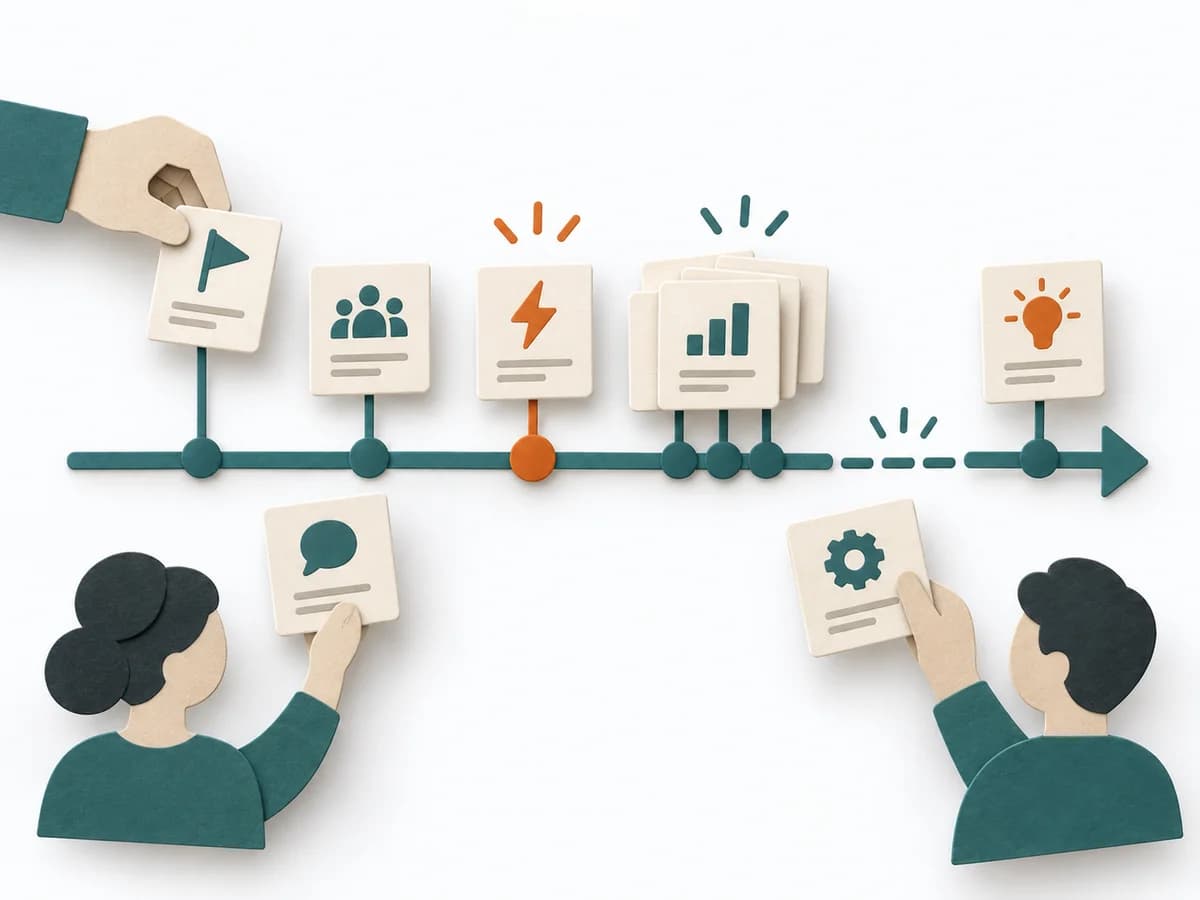 Facilitation Timeline |  Decision Making Constraint Analysis |  Operations 5 Whys |  Operations Kepner-Tregoe |
|---|---|---|---|---|
Purposedifferent | When a project, incident, or change process is only remembered in fragments, Timeline brings the sequence back into a readable form. It makes turning points, precursors, and after-effects recognizable over the course of time. | When an initiative stalls, the limit often lies not in the idea but in hard or soft boundary conditions. Constraint Analysis separates these limits and shows which of them can actually be shaped. | For a single, hard-to-explain deviation, the method exposes the causal chain behind the visible symptom. It keeps the cause open until a controllable condition emerges instead of a mere description. | For a disturbance that's hard to pin down, the method cleanly separates problem, cause, and decision. It reduces mixing when symptoms allow several interpretations. |
Complexitydifferent | Low | Low | Low | High |
Timedifferent | 30-90 min | 30-90 min | 15-30 min | 2-8 h |
Participantsdifferent | 2-12 | 2-8 | 2-6 | 2-8 |
Formatdifferent | Workshop + async | Workshop + async | Workshop | Workshop + async |
Outputdifferent | Timeline, Milestones, Insight Notes | Constraint List, Hard/Soft Classification, Option Impact Notes, Decision Boundaries | Root cause notes, Countermeasures | Problem Analysis, Decision Analysis, Risk Plan |
Tagsno overlap | TimelineFacilitationSequence | ConstraintsDecisionPlanningOptions | Root causeIncidentLeanProblem solving | Problem solvingRoot causeDecisionOperations |