View methods side by side.
Choose up to four methods. Add them using the search and share the comparison by copying its link.
| Criterion | 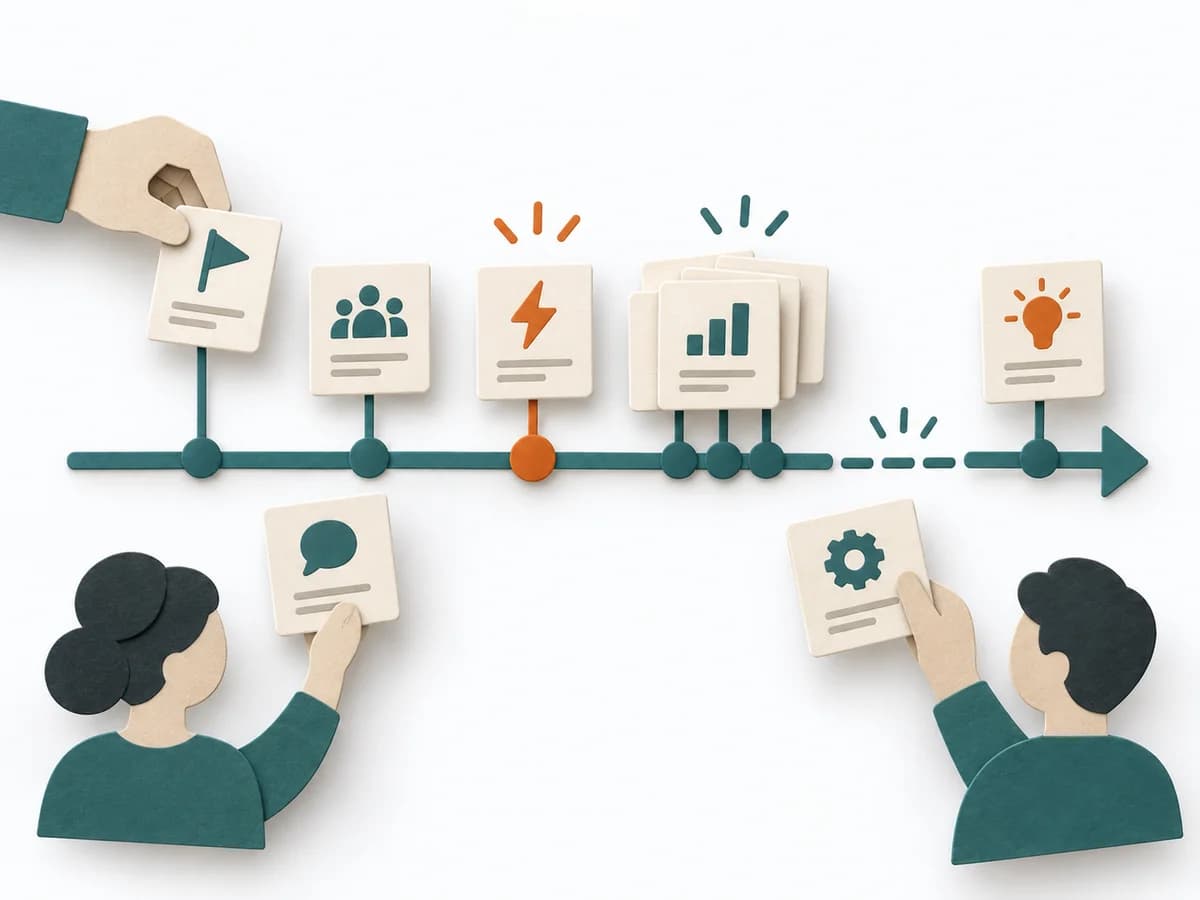 Facilitation Timeline |  Operations ALPEN Method |  Facilitation Stakeholder Salience Model |  Facilitation Power Interest Grid |
|---|---|---|---|---|
Purposedifferent | When a project, incident, or change process is only remembered in fragments, Timeline brings the sequence back into a readable form. It makes turning points, precursors, and after-effects recognizable over the course of time. | With an overloaded day full of too many tasks, a realistic picture of the day emerges. The method connects estimating, deciding, and buffer thinking so planning fits available energy and time. | When stakeholders appear to matter very differently, the Stakeholder Salience Model rates their actual priority through power, legitimacy, and urgency. It turns individual contributions into a visible selection. The result is captured as a Salience diagram and a class-based strategy. | When many stakeholders compete for attention at once, the Power Interest Grid sorts them by influence and stake. It turns individual contributions into a visible selection. The result is captured as a Power Interest Grid and a stakeholder-specific strategy. |
Complexitydifferent | Low | Low | Medium | Low |
Timedifferent | 30-90 min | 10-20 min daily | 60-90 min | 30-60 min |
Participantsdifferent | 2-12 | 1 | 3-6 | 2-8 |
Formatdifferent | Workshop + async | Async | Workshop | Workshop |
Outputdifferent | Timeline, Milestones, Insight Notes | Daily Plan, Time Estimates, Review Notes | Salience Diagram, Strategy per Class | Power Interest Grid, Strategy per Stakeholder |
Tagsno overlap | TimelineFacilitationSequence | PlanningTime managementProductivityOperations | StakeholdersFacilitationAlignmentGovernance | StakeholdersFacilitationAlignmentPlanning |