View methods side by side.
Choose up to four methods. Add them using the search and share the comparison by copying its link.
| Criterion | 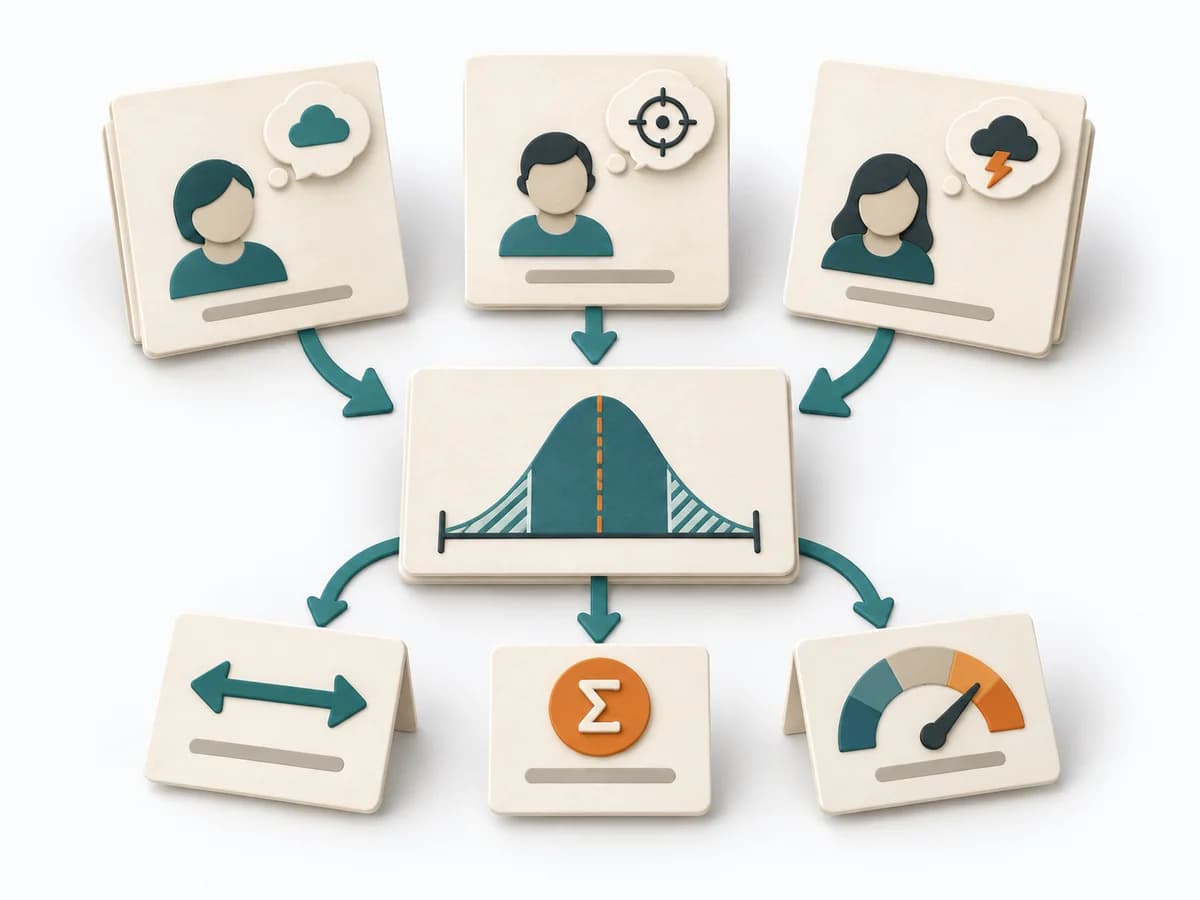 Decision Making Three-Point Estimation | 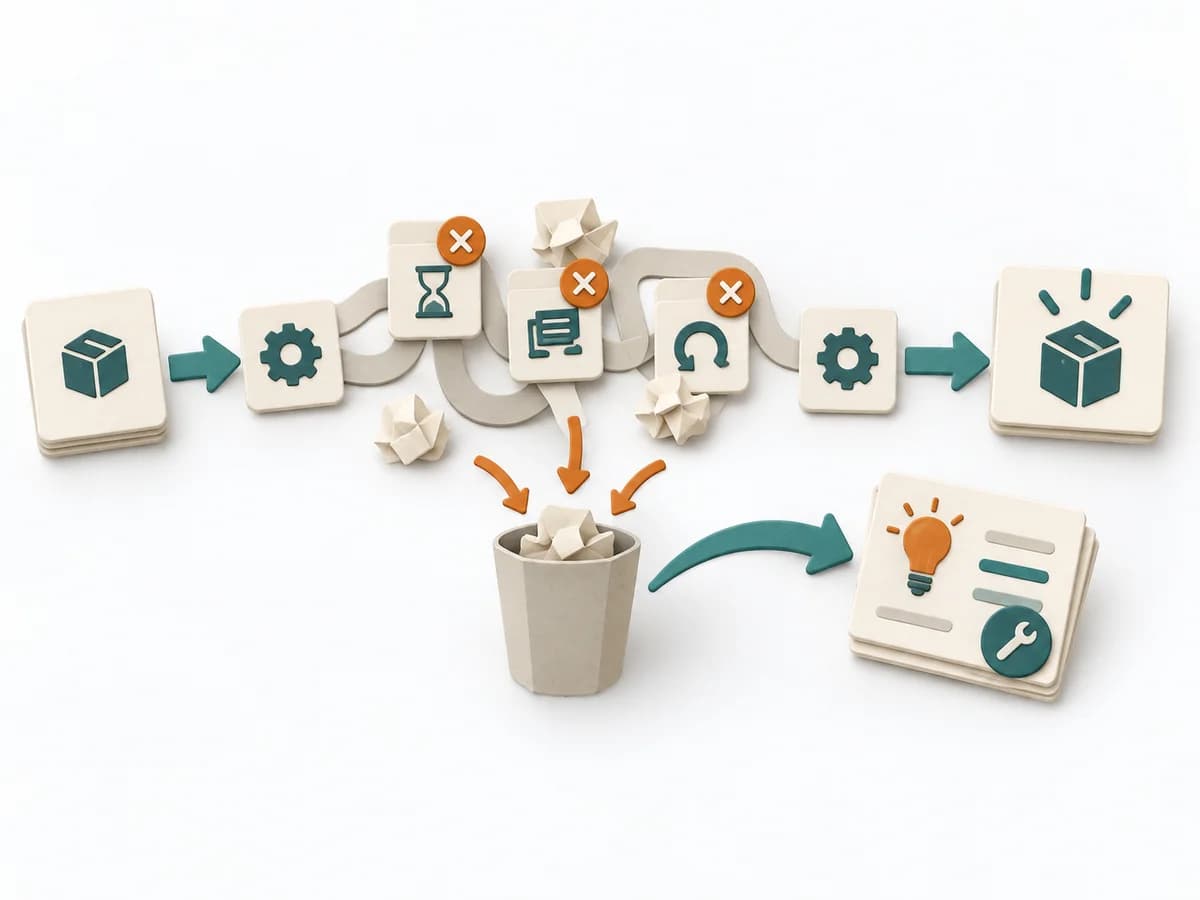 Operations Waste Analysis |  Decision Making OODA Loop |  Decision Making Force Field Analysis |
|---|---|---|---|---|
Purposedifferent | A single estimate for effort, time, or risk often looks too smooth for the real uncertainty behind it. It separates options, evaluation criteria, and open risks. The result is captured as a Three-Point Estimate, Risk Range, and Assumption Notes. | For a process that keeps people busy but creates little value, the method exposes waste. It directs attention to unnecessary movement, waiting times, rework, and overdelivery. | In dynamic situations, decisions become outdated faster than they can be prepared. The OODA Loop holds observing, orienting, deciding, and acting together as a recurring rhythm so reaction does not slide into inertia. | In change initiatives, supporting and restraining forces sit at the table at the same time. Force Field Analysis makes these tensions explicit and shows where change can be pushed forward by strengthening or relieving. |
Complexitydifferent | Medium | Low | Medium | Low |
Timedifferent | 10-30 min je Item | 45-120 min | 15-60 min je Zyklus | 45-90 min |
Participantsdifferent | 1-8 | 2-8 | 1-8 | 3-12 |
Formatdifferent | Workshop + async | Workshop | Workshop + async | Workshop |
Outputdifferent | Three-Point Estimate, Risk Range, Assumption Notes | Waste Map, Prioritized Waste, Improvement Backlog | Situation Assessment, Decision Loop, Action Updates | Force Field Map, Change Levers, Risk Notes |
Tagsno overlap | EstimationUncertaintyForecasting | WasteLeanProcess improvement | DecisionChangeLearningStrategy | ChangeDecisionStrategy |