View methods side by side.
Choose up to four methods. Add them using the search and share the comparison by copying its link.
| Criterion | 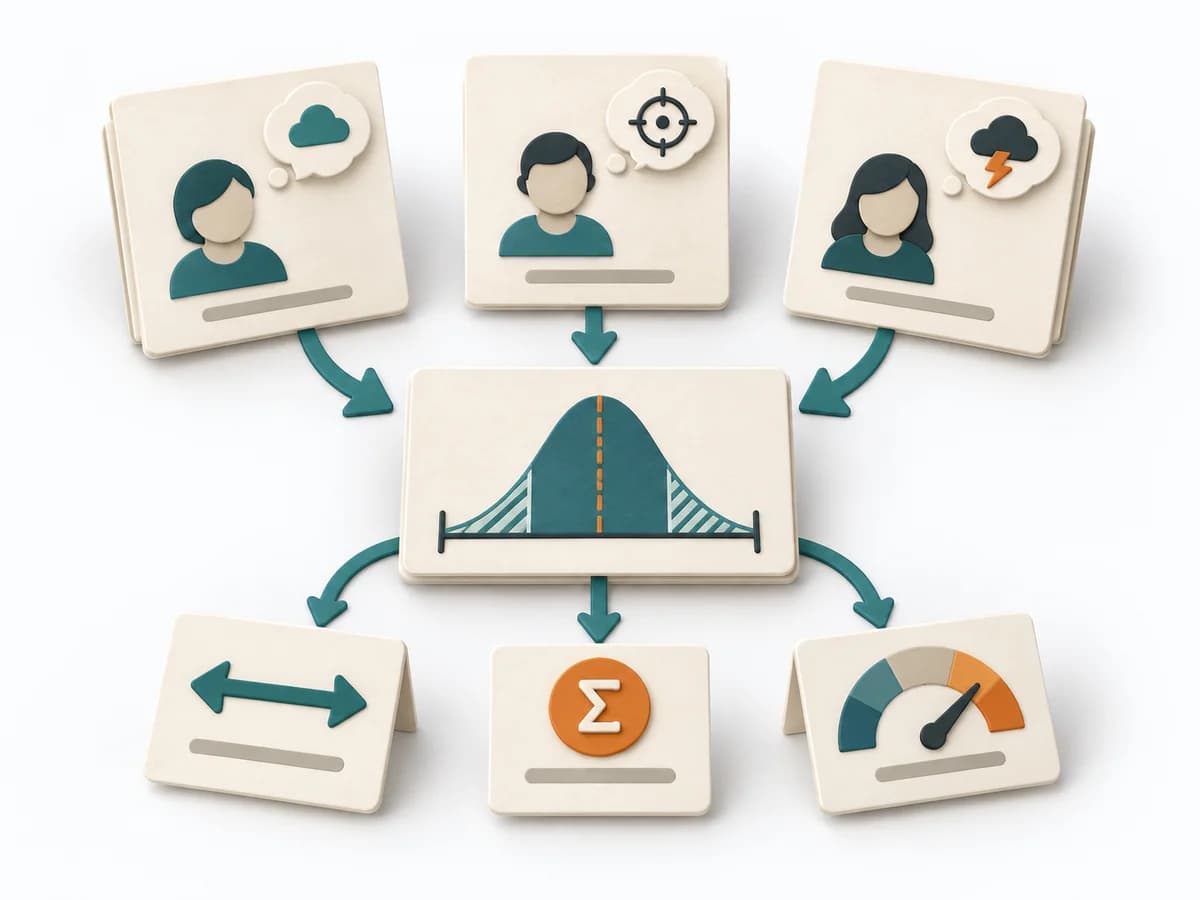 Decision Making Three-Point Estimation | 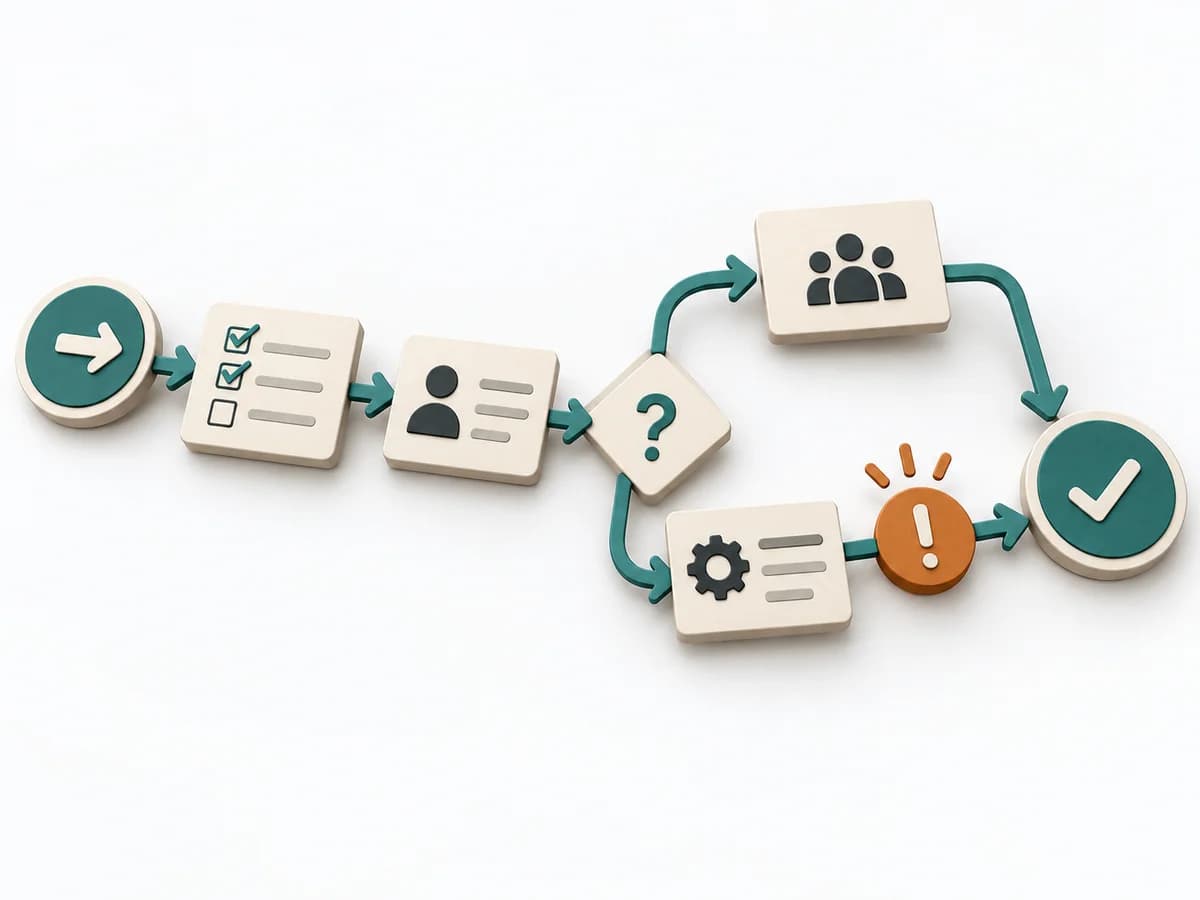 Operations Process Mapping |  Agile Sprint Retrospective |  Operations Learning Review |
|---|---|---|---|---|
Purposedifferent | A single estimate for effort, time, or risk often looks too smooth for the real uncertainty behind it. It separates options, evaluation criteria, and open risks. The result is captured as a Three-Point Estimate, Risk Range, and Assumption Notes. | With a confusing workflow that has many handoffs, the method makes the actual process visible. It shows where work is passed on, delayed, or duplicated, so improvement targets the right spots. | When a sprint is over and friction shouldn't simply be carried forward, it opens the view onto collaboration and patterns. It creates space to see causes and changes together. | After a project phase with mixed results, the method makes learning from the individual case reusable. It connects events, decisions, and systemic conditions into robust insights. |
Complexitydifferent | Medium | Medium | Low | Medium |
Timedifferent | 10-30 min je Item | 1-3 h | Up to 3 hours for a one-month Sprint; shorter Sprints are usually shorter | 1-3 h |
Participantsdifferent | 1-8 | 3-10 | Scrum Team | 3-10 |
Formatdifferent | Workshop + async | Workshop | Workshop | Workshop |
Outputdifferent | Three-Point Estimate, Risk Range, Assumption Notes | Process Map, Handoff List, Improvement Backlog | Improvement actions, Team agreements | Learning Review Notes, System Factors, Improvement Actions |
Tagsno overlap | EstimationUncertaintyForecasting | ProcessOperationsImprovement | RetrospectiveImprovementLearning | LearningRetrospectiveIncidentOperations |