View methods side by side.
Choose up to four methods. Add them using the search and share the comparison by copying its link.
| Criterion | 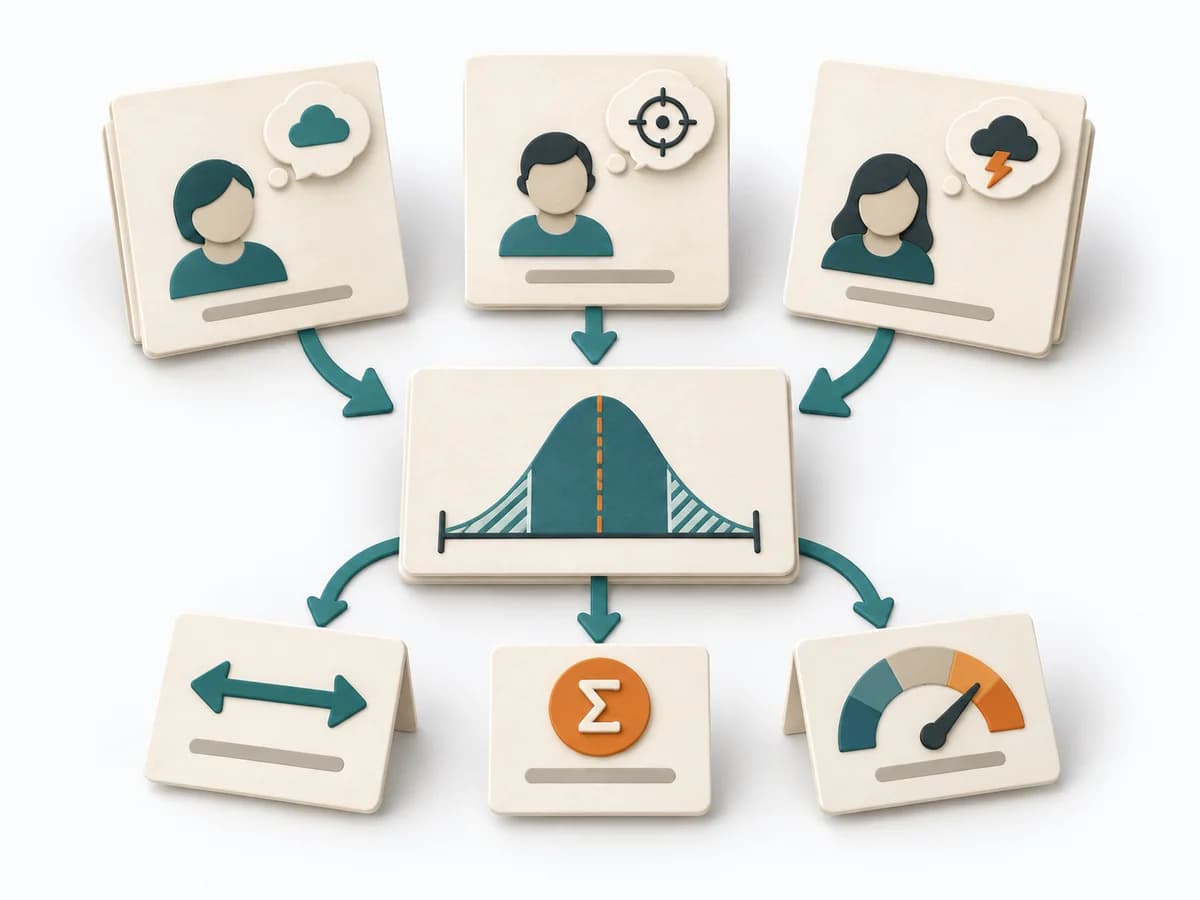 Decision Making Three-Point Estimation | 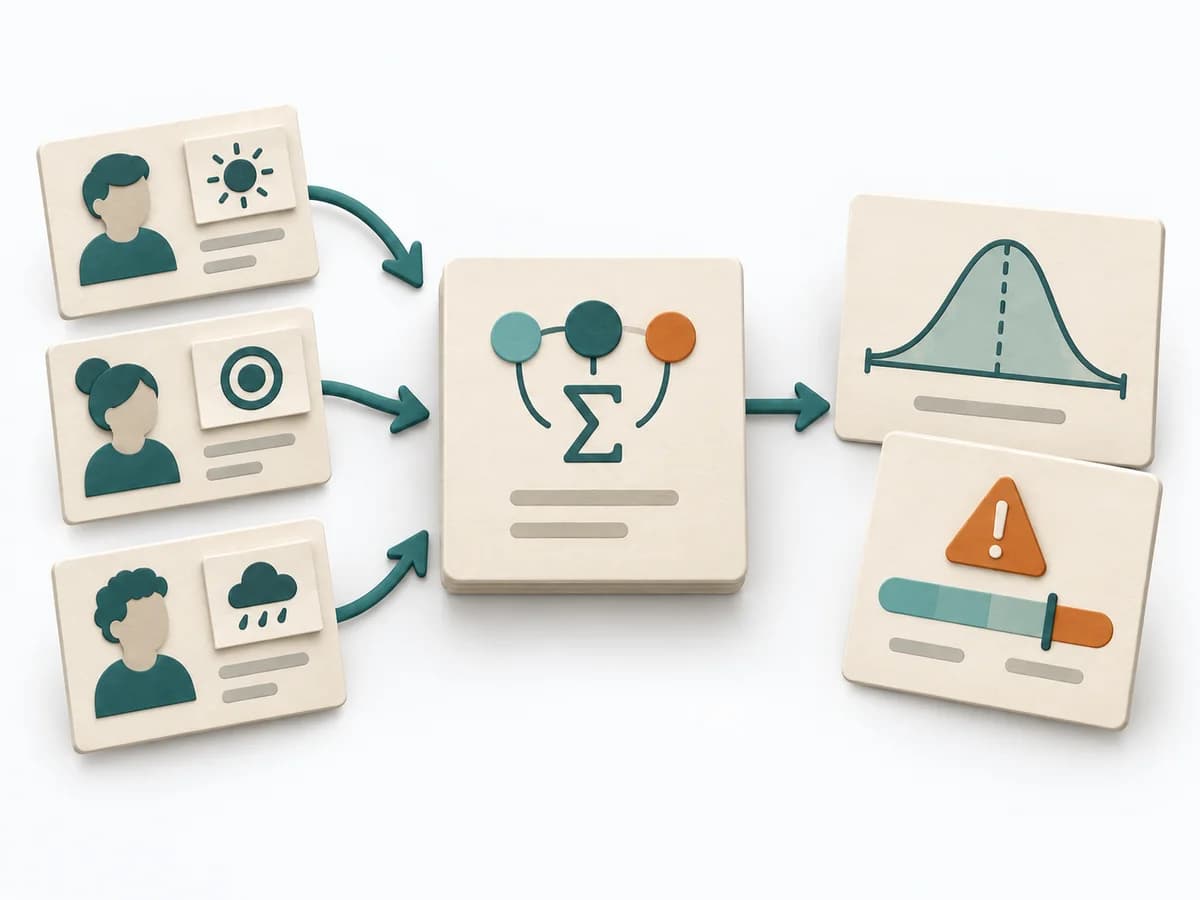 Decision Making PERT Estimation |  Systems Thinking Leverage Points |  Decision Making Force Field Analysis |
|---|---|---|---|---|
Purposedifferent | A single estimate for effort, time, or risk often looks too smooth for the real uncertainty behind it. It separates options, evaluation criteria, and open risks. The result is captured as a Three-Point Estimate, Risk Range, and Assumption Notes. | On complex initiatives, a plain average tends to understate just how uncertain the outcome really is. It separates options, evaluation criteria, and open risks. The result is captured as a PERT Estimate, Expected Value, and Risk Notes. | Leverage Points show exactly where interventions in a system produce a disproportionate effect. It draws relationships, patterns, and feedback loops. The result is captured as a leverage map and action strategy. | In change initiatives, supporting and restraining forces sit at the table at the same time. Force Field Analysis makes these tensions explicit and shows where change can be pushed forward by strengthening or relieving. |
Complexitydifferent | Medium | Medium | High | Low |
Timedifferent | 10-30 min je Item | 15-45 min | Half day | 45-90 min |
Participantsdifferent | 1-8 | 1-8 | 3-12 | 3-12 |
Formatdifferent | Workshop + async | Workshop + async | Workshop | Workshop |
Outputdifferent | Three-Point Estimate, Risk Range, Assumption Notes | PERT Estimate, Expected Value, Risk Notes | Leverage Map, Action Strategy | Force Field Map, Change Levers, Risk Notes |
Tagsno overlap | EstimationUncertaintyForecasting | EstimationUncertaintyRisk | Systems thinkingChangeStrategy | ChangeDecisionStrategy |