View methods side by side.
Choose up to four methods. Add them using the search and share the comparison by copying its link.
| Criterion | 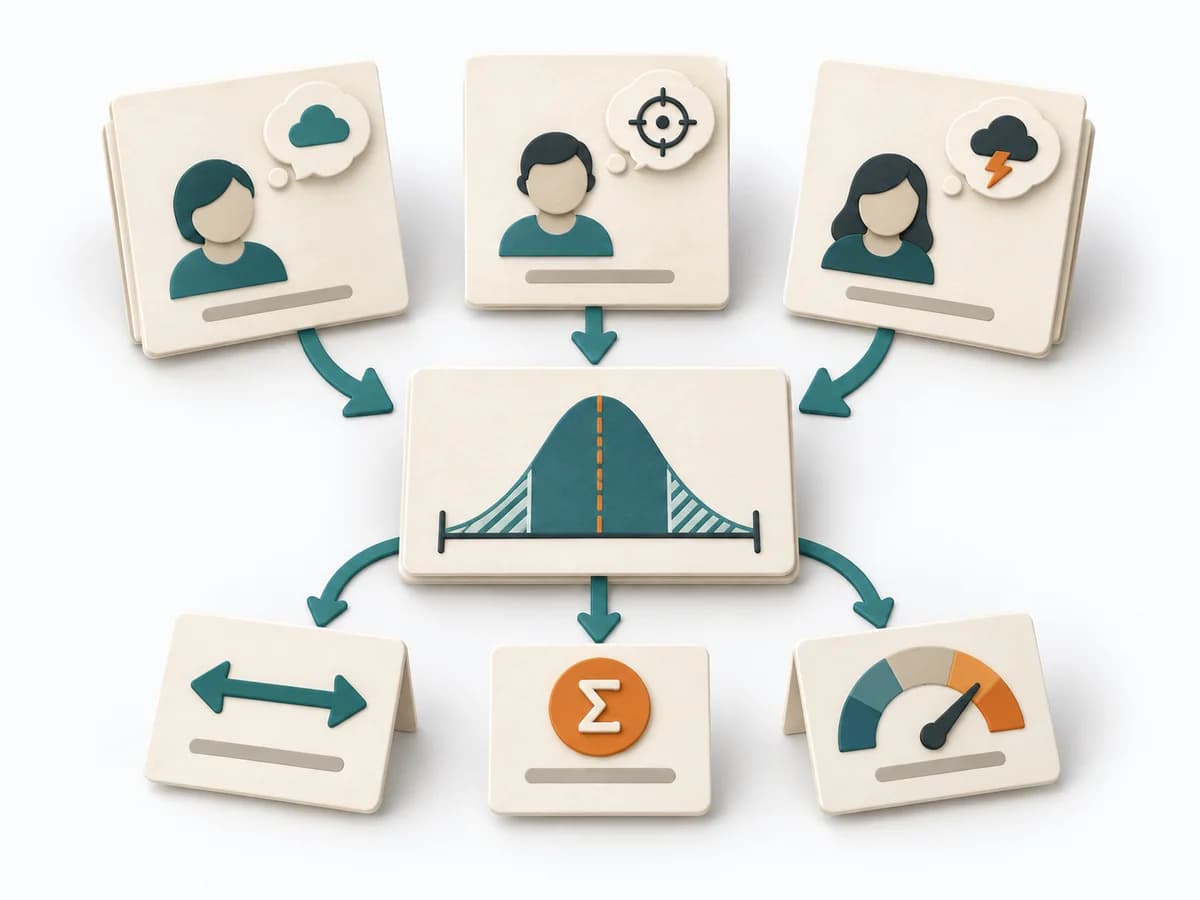 Decision Making Three-Point Estimation |  Innovation Lean Startup |  Systems Thinking Leverage Points | 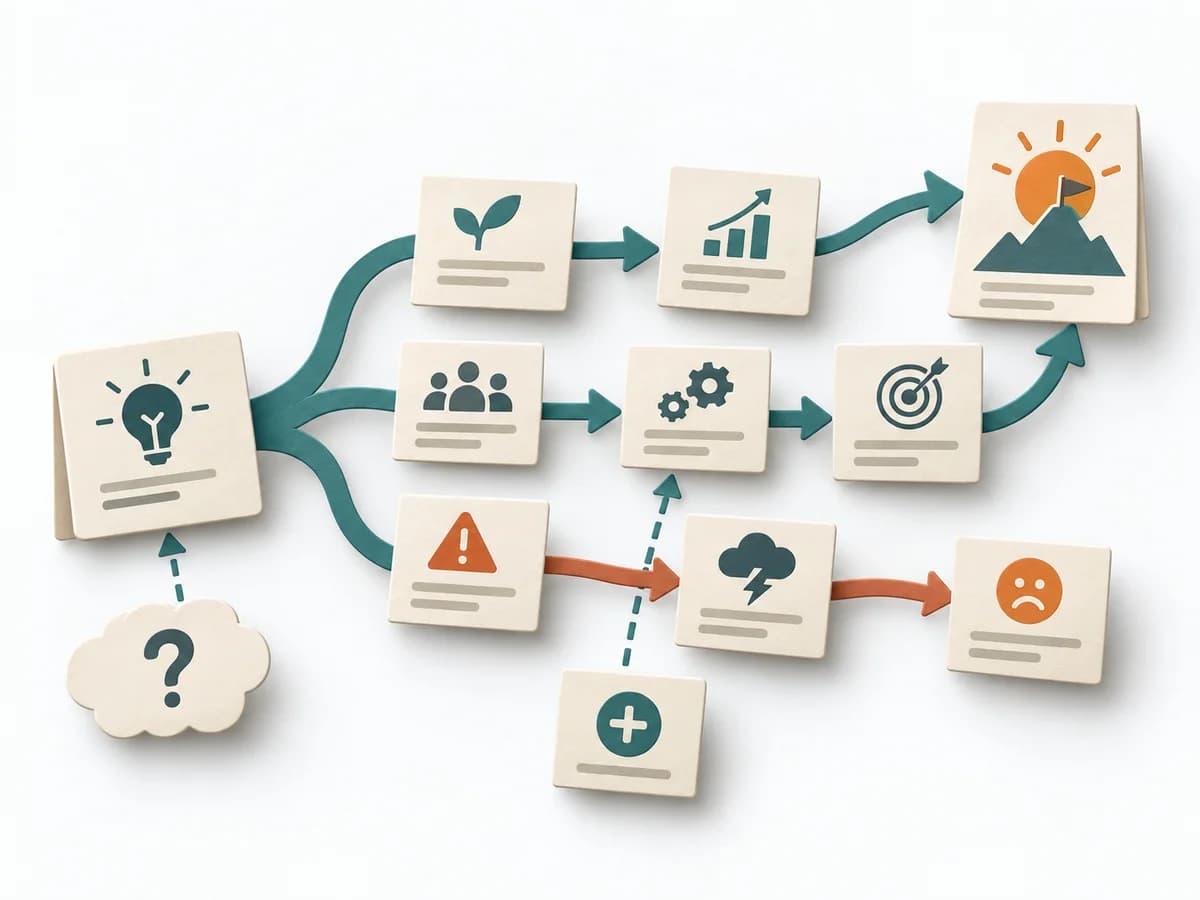 Systems Thinking Future Reality Tree |
|---|---|---|---|---|
Purposedifferent | A single estimate for effort, time, or risk often looks too smooth for the real uncertainty behind it. It separates options, evaluation criteria, and open risks. The result is captured as a Three-Point Estimate, Risk Range, and Assumption Notes. | For uncertain business assumptions, the method forces the idea into contact with real market reactions early. It separates wishful picture, assumption, and observable behavior, so that learning becomes faster than planning. This translates uncertainty into measurable insight. | Leverage Points show exactly where interventions in a system produce a disproportionate effect. It draws relationships, patterns, and feedback loops. The result is captured as a leverage map and action strategy. | A Future Reality Tree shows how desired actions are meant to lead to a better system state. The method checks whether a path of change holds together logically before time flows into implementation. |
Complexitydifferent | Medium | Medium | High | High |
Timedifferent | 10-30 min je Item | Wochen bis Monate je Lernzyklus | Half day | 2-4 h |
Participantsdifferent | 1-8 | 2-8 | 3-12 | 3-8 |
Formatdifferent | Workshop + async | Workshop + async | Workshop | Workshop |
Outputdifferent | Three-Point Estimate, Risk Range, Assumption Notes | Hypothesis list, MVPs, Learning reports, Pivot or persevere decision | Leverage Map, Action Strategy | Future Reality Tree, Negative Branches, Assumption List, Improved Injections |
Tagsno overlap | EstimationUncertaintyForecasting | LeanStartupValidationMVP | Systems thinkingChangeStrategy | Theory of ConstraintsSystems thinkingChange |