View methods side by side.
Choose up to four methods. Add them using the search and share the comparison by copying its link.
| Criterion | 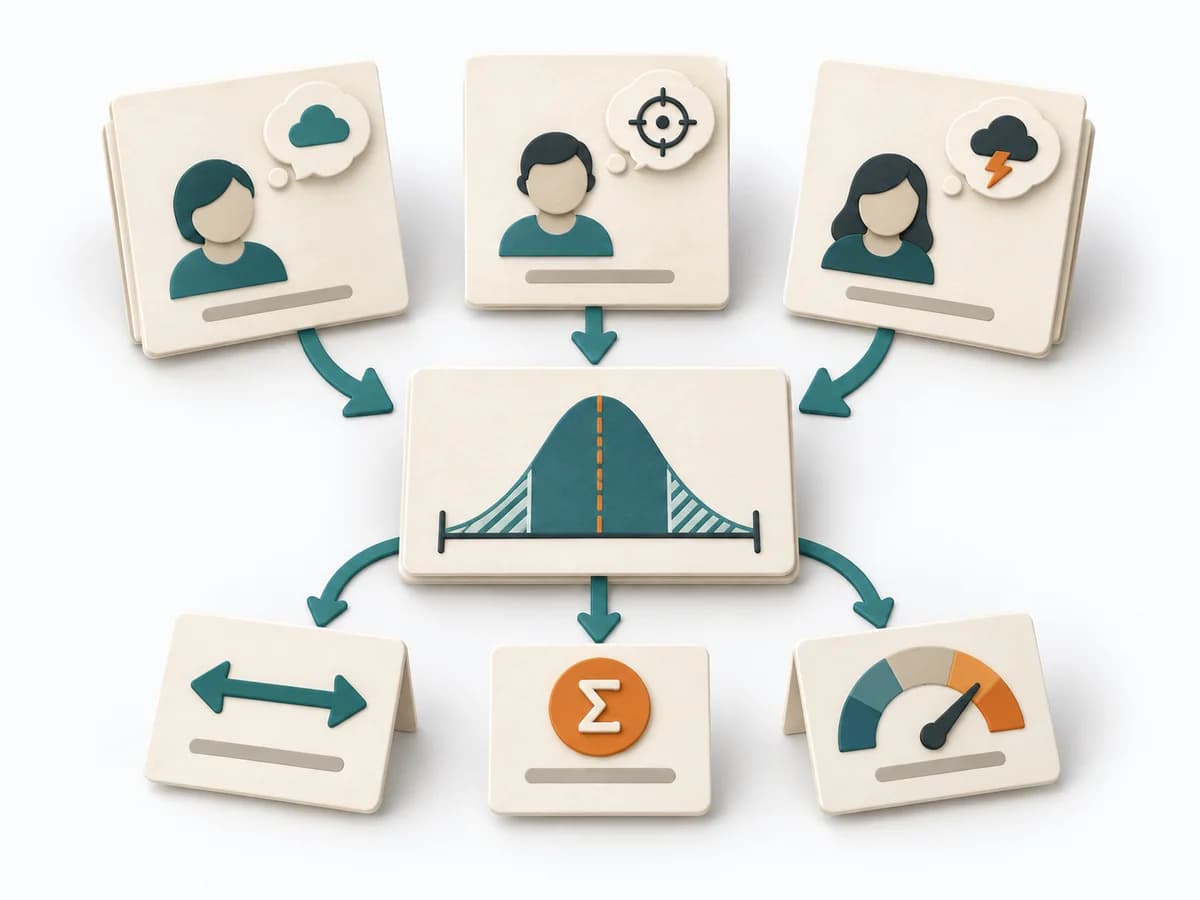 Decision Making Three-Point Estimation | 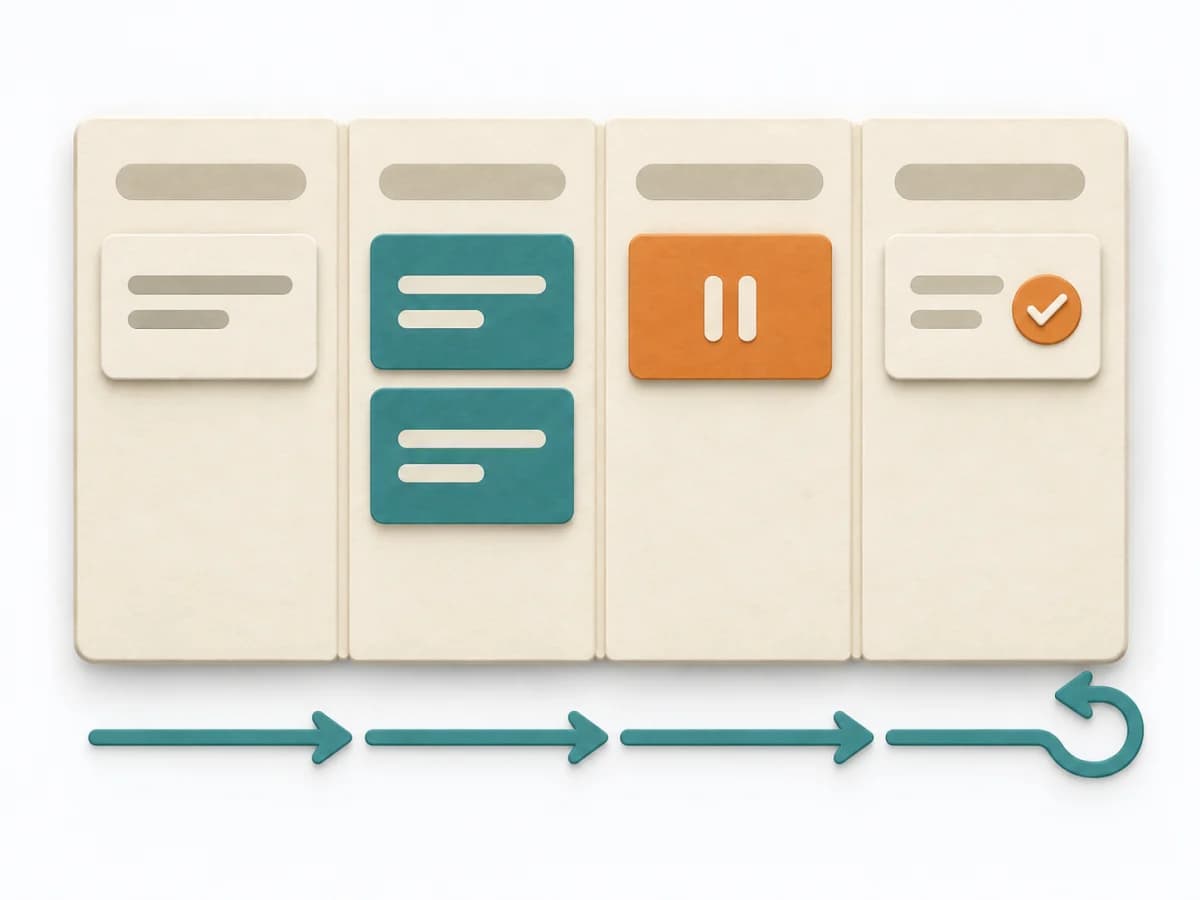 Engineering Kanban |  Growth Hooked Model | 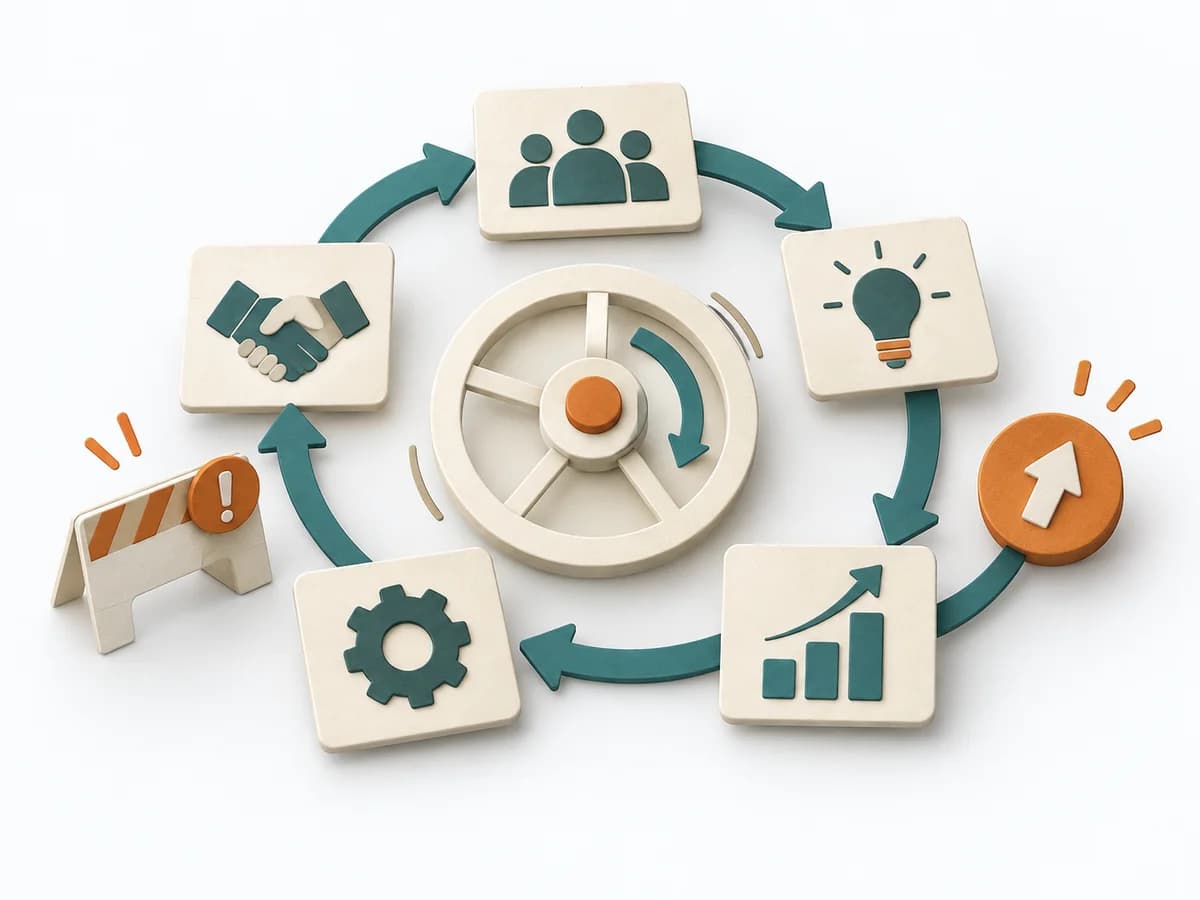 Growth Flywheel |
|---|---|---|---|---|
Purposedifferent | A single estimate for effort, time, or risk often looks too smooth for the real uncertainty behind it. It separates options, evaluation criteria, and open risks. The result is captured as a Three-Point Estimate, Risk Range, and Assumption Notes. | When work sits in too many parallel streams, throughput suffers and no one sees the bottlenecks. Kanban makes the flow of work visible and limits overload so a system becomes calmer and more predictable. | The Hooked Model helps clarify engagement loops, user behavior, and experiments. It makes repeat behavior measurable and captures the result as a hooked loop, trigger map, and reward design. | Growth often breaks down where a reinforcing mechanism builds up too much friction. A Flywheel shows the cycle of value, repetition, and reinforcement meant to sustain growth. |
Complexitysame | Medium | Medium | Medium | Medium |
Timedifferent | 10-30 min je Item | Ongoing | Multiple workshops over several weeks | 60-120 min |
Participantsdifferent | 1-8 | 2-12 | 2-8 | 3-8 |
Formatdifferent | Workshop + async | Workshop + async | Workshop + async | Workshop |
Outputdifferent | Three-Point Estimate, Risk Range, Assumption Notes | Kanban board, WIP policies, Flow metrics | Hooked loop, Trigger map, Reward design, Ethics check | Flywheel Map, Friction Points, Growth Levers, Experiment Backlog |
Tagsno overlap | EstimationUncertaintyForecasting | FlowVisual managementDelivery | GrowthBehaviorRetention | GrowthRetentionConversion |