View methods side by side.
Choose up to four methods. Add them using the search and share the comparison by copying its link.
| Criterion | 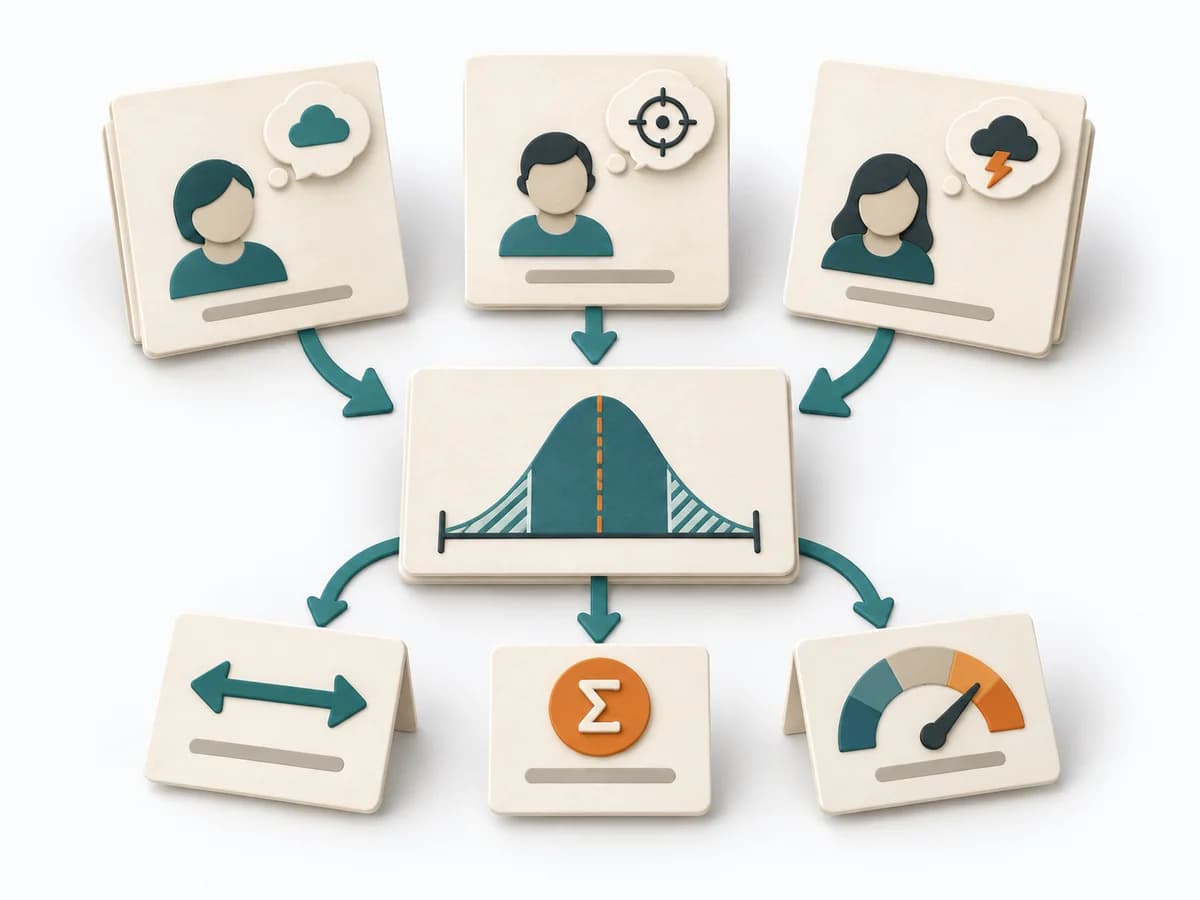 Decision Making Three-Point Estimation |  Facilitation Dot Voting |  Facilitation Stakeholder Mapping | 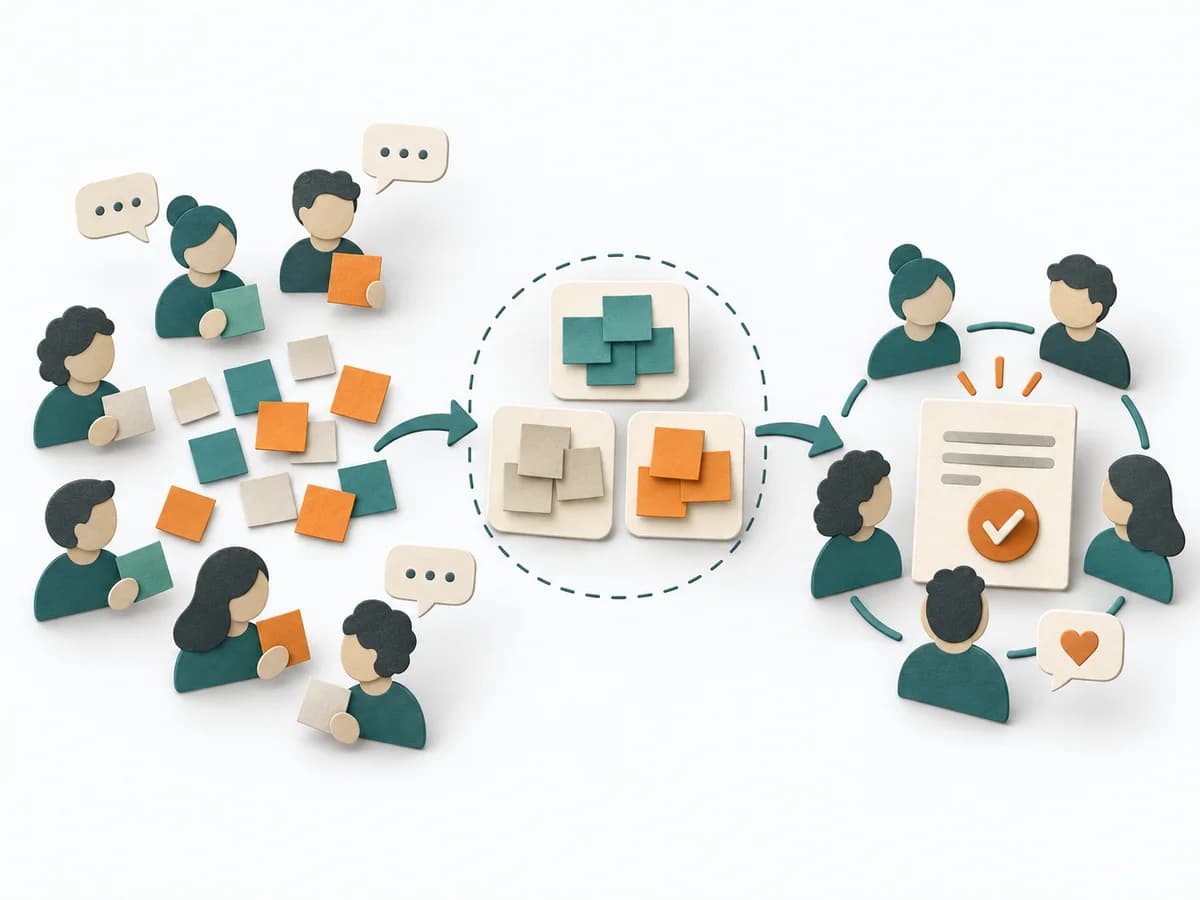 Facilitation Consensus Workshop |
|---|---|---|---|---|
Purposedifferent | A single estimate for effort, time, or risk often looks too smooth for the real uncertainty behind it. It separates options, evaluation criteria, and open risks. The result is captured as a Three-Point Estimate, Risk Range, and Assumption Notes. | When a workshop has produced too many options and the group needs to condense quickly, dot voting makes preferences visible in a short time. It bundles individual votes into a solid signal for the next selection. | When an initiative depends on many people, interests, and power dynamics, Stakeholder Mapping systematically orders the environment. It shows who influences, who is affected, and where relationship management or safeguarding matters first. | When a group needs a solid decision without outvoting individual factions, a Consensus Workshop creates a negotiable common ground. It makes agreement, reservations, and open tensions discussable at the same time. |
Complexitydifferent | Medium | Low | Low | Medium |
Timedifferent | 10-30 min je Item | 5-15 min | 60–90 min | 1-3 h |
Participantsdifferent | 1-8 | 3-20 | 2-8 | 5-30 |
Formatdifferent | Workshop + async | Workshop | Workshop + async | Workshop |
Outputdifferent | Three-Point Estimate, Risk Range, Assumption Notes | Ranked list, Consensus signal, Shortlist | Stakeholder Map, Engagement Plan, Risk Notes | Consensus Clusters, Theme Titles, Priority Areas |
Tagsno overlap | EstimationUncertaintyForecasting | FacilitationVotingConsensusPrioritization | StakeholdersAlignmentFacilitationChange | FacilitationConsensusWorkshopAlignment |