View methods side by side.
Choose up to four methods. Add them using the search and share the comparison by copying its link.
| Criterion | 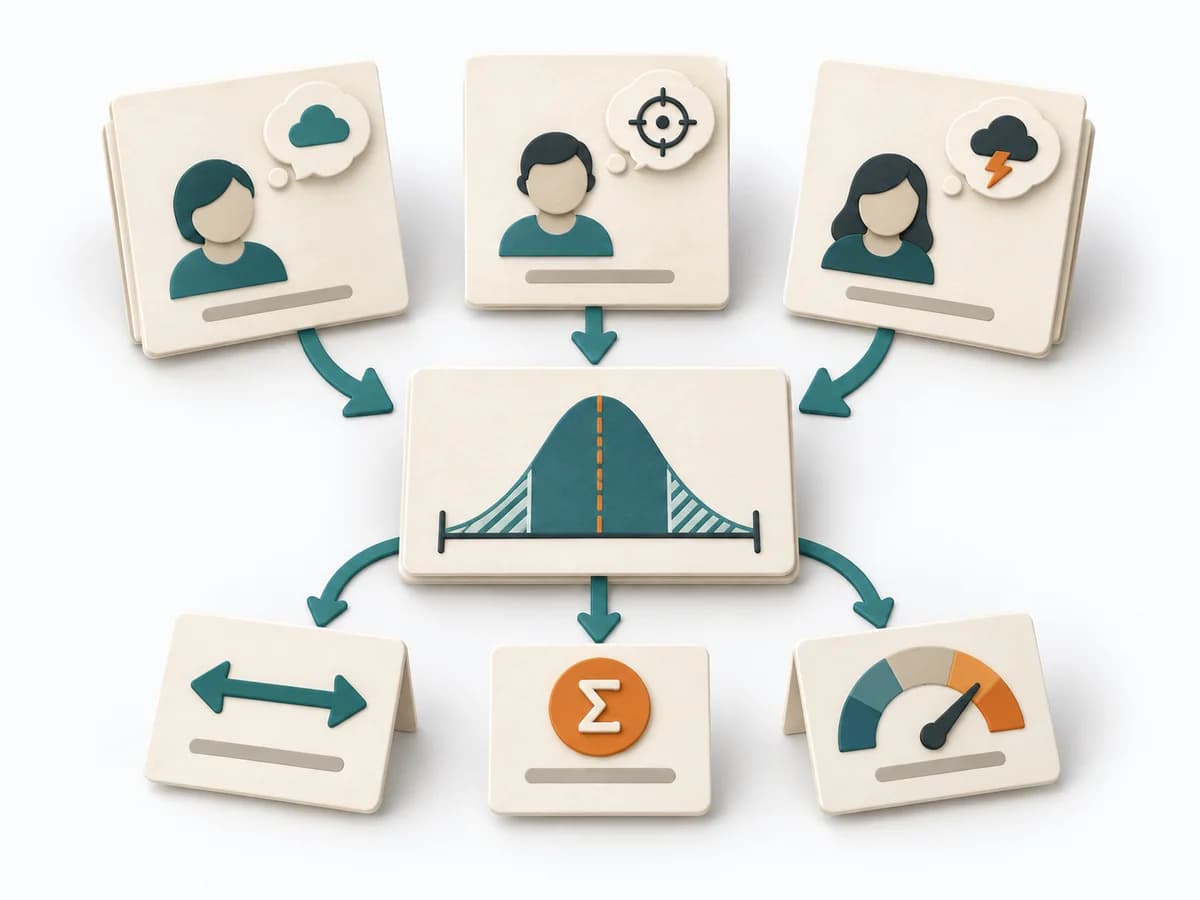 Decision Making Three-Point Estimation | 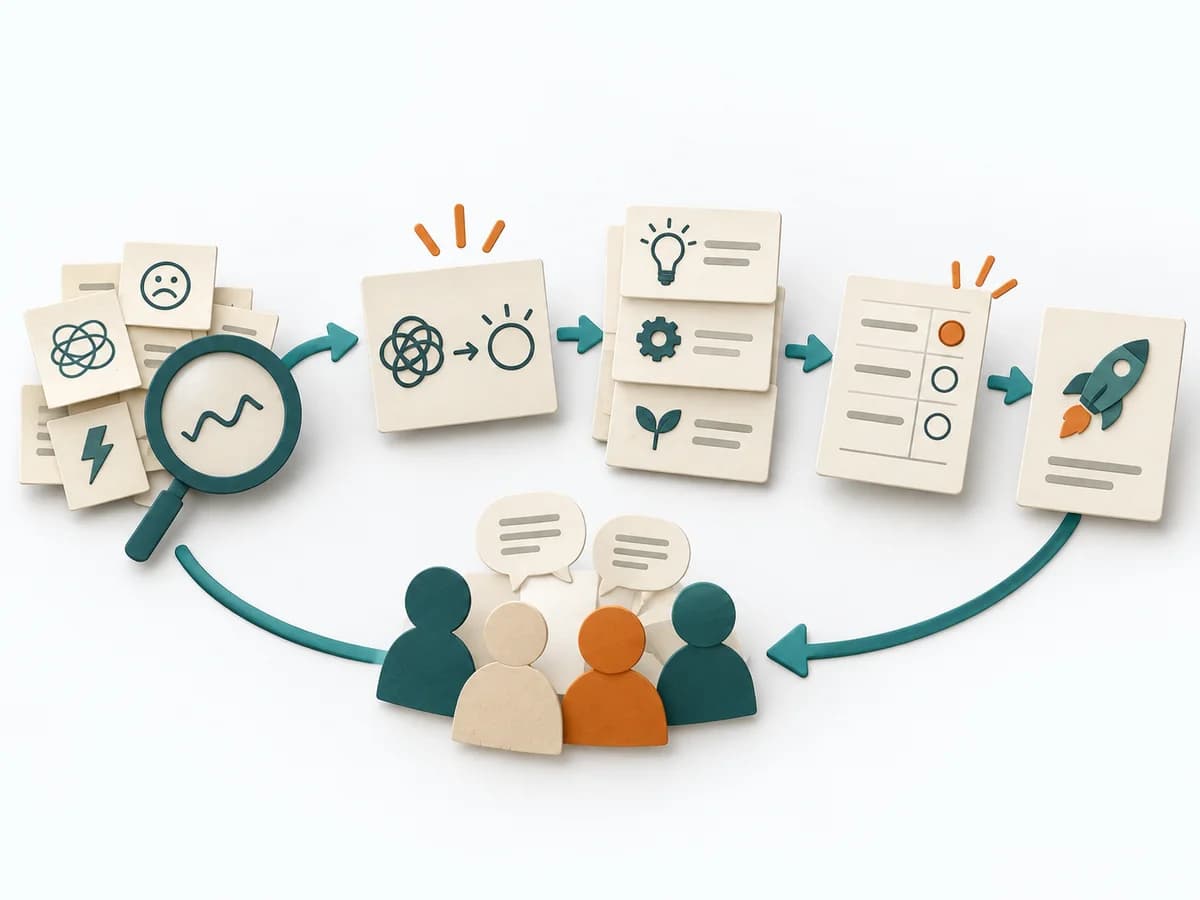 Facilitation Decision Jam |  Facilitation Stakeholder Mapping |  Facilitation Alignment Mapping |
|---|---|---|---|---|
Purposedifferent | A single estimate for effort, time, or risk often looks too smooth for the real uncertainty behind it. It separates options, evaluation criteria, and open risks. The result is captured as a Three-Point Estimate, Risk Range, and Assumption Notes. | When a decision is stuck, Decision Jam loosens the knot through structured separation of problem, idea, and selection. The format creates movement without jumping prematurely at the first seemingly elegant answer. | When an initiative depends on many people, interests, and power dynamics, Stakeholder Mapping systematically orders the environment. It shows who influences, who is affected, and where relationship management or safeguarding matters first. | When several people work toward one goal but hold different mental maps, Alignment Mapping makes the discrepancies visible. It arranges goals, assumptions, and priorities so shared direction becomes verifiable. |
Complexitydifferent | Medium | Low | Low | Medium |
Timedifferent | 10-30 min je Item | 60-90 min | 60–90 min | 1-2 h |
Participantsdifferent | 1-8 | 4-10 | 2-8 | 4-12 |
Formatdifferent | Workshop + async | Workshop | Workshop + async | Workshop |
Outputdifferent | Three-Point Estimate, Risk Range, Assumption Notes | Problem Cluster, Prioritized Challenge, Experiment | Stakeholder Map, Engagement Plan, Risk Notes | Alignment Map, Open Issues, Decision Questions |
Tagsno overlap | EstimationUncertaintyForecasting | FacilitationDecisionProblem solvingWorkshop | StakeholdersAlignmentFacilitationChange | AlignmentStakeholdersStrategyFacilitation |