View methods side by side.
Choose up to four methods. Add them using the search and share the comparison by copying its link.
| Criterion | 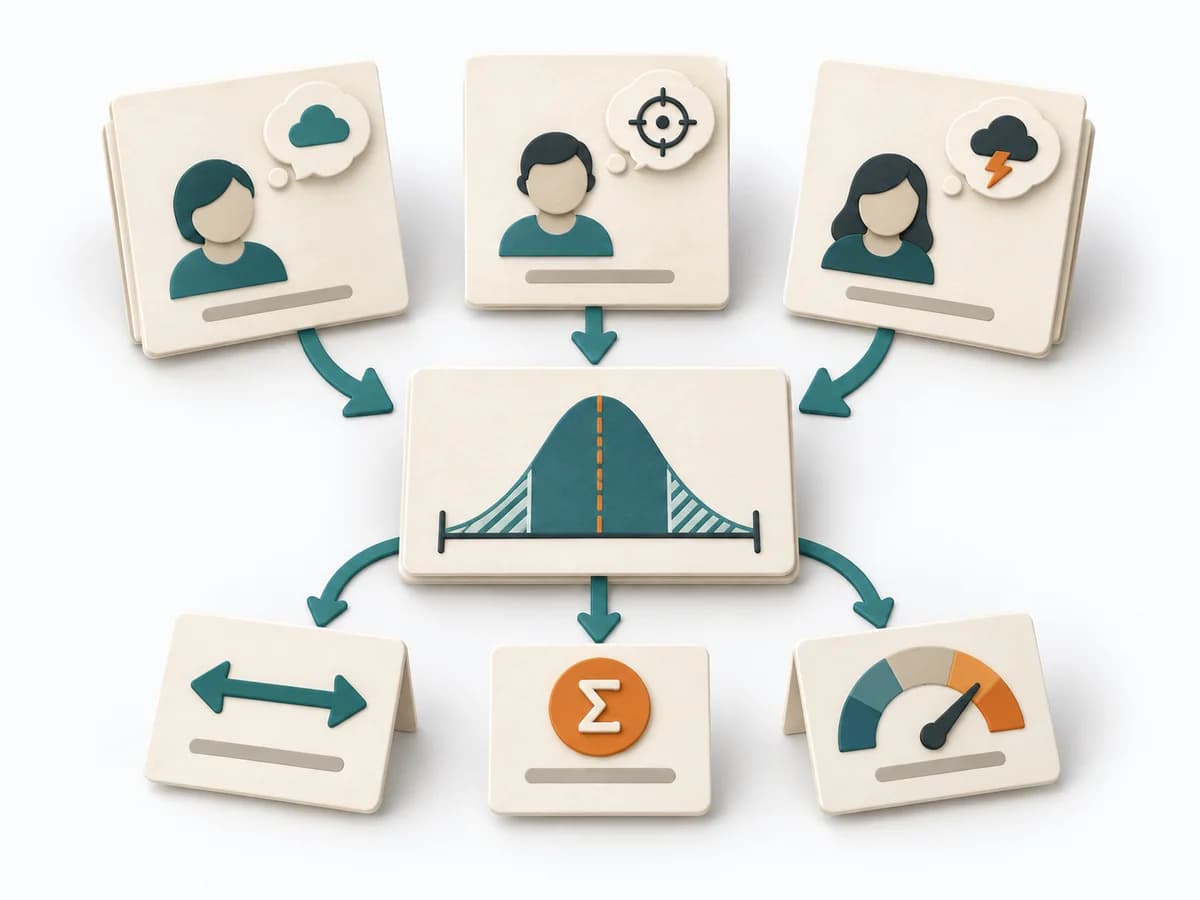 Decision Making Three-Point Estimation | 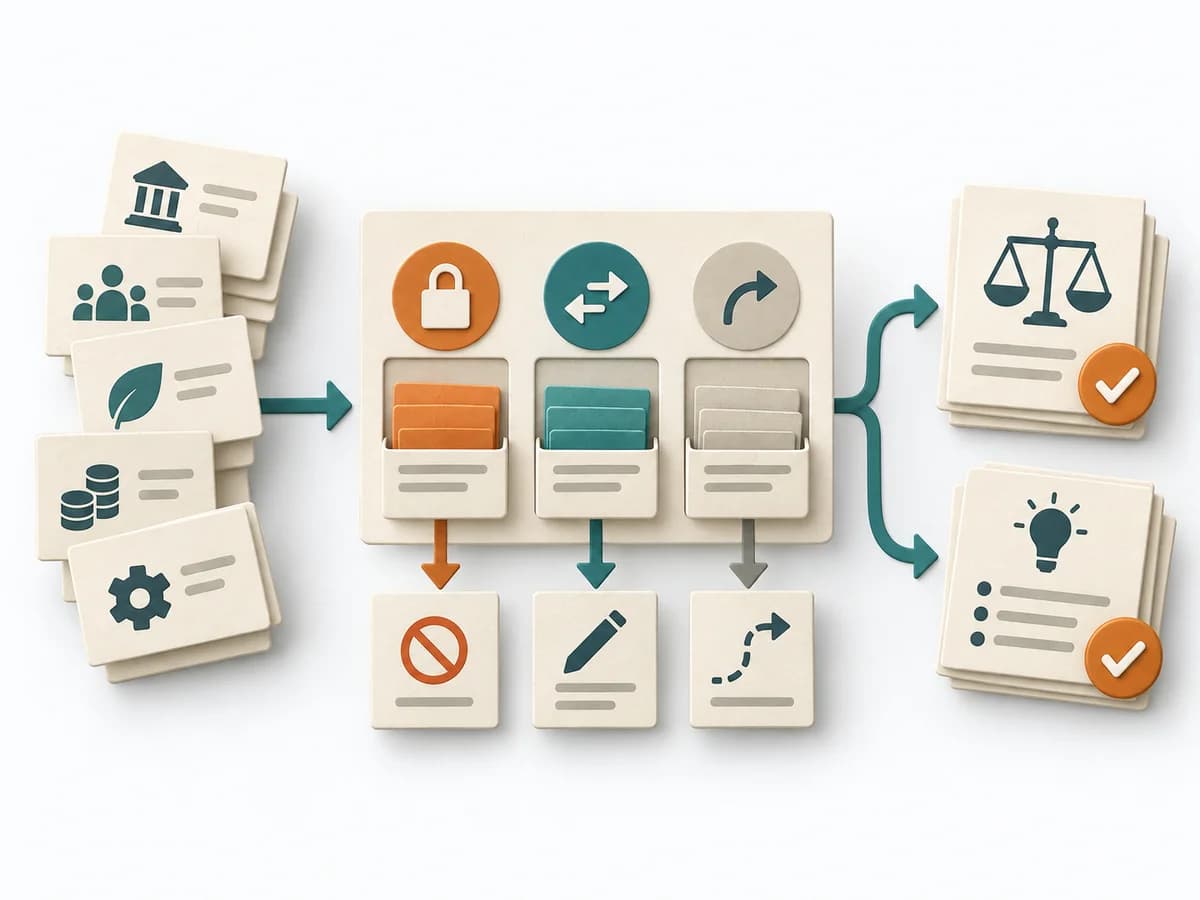 Decision Making Constraint Analysis |  Product Strategy DIBB |  Business Strategy Scenario Planning |
|---|---|---|---|---|
Purposedifferent | A single estimate for effort, time, or risk often looks too smooth for the real uncertainty behind it. It separates options, evaluation criteria, and open risks. The result is captured as a Three-Point Estimate, Risk Range, and Assumption Notes. | When an initiative stalls, the limit often lies not in the idea but in hard or soft boundary conditions. Constraint Analysis separates these limits and shows which of them can actually be shaped. | DIBB helps clarify target groups, value, goals, and priorities by making the logic behind a decision explicit. It captures results as a DIBB document, belief list, bet list, and learning report. | Scenario Planning opens the view to several plausible futures instead of a single forecast. The method protects strategies from depending on too narrow an expected path. |
Complexitydifferent | Medium | Low | Low | High |
Timedifferent | 10-30 min je Item | 30-90 min | 1-2 h | 0.5-2 Tage |
Participantsdifferent | 1-8 | 2-8 | 2-8 | 4-12 |
Formatdifferent | Workshop + async | Workshop + async | Workshop + async | Workshop |
Outputdifferent | Three-Point Estimate, Risk Range, Assumption Notes | Constraint List, Hard/Soft Classification, Option Impact Notes, Decision Boundaries | DIBB document, Belief list, Bet list, Learning report | Scenario Set, Strategic Implications, Robust Options |
Tagsno overlap | EstimationUncertaintyForecasting | ConstraintsDecisionPlanningOptions | StrategyDecisionAssumptionsHypothesis | StrategyUncertaintyPlanning |