View methods side by side.
Choose up to four methods. Add them using the search and share the comparison by copying its link.
| Criterion | 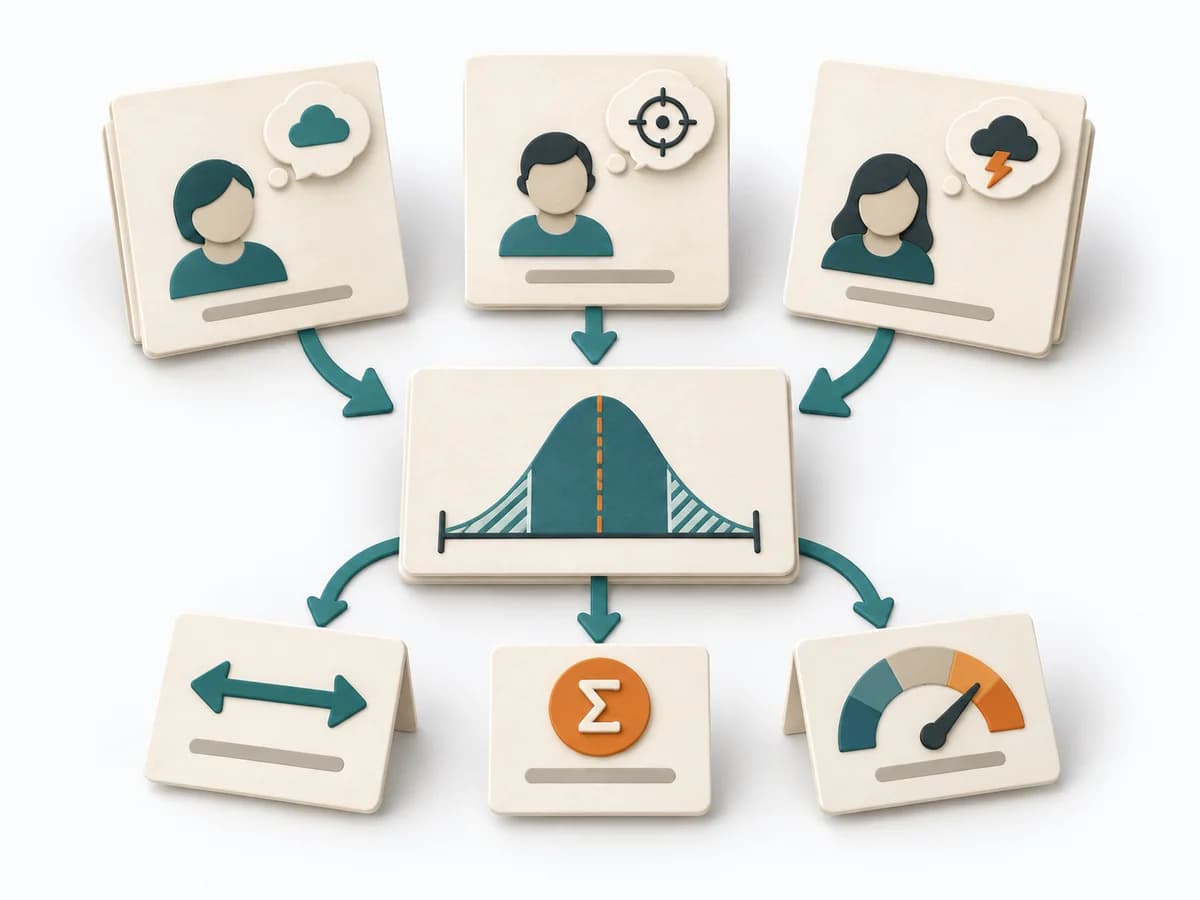 Decision Making Three-Point Estimation | 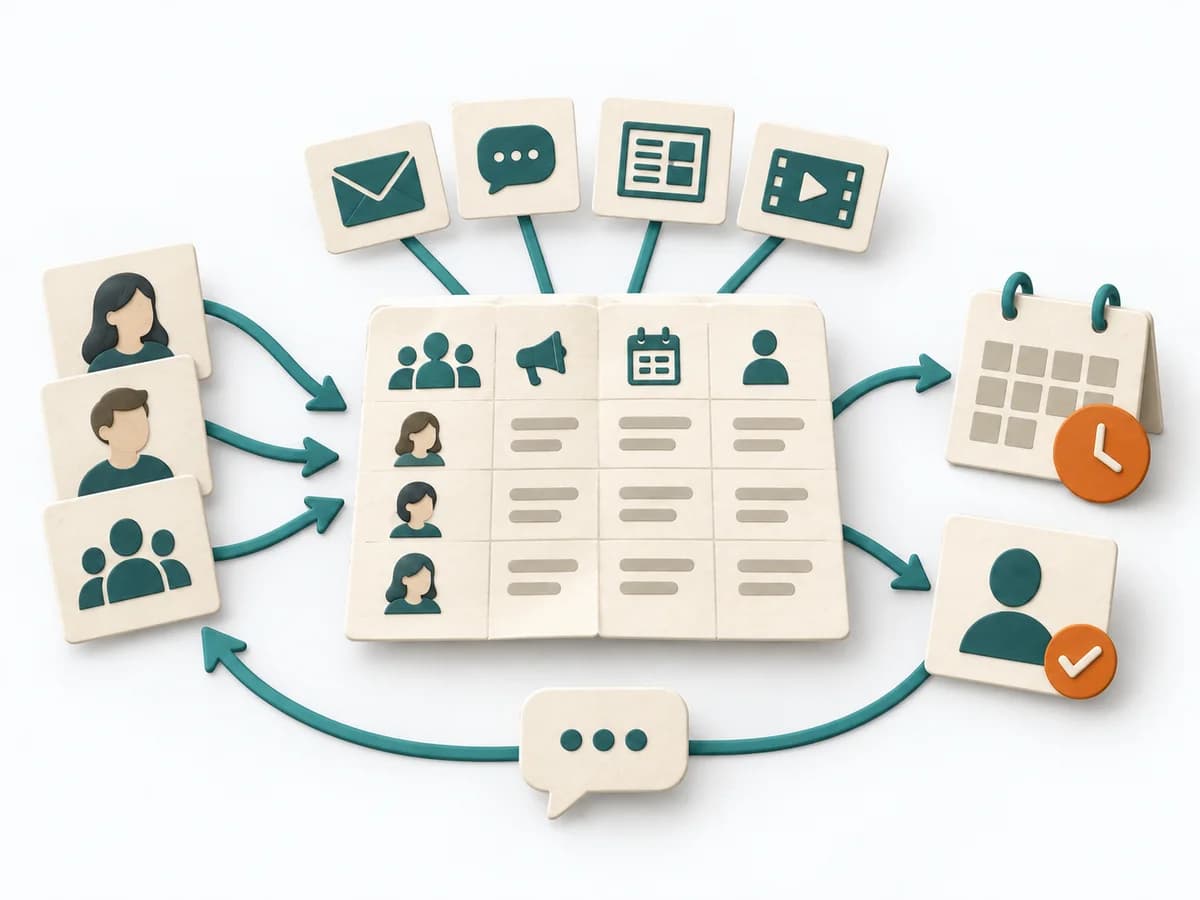 Delivery Communication Plan | 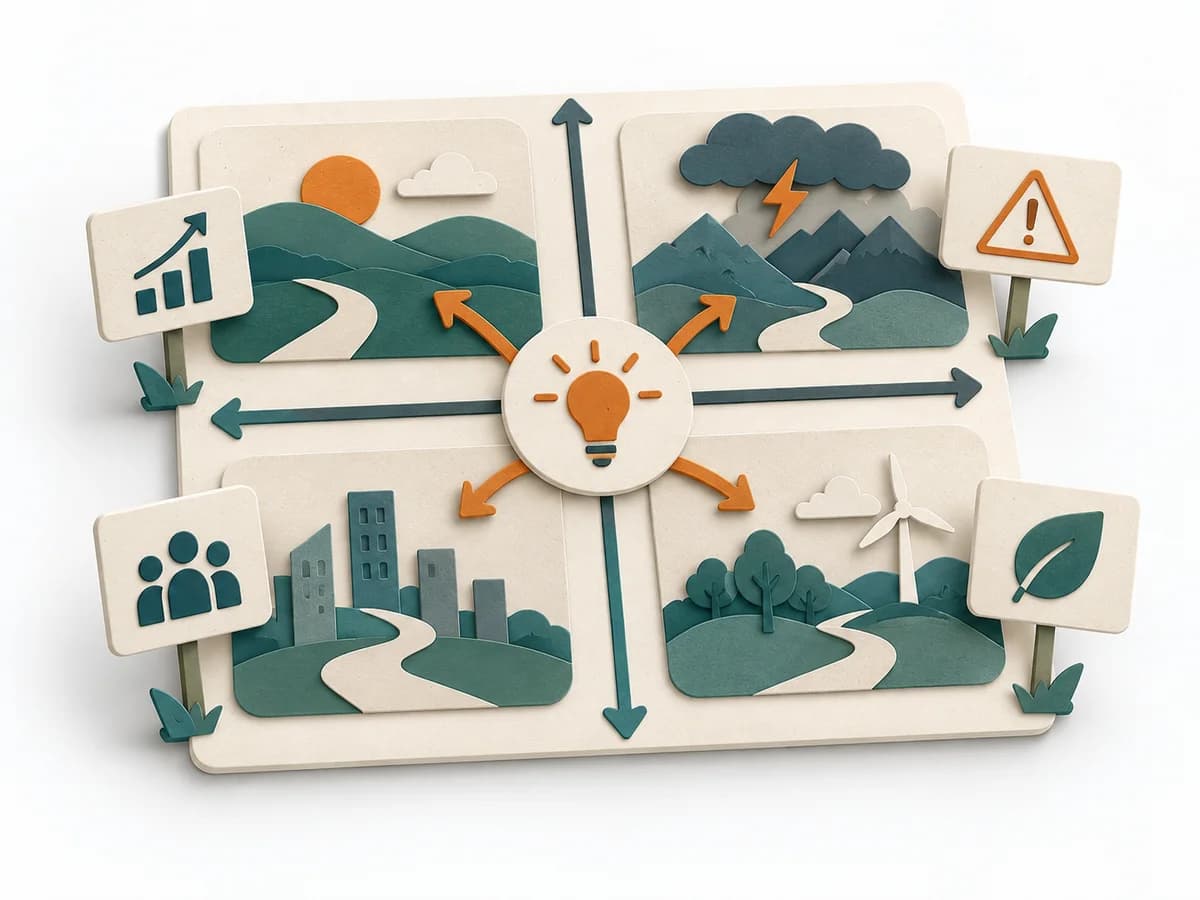 Business Strategy Scenario Planning |  Facilitation Alignment Mapping |
|---|---|---|---|---|
Purposedifferent | A single estimate for effort, time, or risk often looks too smooth for the real uncertainty behind it. It separates options, evaluation criteria, and open risks. The result is captured as a Three-Point Estimate, Risk Range, and Assumption Notes. | When many people need to be informed in parallel and messages would otherwise arrive unevenly or too late, a Communication Plan orders communication reliably. Channels, audiences, and cadences interlock so important information doesn't get lost. | Scenario Planning opens the view to several plausible futures instead of a single forecast. The method protects strategies from depending on too narrow an expected path. | When several people work toward one goal but hold different mental maps, Alignment Mapping makes the discrepancies visible. It arranges goals, assumptions, and priorities so shared direction becomes verifiable. |
Complexitydifferent | Medium | Low | High | Medium |
Timedifferent | 10-30 min je Item | 45-90 min | 0.5-2 Tage | 1-2 h |
Participantsdifferent | 1-8 | 2-6 | 4-12 | 4-12 |
Formatdifferent | Workshop + async | Workshop + async | Workshop | Workshop |
Outputdifferent | Three-Point Estimate, Risk Range, Assumption Notes | Communication Plan, Channel Matrix, Message Cadence | Scenario Set, Strategic Implications, Robust Options | Alignment Map, Open Issues, Decision Questions |
Tagsno overlap | EstimationUncertaintyForecasting | CommunicationStakeholdersDeliveryPlanning | StrategyUncertaintyPlanning | AlignmentStakeholdersStrategyFacilitation |