View methods side by side.
Choose up to four methods. Add them using the search and share the comparison by copying its link.
| Criterion | 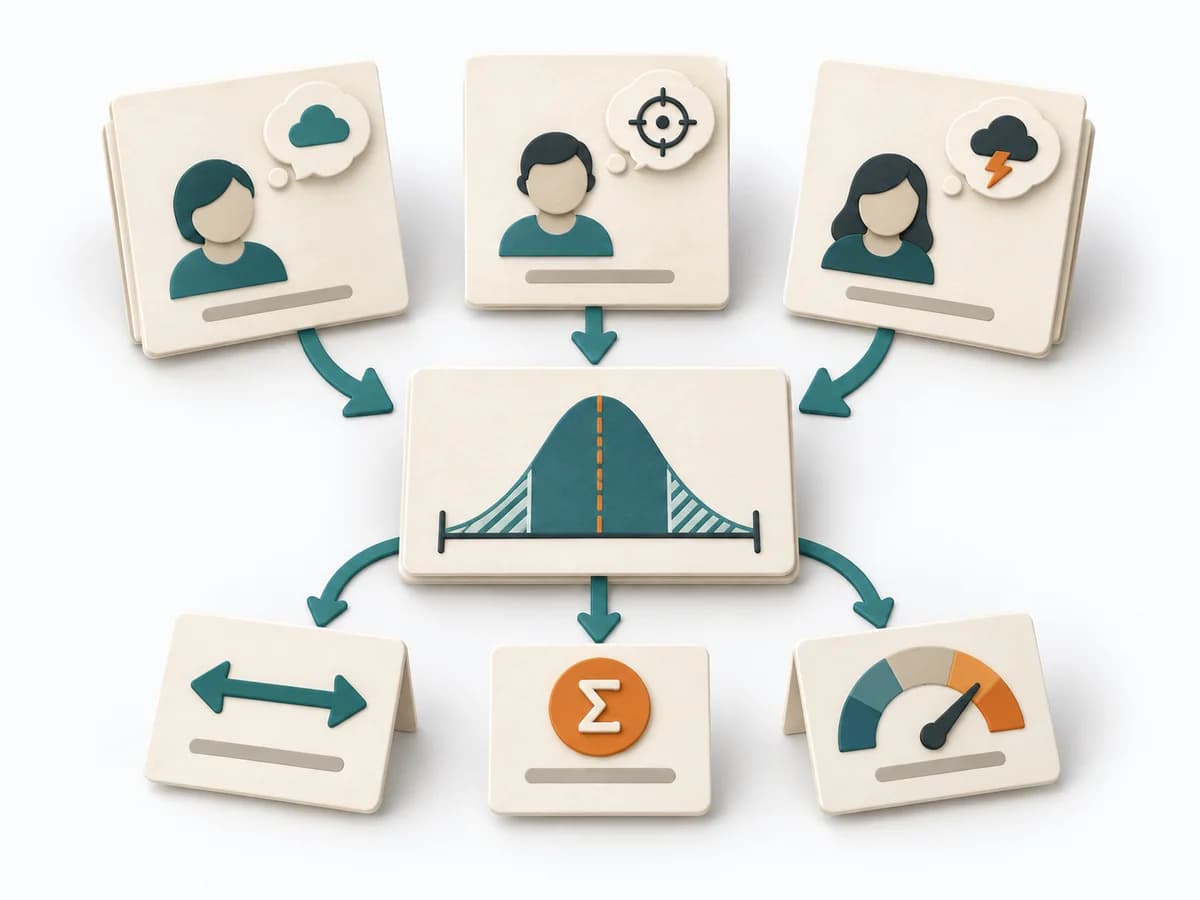 Decision Making Three-Point Estimation | 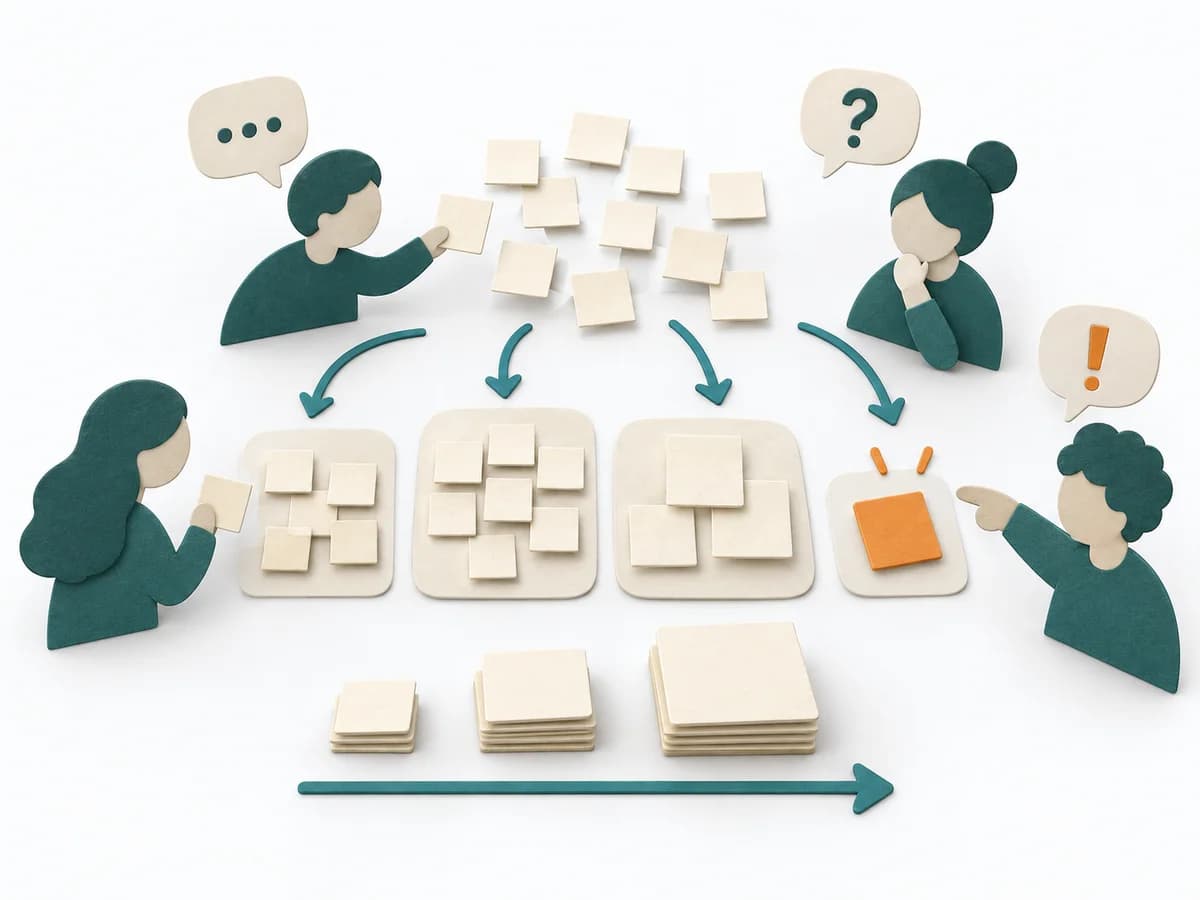 Agile Affinity Estimation |  Decision Making Assumption Surfacing | 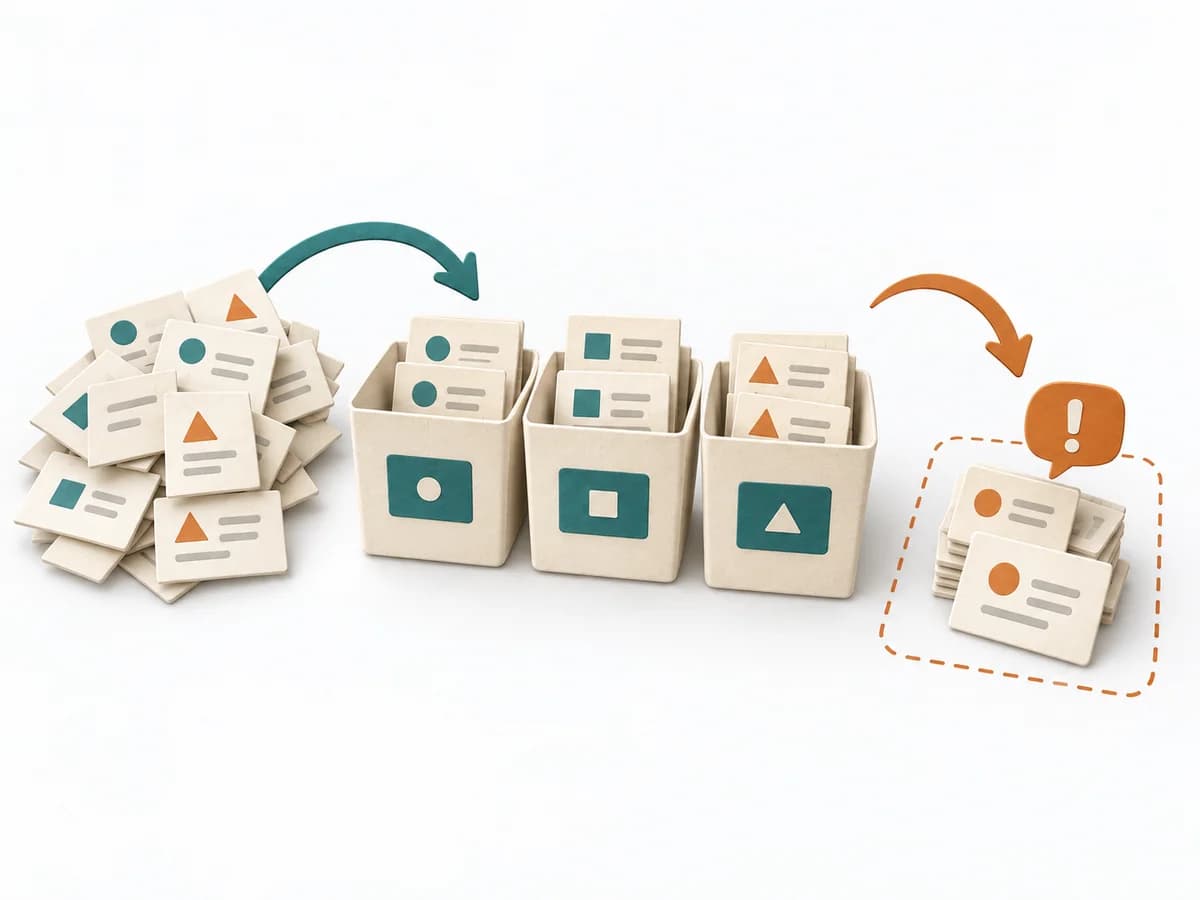 Agile Bucket System |
|---|---|---|---|---|
Purposedifferent | A single estimate for effort, time, or risk often looks too smooth for the real uncertainty behind it. It separates options, evaluation criteria, and open risks. The result is captured as a Three-Point Estimate, Risk Range, and Assumption Notes. | When many tasks need to be classified quickly, it sorts them by perceived effort and similarity. It reduces the effort of fine-grained estimation for large volumes. | Plans often contain assumptions that were never openly stated and remain dangerous precisely because of that. Assumption Surfacing makes these silent premises visible and prioritizes which of them carry the initiative or could sink it. | When a large batch of work needs a fast, rough estimate, it sorts items into predefined size buckets. It sorts work by value, risk, and delivery ability. The result is captured as a Bucketed Backlog, Relative Estimates, and Split Candidates. |
Complexitydifferent | Medium | Medium | Low | Medium |
Timedifferent | 10-30 min je Item | 30-90 min | 45-90 min | 30-90 min |
Participantsdifferent | 1-8 | 3-12 | 2-8 | 3-12 |
Formatdifferent | Workshop + async | Workshop | Workshop + async | Workshop |
Outputdifferent | Three-Point Estimate, Risk Range, Assumption Notes | Affinity Size Map, Grouped Estimates, Unclear Items | Assumption List, Critical Assumptions, Learning Plan | Bucketed Backlog, Relative Estimates, Split Candidates |
Tagsno overlap | EstimationUncertaintyForecasting | EstimationBacklogRelative sizing | AssumptionsRiskDecisionDiscovery | EstimationBacklogRelative sizing |