View methods side by side.
Choose up to four methods. Add them using the search and share the comparison by copying its link.
| Criterion | 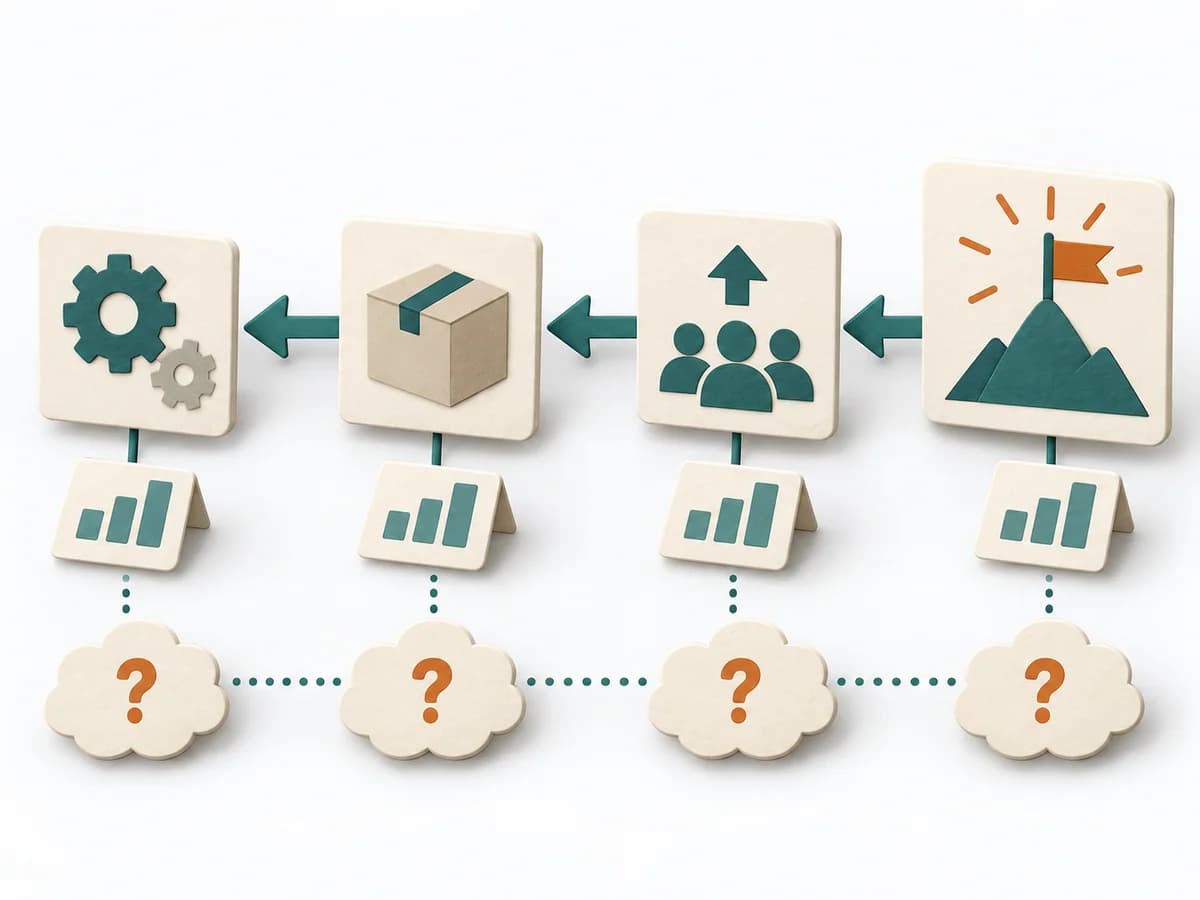 Systems Thinking Theory of Change |  Systems Thinking Leverage Points |  Decision Making Delphi Method |  Product Strategy DIBB |
|---|---|---|---|---|
Purposedifferent | Theory of Change translates a desired impact into a traceable chain of change. It makes assumptions, intermediate goals, and measurement points visible before a program is rolled out at scale. | Leverage Points show exactly where interventions in a system produce a disproportionate effect. It draws relationships, patterns, and feedback loops. The result is captured as a leverage map and action strategy. | When knowledge is distributed and direct dominance should be avoided, groups quickly fall under the sway of their opinion leaders. The Delphi Method gathers assessments iteratively and gradually brings expert judgments closer together. | DIBB helps clarify target groups, value, goals, and priorities by making the logic behind a decision explicit. It captures results as a DIBB document, belief list, bet list, and learning report. |
Complexitydifferent | High | High | High | Low |
Timedifferent | 2-6 h | Half day | 1-4 Wochen | 1-2 h |
Participantsdifferent | 4-12 | 3-12 | 6-30 Experten | 2-8 |
Formatdifferent | Workshop | Workshop | Async | Workshop + async |
Outputdifferent | Theory of Change Map, Assumptions, Outcome Measures | Leverage Map, Action Strategy | Expert Forecast, Consensus Range, Assumption Notes | DIBB document, Belief list, Bet list, Learning report |
Tags1 shared | ImpactOutcomesSystems thinkingStrategy | Systems thinkingChangeStrategy | ForecastingExpertsDecisionStrategy | StrategyDecisionAssumptionsHypothesis |