View methods side by side.
Choose up to four methods. Add them using the search and share the comparison by copying its link.
| Criterion | 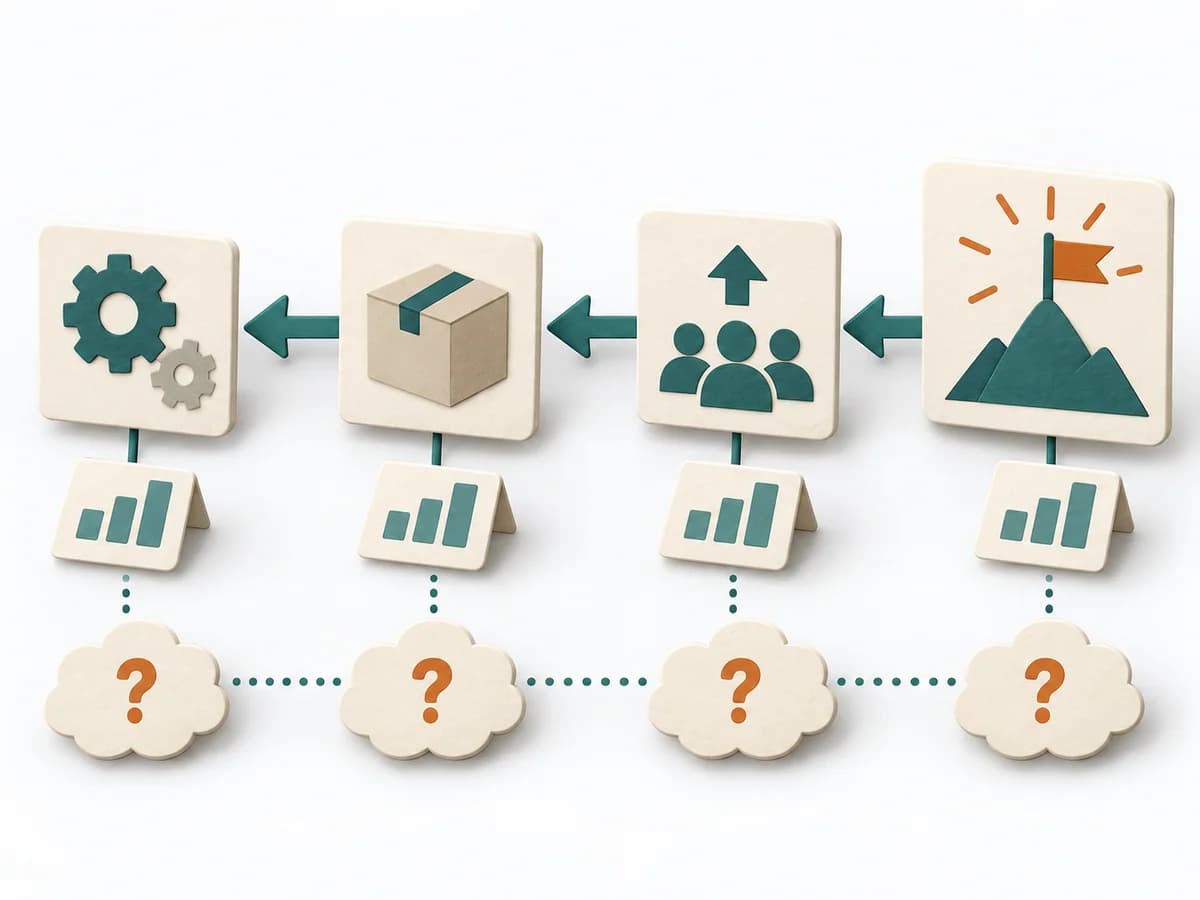 Systems Thinking Theory of Change | 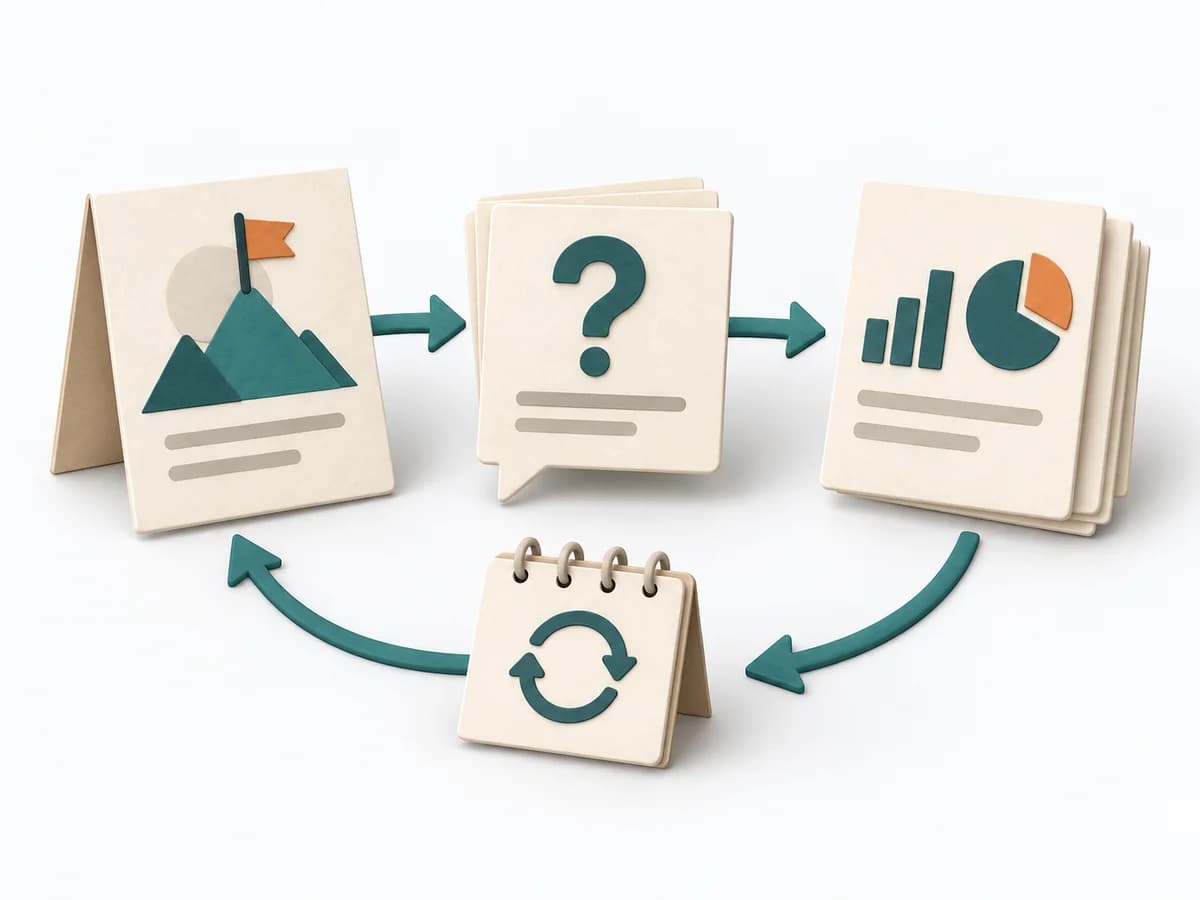 Engineering Goal Question Metric |  Facilitation Alignment Mapping | 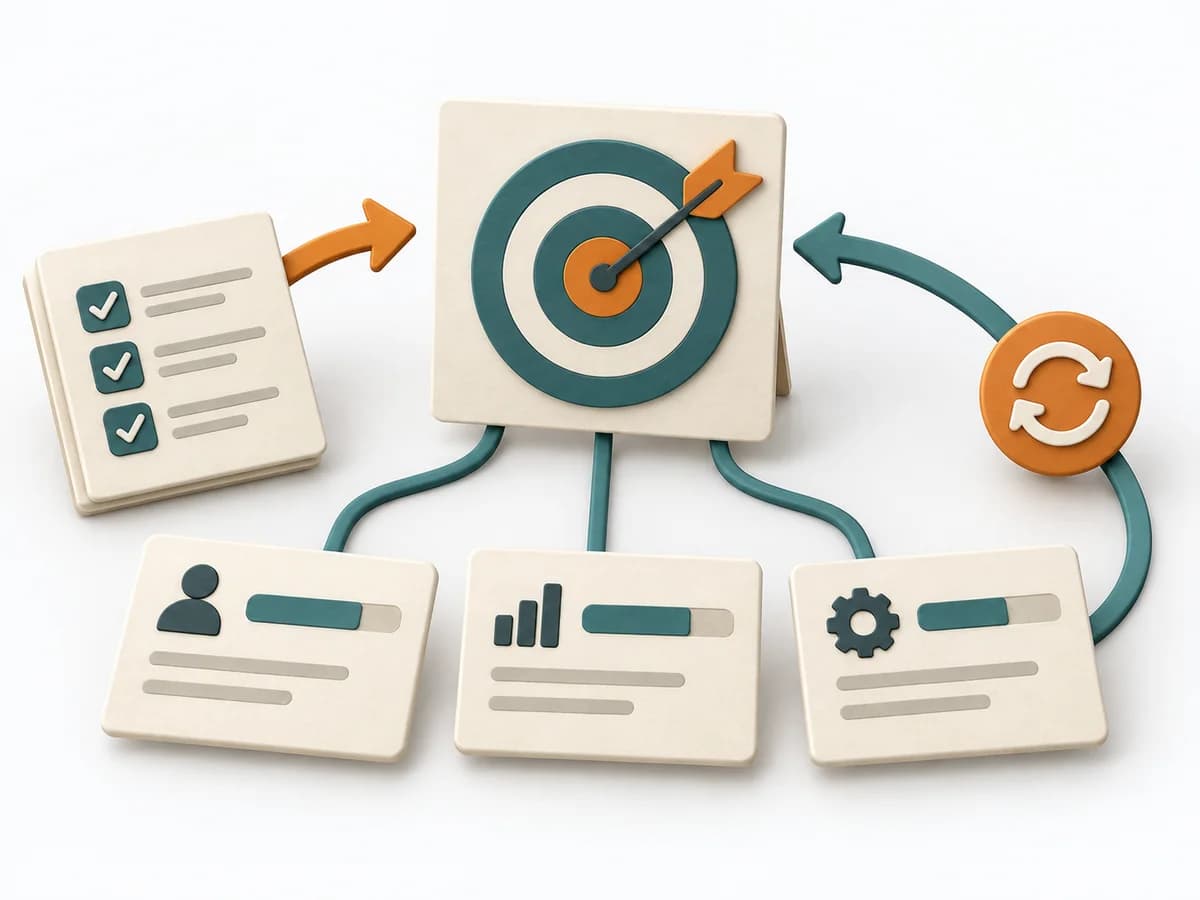 Product Strategy OKRs |
|---|---|---|---|---|
Purposedifferent | Theory of Change translates a desired impact into a traceable chain of change. It makes assumptions, intermediate goals, and measurement points visible before a program is rolled out at scale. | Helps clarify technical problems, hypotheses, and next steps in concrete terms. It breaks a technical problem into testable parts. The result is captured as a GQM table and metric briefs. | When several people work toward one goal but hold different mental maps, Alignment Mapping makes the discrepancies visible. It arranges goals, assumptions, and priorities so shared direction becomes verifiable. | When strategic direction needs to become measurable, it connects ambition with checkable results. It makes goals connectable to focus and review. |
Complexitydifferent | High | Medium | Medium | Medium |
Timedifferent | 2-6 h | 90-180 min | 1-2 h | 1-2 h Setup |
Participantsdifferent | 4-12 | 3-6 | 4-12 | 2-20 |
Formatdifferent | Workshop | Workshop | Workshop | Workshop + async |
Outputdifferent | Theory of Change Map, Assumptions, Outcome Measures | GQM Table, Metric Profiles | Alignment Map, Open Issues, Decision Questions | OKR set, Measurement plan, Review cadence |
Tagsno overlap | ImpactOutcomesSystems thinkingStrategy | MetricsMeasurementEngineeringAlignment | AlignmentStakeholdersStrategyFacilitation | GoalsAlignmentOutcomesMeasurement |