View methods side by side.
Choose up to four methods. Add them using the search and share the comparison by copying its link.
| Criterion | 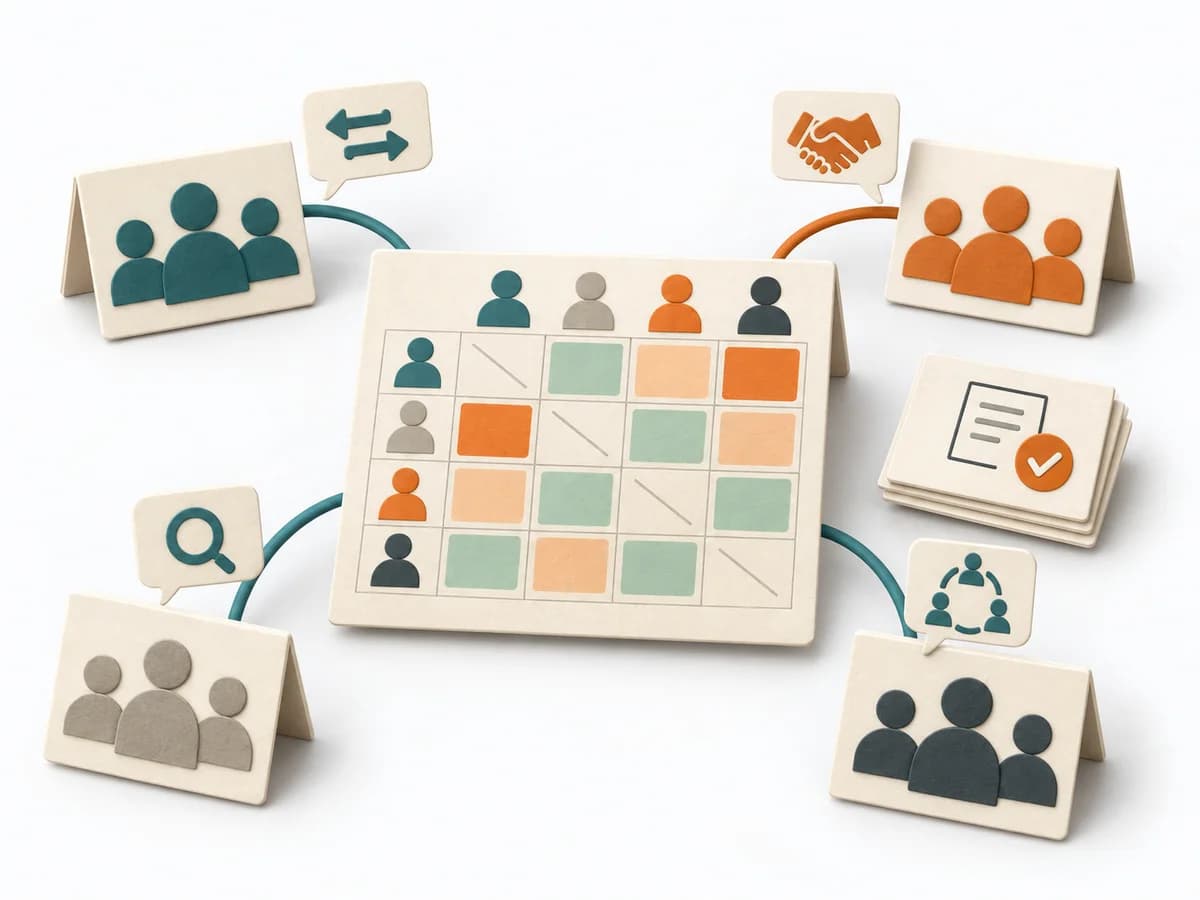 Team Design Team Topologies Interaction Modes |  Facilitation Team Charter | 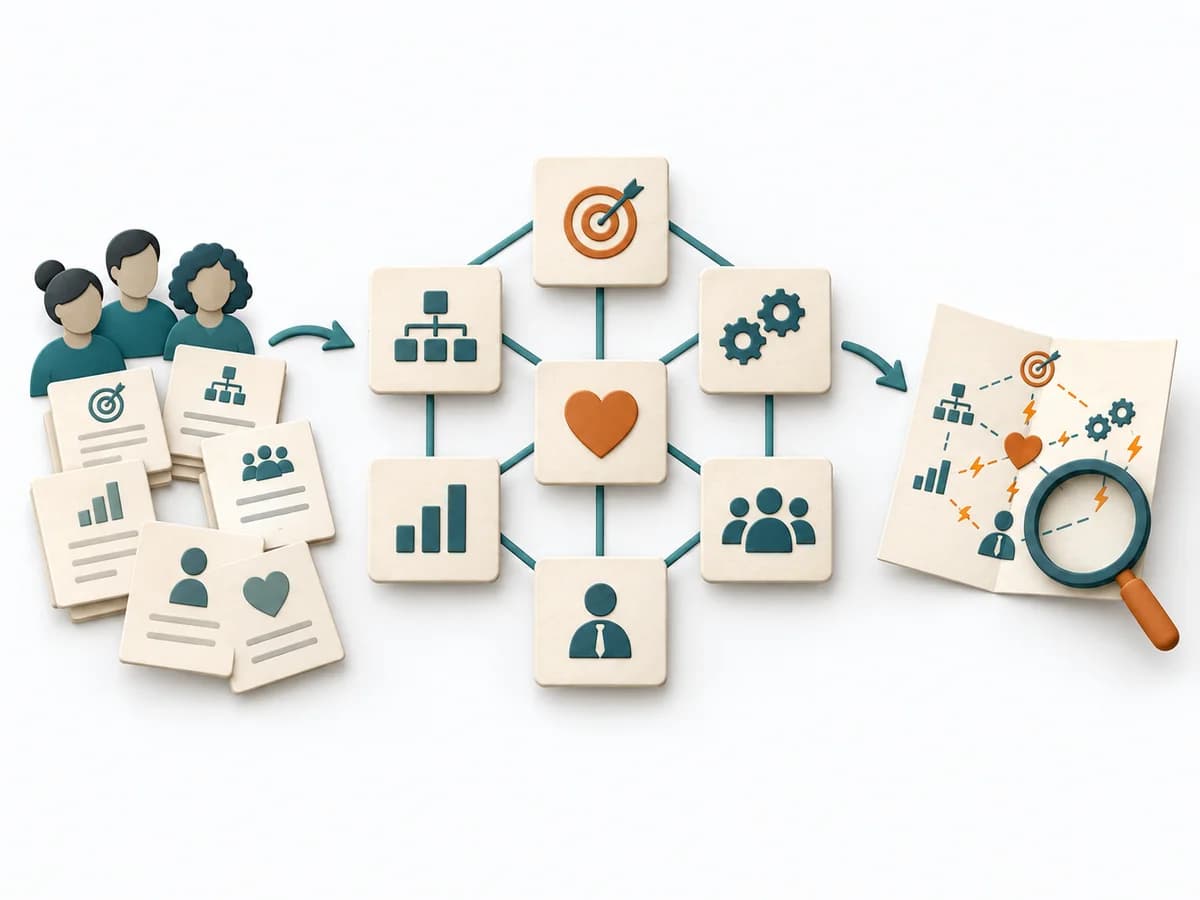 Business Strategy McKinsey 7S |  Facilitation Alignment Mapping |
|---|---|---|---|---|
Purposedifferent | When several teams collaborate repeatedly, it describes the right interaction mode for each interface between them. It clarifies responsibility, interaction, and load between teams. The result is captured as an interaction heat map and pairwise agreements. | When a team is starting fresh or working past each other, Team Charter clarifies the shared working basis. It visibly sets out how collaboration, decision paths, and mutual conduct should work day to day. | McKinsey 7S checks whether Strategy, Structure, Systems, Shared Values, Skills, Style, and Staff fit together. Organizational misalignments become visible across multiple levers as a result. | When several people work toward one goal but hold different mental maps, Alignment Mapping makes the discrepancies visible. It arranges goals, assumptions, and priorities so shared direction becomes verifiable. |
Complexitysame | Medium | Medium | Medium | Medium |
Timedifferent | Half day | 2-4 h | 2-4 h | 1-2 h |
Participantsdifferent | Team-Leads plus Architecture | 3-12 | 3-12 | 4-12 |
Formatsame | Workshop | Workshop | Workshop | Workshop |
Outputdifferent | Interaction Heat Map, Agreements per Pair | Team Charter, Working Norms, Role Notes | 7S Assessment, Alignment Gaps, Change Actions | Alignment Map, Open Issues, Decision Questions |
Tags1 shared | TeamAlignmentCollaborationOrganization | TeamAlignmentCollaboration | OrganizationStrategyAlignmentChange | AlignmentStakeholdersStrategyFacilitation |