View methods side by side.
Choose up to four methods. Add them using the search and share the comparison by copying its link.
| Criterion | 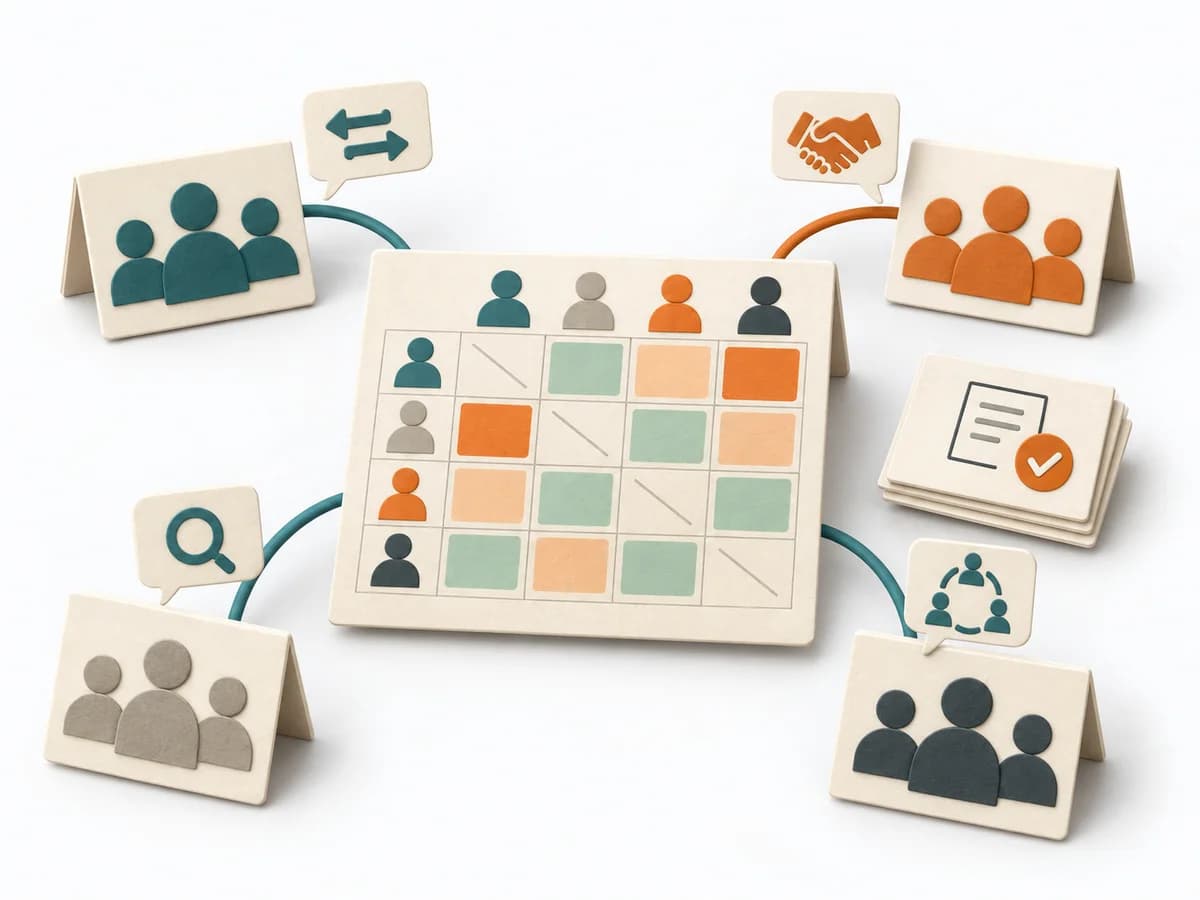 Team Design Team Topologies Interaction Modes | 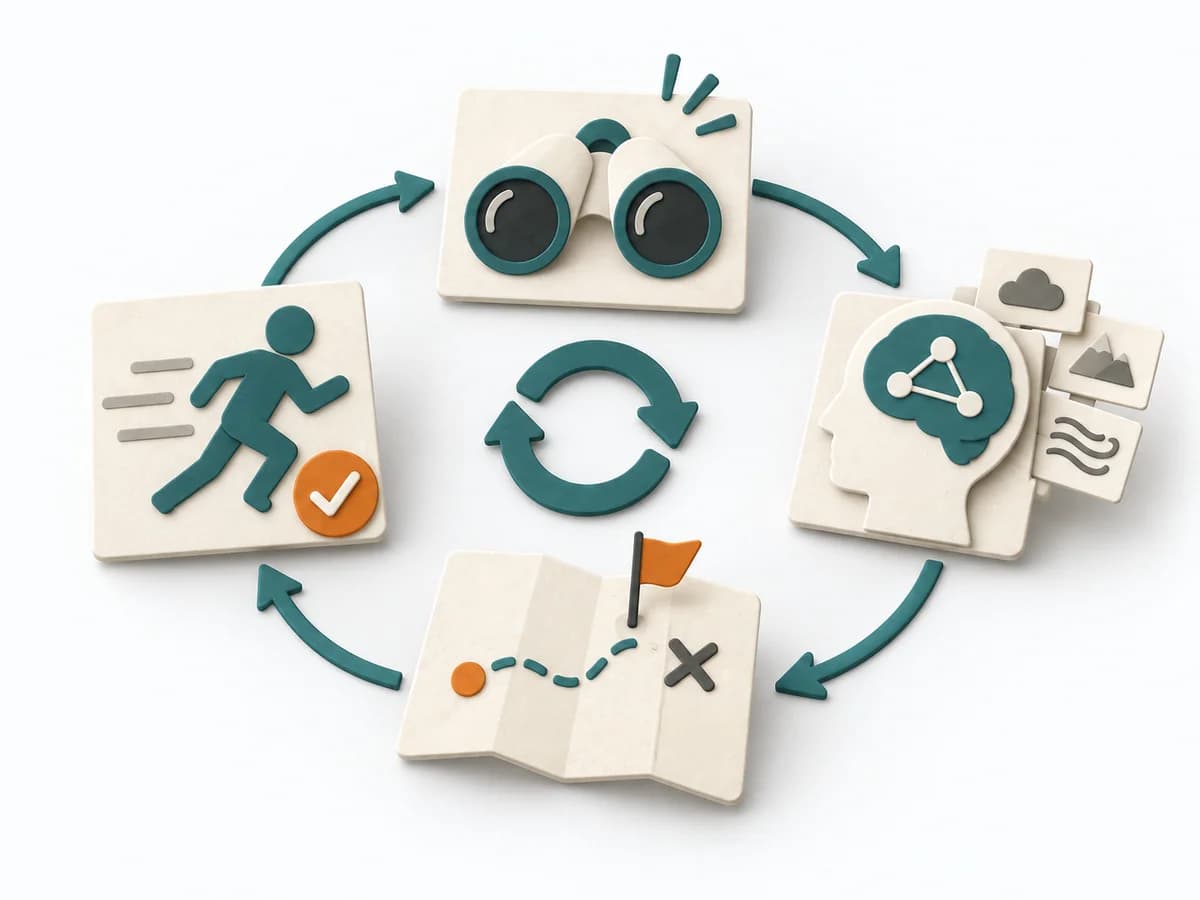 Decision Making OODA Loop |  Facilitation Alignment Mapping |  Facilitation Stakeholder Mapping |
|---|---|---|---|---|
Purposedifferent | When several teams collaborate repeatedly, it describes the right interaction mode for each interface between them. It clarifies responsibility, interaction, and load between teams. The result is captured as an interaction heat map and pairwise agreements. | In dynamic situations, decisions become outdated faster than they can be prepared. The OODA Loop holds observing, orienting, deciding, and acting together as a recurring rhythm so reaction does not slide into inertia. | When several people work toward one goal but hold different mental maps, Alignment Mapping makes the discrepancies visible. It arranges goals, assumptions, and priorities so shared direction becomes verifiable. | When an initiative depends on many people, interests, and power dynamics, Stakeholder Mapping systematically orders the environment. It shows who influences, who is affected, and where relationship management or safeguarding matters first. |
Complexitydifferent | Medium | Medium | Medium | Low |
Timedifferent | Half day | 15-60 min je Zyklus | 1-2 h | 60–90 min |
Participantsdifferent | Team-Leads plus Architecture | 1-8 | 4-12 | 2-8 |
Formatdifferent | Workshop | Workshop + async | Workshop | Workshop + async |
Outputdifferent | Interaction Heat Map, Agreements per Pair | Situation Assessment, Decision Loop, Action Updates | Alignment Map, Open Issues, Decision Questions | Stakeholder Map, Engagement Plan, Risk Notes |
Tagsno overlap | TeamAlignmentCollaborationOrganization | DecisionChangeLearningStrategy | AlignmentStakeholdersStrategyFacilitation | StakeholdersAlignmentFacilitationChange |