View methods side by side.
Choose up to four methods. Add them using the search and share the comparison by copying its link.
| Criterion | 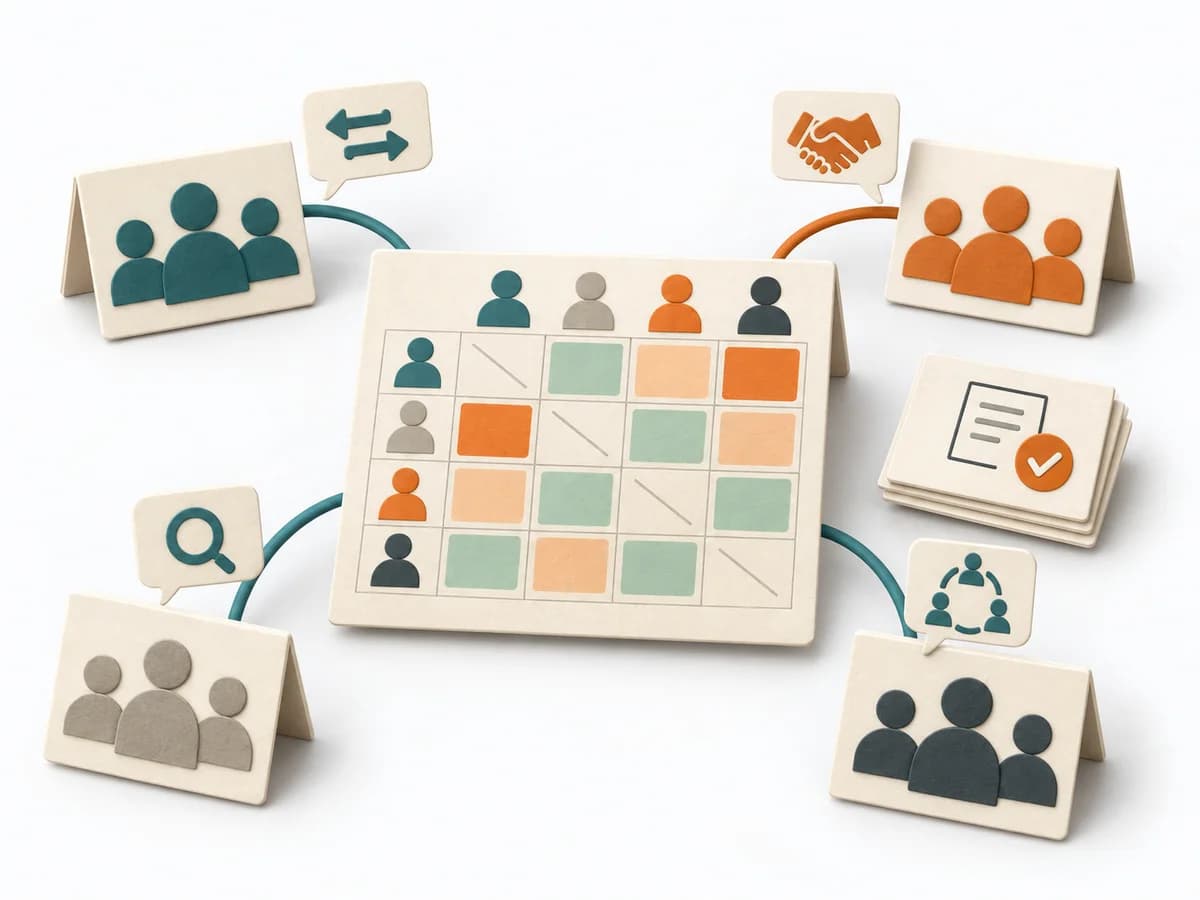 Team Design Team Topologies Interaction Modes |  Product Discovery Assumption Mapping | 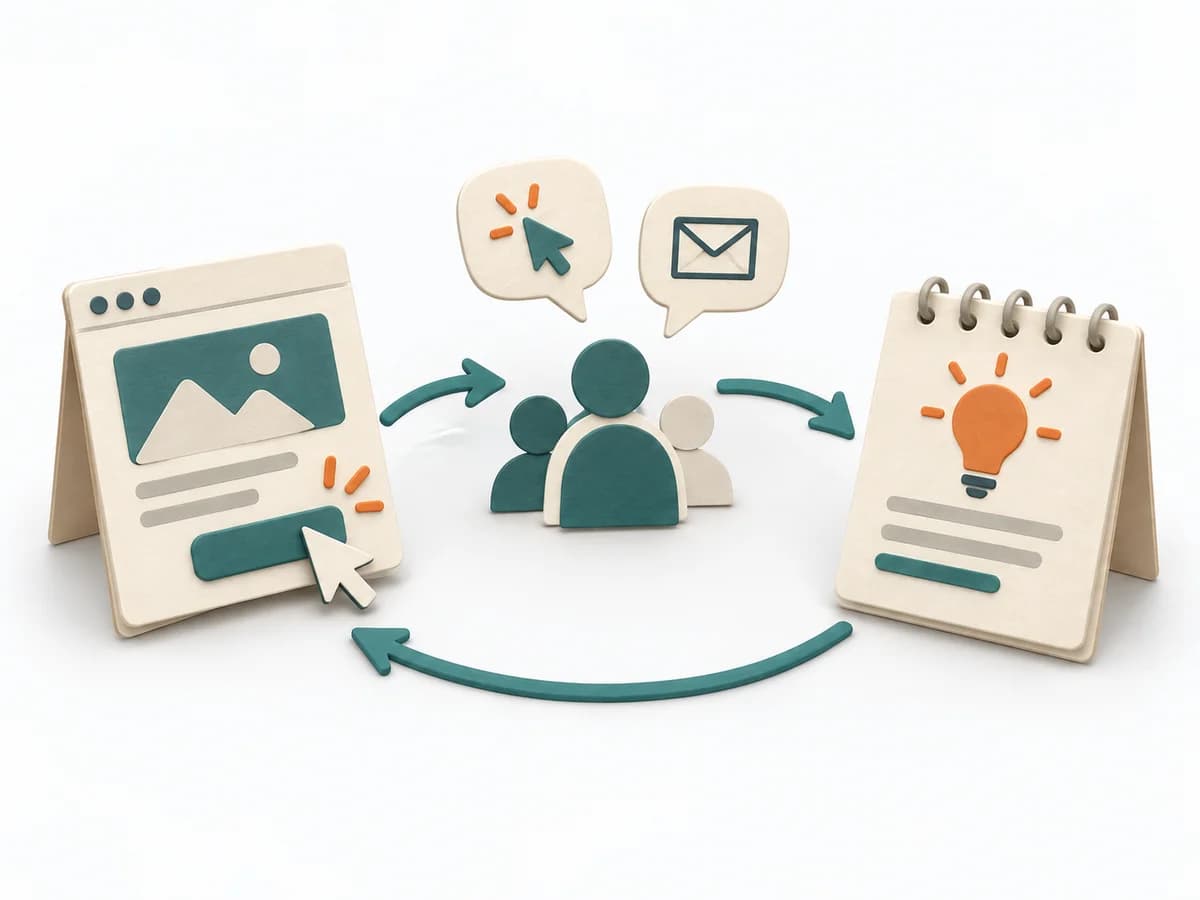 Product Discovery Smoke Test | 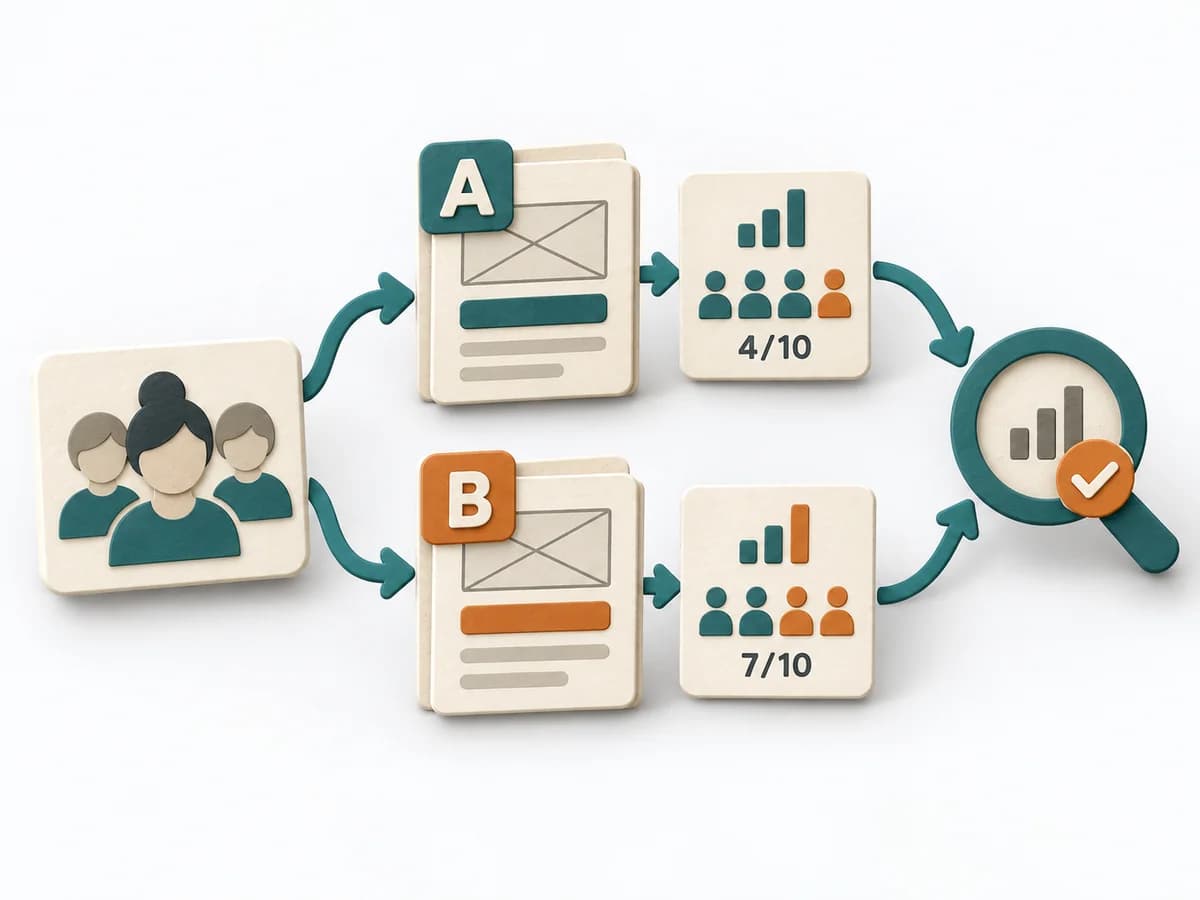 Growth A/B Testing |
|---|---|---|---|---|
Purposedifferent | When several teams collaborate repeatedly, it describes the right interaction mode for each interface between them. It clarifies responsibility, interaction, and load between teams. The result is captured as an interaction heat map and pairwise agreements. | When assumptions still sit unordered in the room, it weighs uncertainty against leverage. It makes visible which hypotheses should be checked first. | When demand only needs to be roughly verified, it tests interest with minimal effort. It measures whether people would take a next step at all. | When two variants compete, discussions quickly decide by taste rather than effect. A/B Testing checks behavior under controlled conditions and separates real improvement from chance or expectation effects. |
Complexitydifferent | Medium | Medium | Low | High |
Timedifferent | Half day | 45-60 min | 1-5 Tage | 1-4 Wochen |
Participantsdifferent | Team-Leads plus Architecture | 2-8 | Nutzertraffic | 1-6 |
Formatdifferent | Workshop | Workshop + async | Async | Async |
Outputdifferent | Interaction Heat Map, Agreements per Pair | Assumption map, Test backlog, Risk ranking | Interest Metrics, Conversion Signal, Learning Note | Experiment results, Decision log, Learning summary |
Tagsno overlap | TeamAlignmentCollaborationOrganization | AssumptionsRiskExperimentsValidation | ValidationExperimentsDemandGrowth | ExperimentsGrowthAnalyticsValidation |