View methods side by side.
Choose up to four methods. Add them using the search and share the comparison by copying its link.
| Criterion | 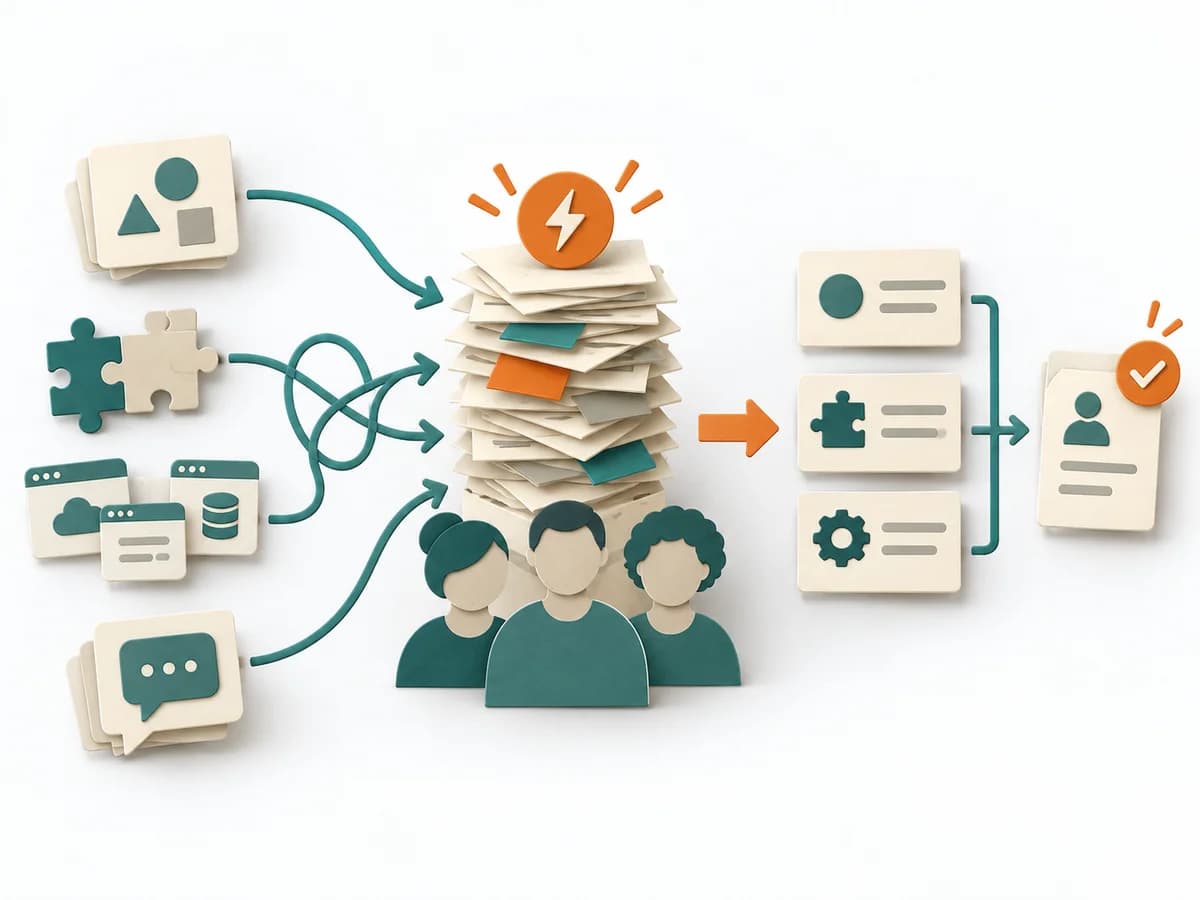 Team Design Team Cognitive Load Assessment |  Facilitation Responsibility Poker |  Facilitation Question Burst |  Facilitation Delegation Poker |
|---|---|---|---|---|
Purposedifferent | When a team juggles too many domains, systems, or handoffs, it measures mental overload as an organizational problem. It clarifies responsibility, interaction, and load between teams. The result is captured as a cognitive-load profile and action list. | When it stays unclear who carries responsibility and who only contributes, Responsibility Poker makes the distribution of responsibility explicit. It sharpens the boundaries between weighing in, deciding, and bearing consequences. | When a problem gets covered up too quickly with answers, Question Burst puts the better question at the center. The format opens the thinking space before the group commits to an interpretation. | When decisions get stuck between leadership and team, Delegation Poker clarifies the desired scope of autonomy. It shows how much decision-making latitude a role should actually get in practice. |
Complexitydifferent | Medium | Low | Low | Low |
Timedifferent | 60-90 min | 45-90 min | 15-30 min | 45-90 min |
Participantsdifferent | 3-12 | 3-10 | 2-8 | 3-10 |
Formatdifferent | Workshop + async | Workshop | Workshop | Workshop |
Outputdifferent | Cognitive Load Profile, Action List | Responsibility Map, Role Agreements, Open Questions | Question List, Reframed Challenge, Learning Prompts | Delegation Board, Decision Boundaries, Role Agreements |
Tagsno overlap | TeamComplexityImprovementDiagnosis | RolesResponsibilityTeamFacilitation | QuestionsReframingFacilitationSensemaking | AutonomyRolesTeam |