View methods side by side.
Choose up to four methods. Add them using the search and share the comparison by copying its link.
| Criterion | 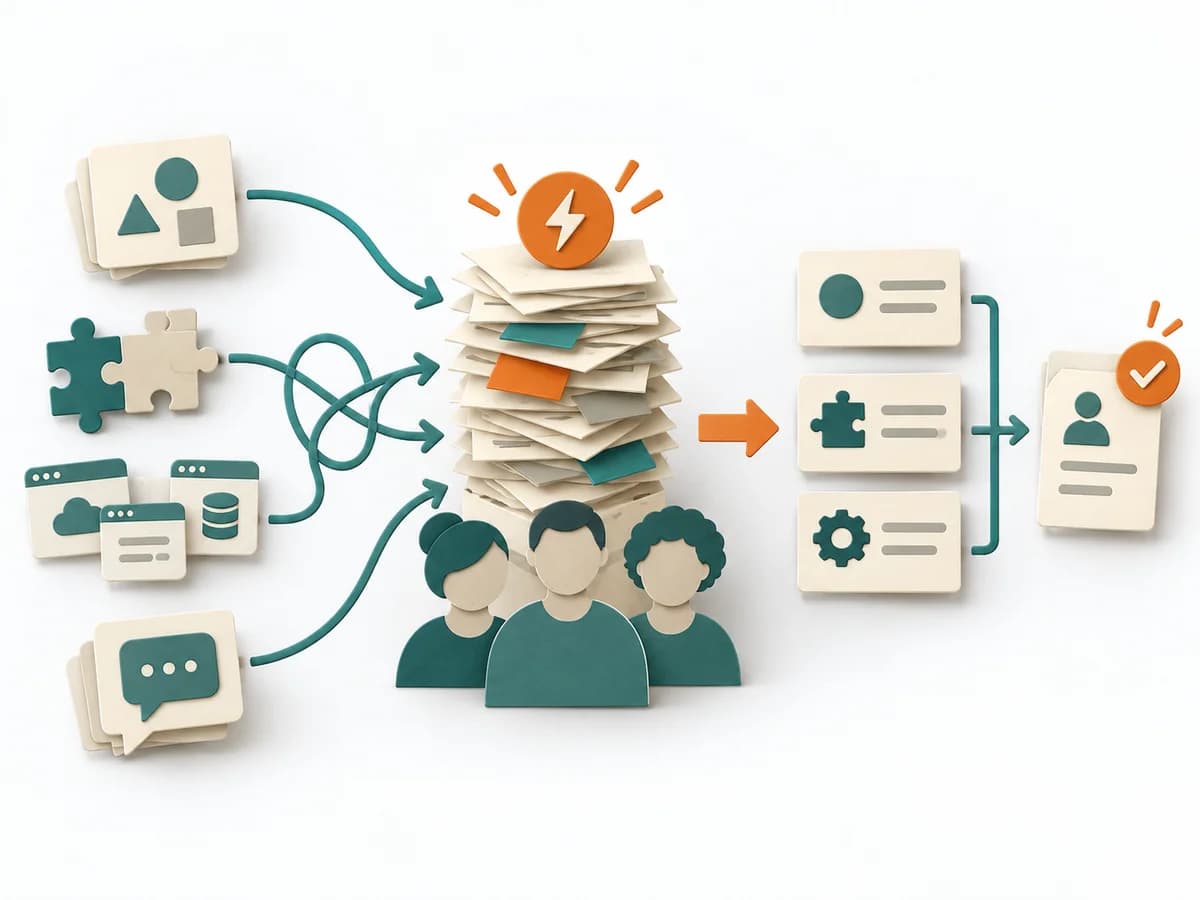 Team Design Team Cognitive Load Assessment |  Facilitation Delegation Poker | 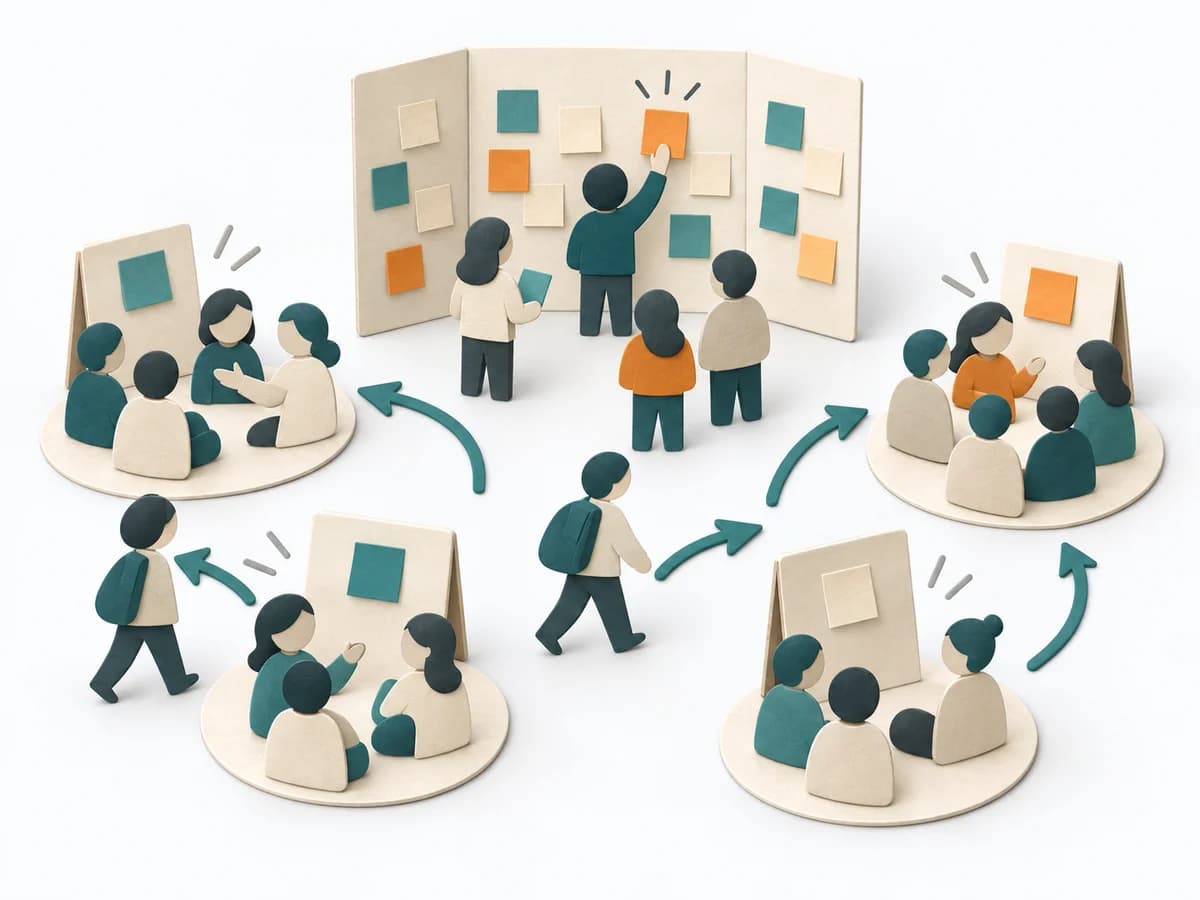 Facilitation Open Space Technology | 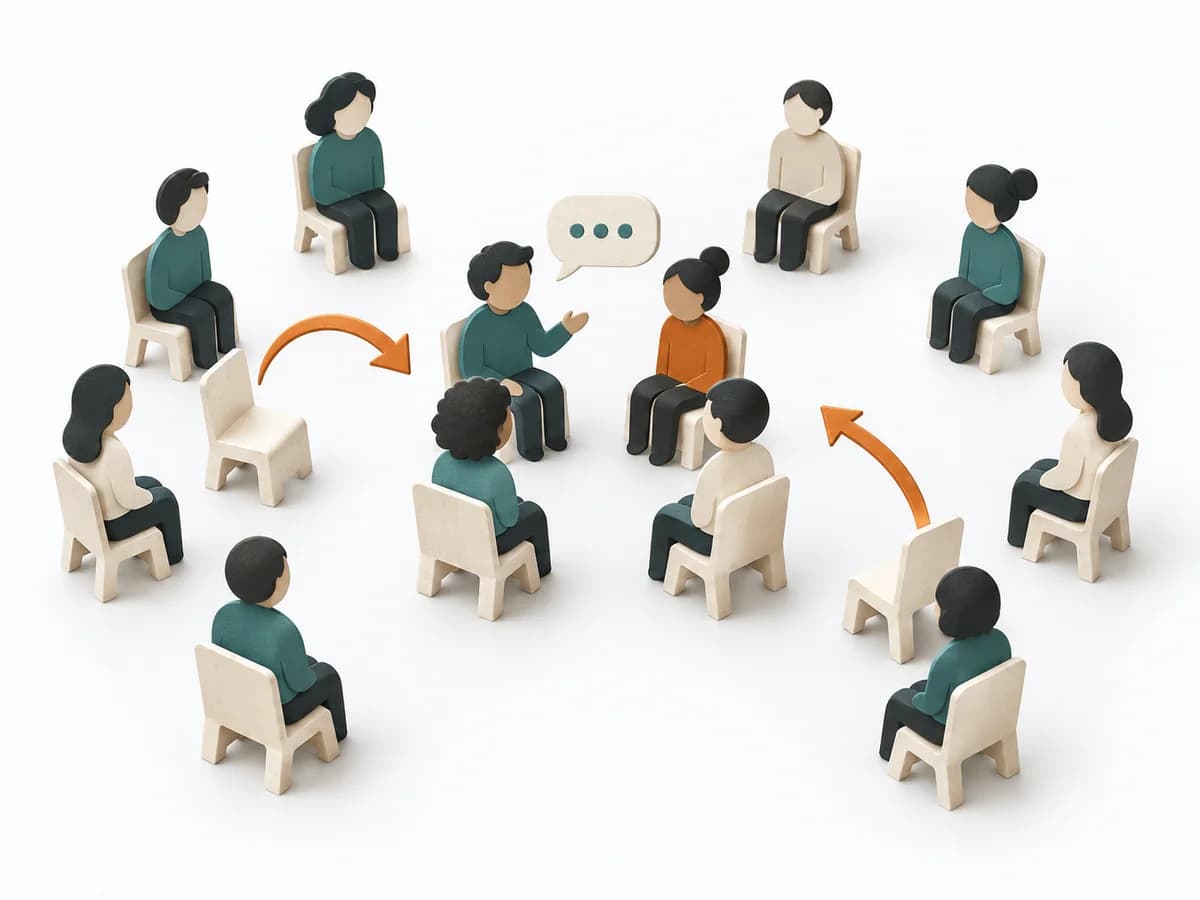 Facilitation Fishbowl Discussion |
|---|---|---|---|---|
Purposedifferent | When a team juggles too many domains, systems, or handoffs, it measures mental overload as an organizational problem. It clarifies responsibility, interaction, and load between teams. The result is captured as a cognitive-load profile and action list. | When decisions get stuck between leadership and team, Delegation Poker clarifies the desired scope of autonomy. It shows how much decision-making latitude a role should actually get in practice. | When a complex topic does not yet have a fitting agenda, Open Space Technology hands topic ownership back to the participants. The format suits questions that only move forward when real interest determines the order. | When a controversial topic needs depth and discipline at the same time, Fishbowl Discussion makes the structure of the conversation transparent. The format keeps the core small enough for real dialogue and open enough for controlled turnover. |
Complexitydifferent | Medium | Low | High | Medium |
Timedifferent | 60-90 min | 45-90 min | 0.5-2 Tage | 45-90 min |
Participantsdifferent | 3-12 | 3-10 | 20-500+ | 8-80 |
Formatdifferent | Workshop + async | Workshop | Workshop | Workshop |
Outputdifferent | Cognitive Load Profile, Action List | Delegation Board, Decision Boundaries, Role Agreements | Session Marketplace, Proceedings, Action Topics | Discussion Insights, Observed Tensions, Follow-up Questions |
Tagsno overlap | TeamComplexityImprovementDiagnosis | AutonomyRolesTeam | FacilitationLarge groupAutonomy | FacilitationDialogueLarge group |