View methods side by side.
Choose up to four methods. Add them using the search and share the comparison by copying its link.
| Criterion | 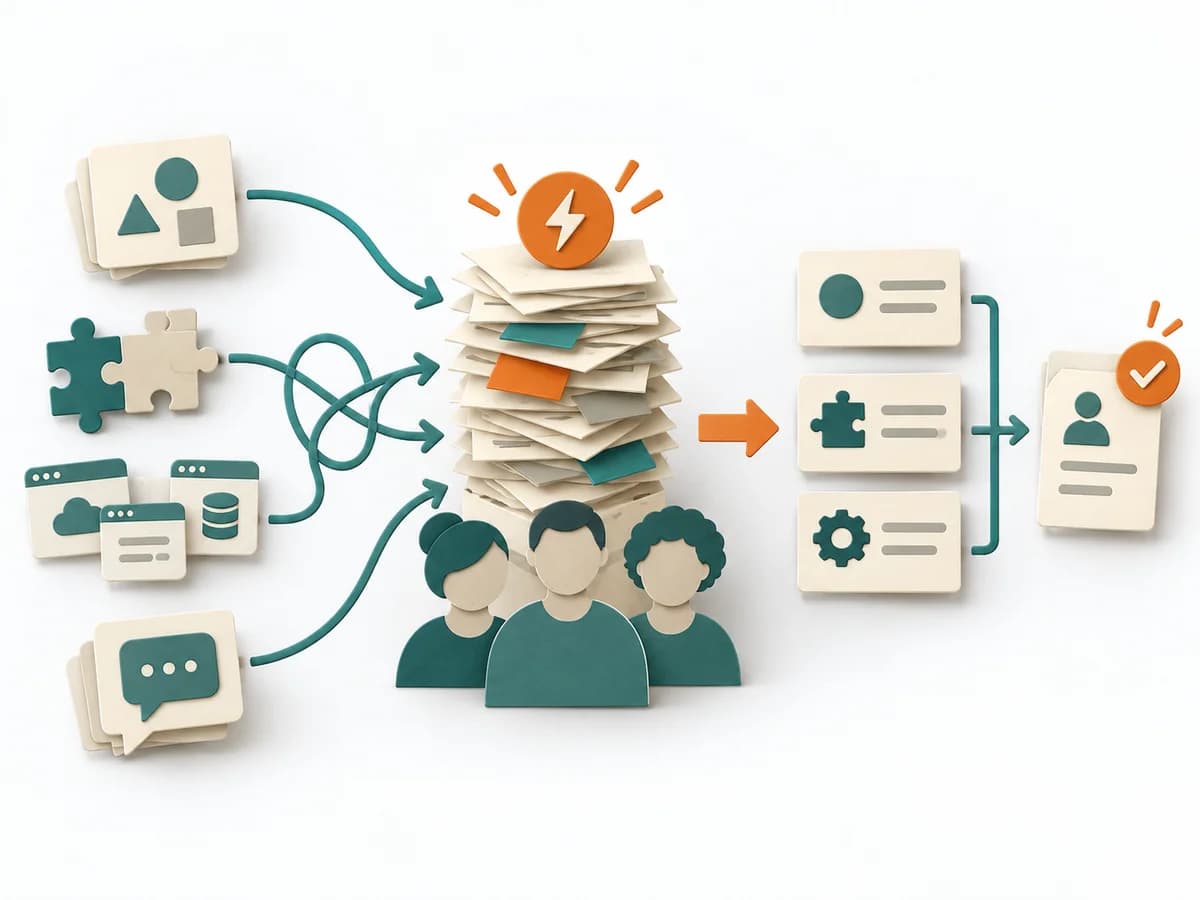 Team Design Team Cognitive Load Assessment |  Facilitation Barcamp | 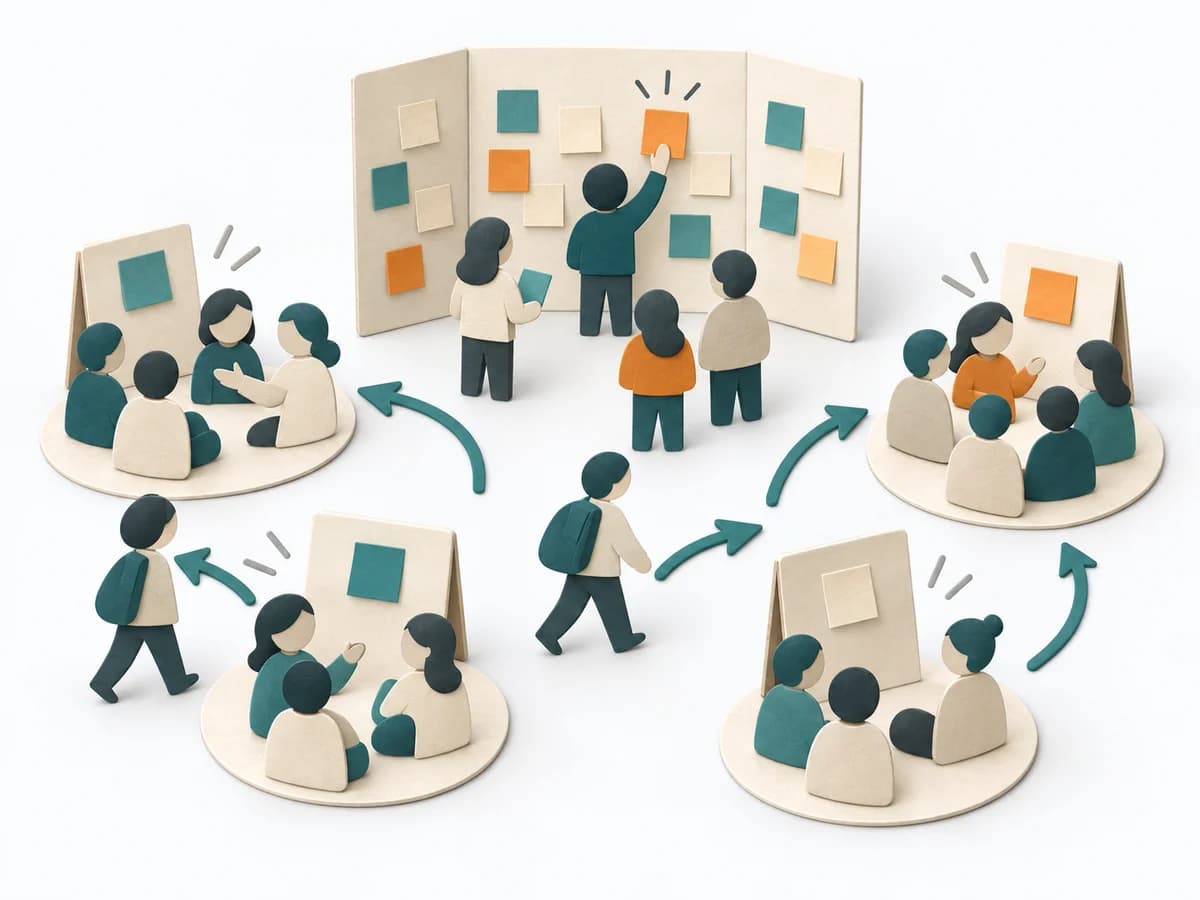 Facilitation Open Space Technology | 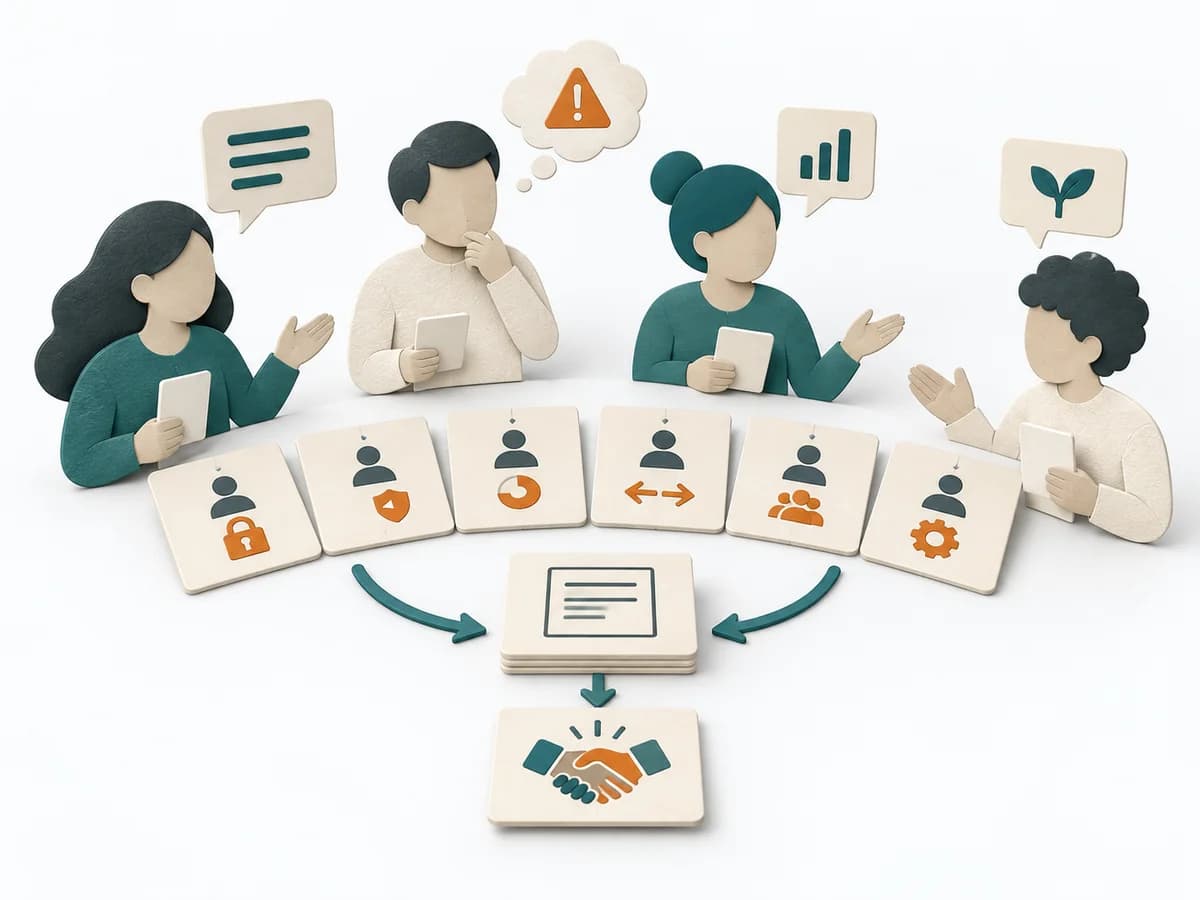 Facilitation Delegation Poker |
|---|---|---|---|---|
Purposedifferent | When a team juggles too many domains, systems, or handoffs, it measures mental overload as an organizational problem. It clarifies responsibility, interaction, and load between teams. The result is captured as a cognitive-load profile and action list. | When many people can contribute knowledge and the flow should stay open, Barcamp provides a framework for self-organized sessions. The format channels energy without defining the content too narrowly in advance. | When a complex topic does not yet have a fitting agenda, Open Space Technology hands topic ownership back to the participants. The format suits questions that only move forward when real interest determines the order. | When decisions get stuck between leadership and team, Delegation Poker clarifies the desired scope of autonomy. It shows how much decision-making latitude a role should actually get in practice. |
Complexitydifferent | Medium | Medium | High | Low |
Timedifferent | 60-90 min | Halber Tag bis 2 Tage | 0.5-2 Tage | 45-90 min |
Participantsdifferent | 3-12 | 15-200 | 20-500+ | 3-10 |
Formatdifferent | Workshop + async | Workshop | Workshop | Workshop |
Outputdifferent | Cognitive Load Profile, Action List | Session Board, Session Notes, Community Learnings | Session Marketplace, Proceedings, Action Topics | Delegation Board, Decision Boundaries, Role Agreements |
Tagsno overlap | TeamComplexityImprovementDiagnosis | FacilitationLarge groupLearning | FacilitationLarge groupAutonomy | AutonomyRolesTeam |