View methods side by side.
Choose up to four methods. Add them using the search and share the comparison by copying its link.
| Criterion |  Facilitation Team Charter | 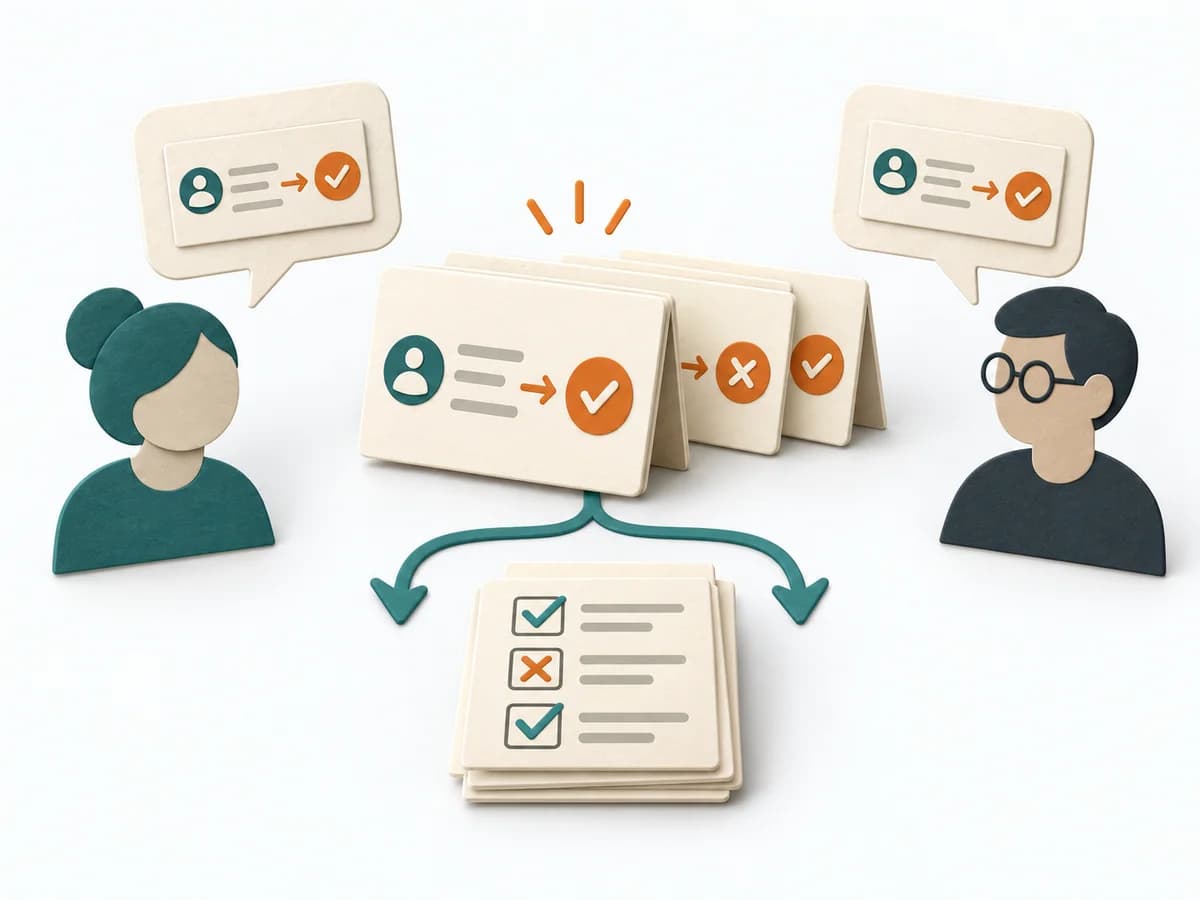 Agile Specification by Example | 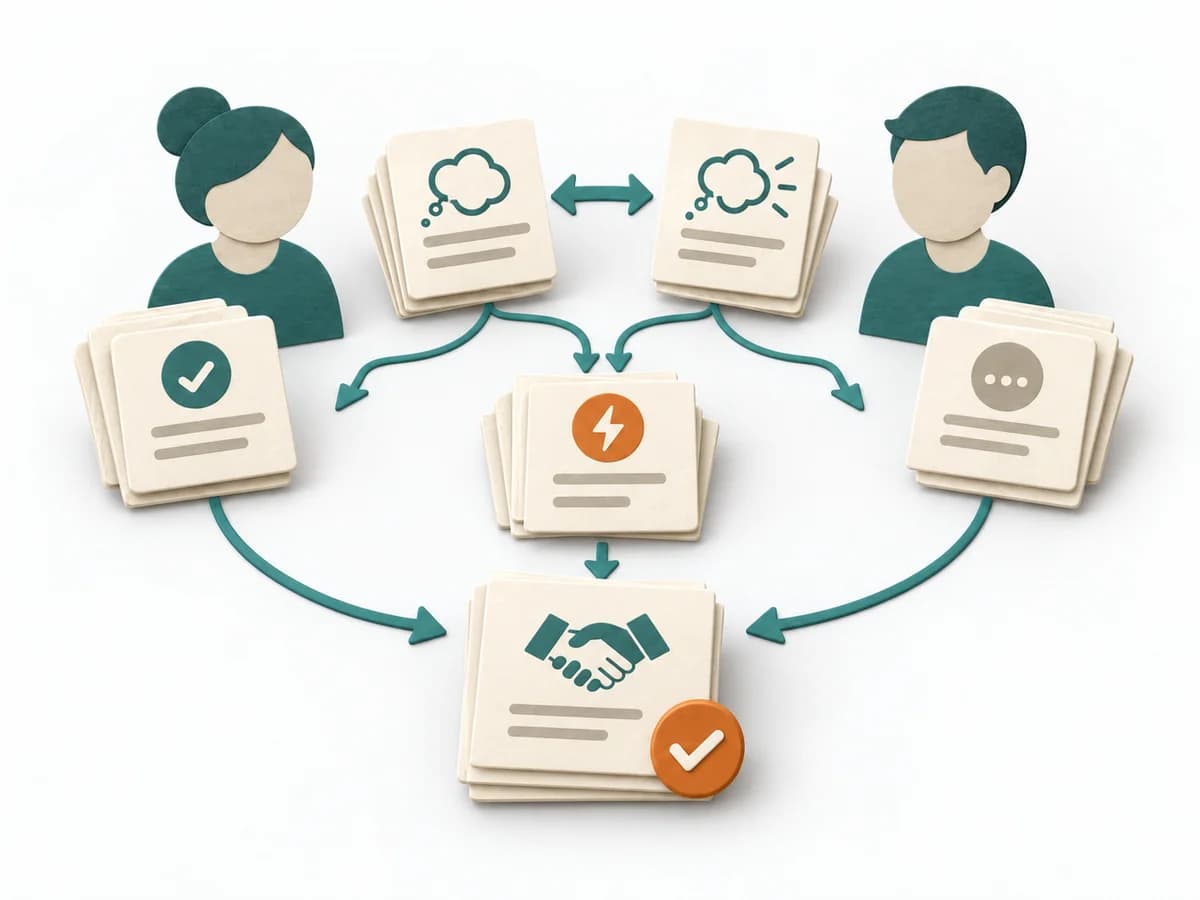 Facilitation Expectation Mapping | 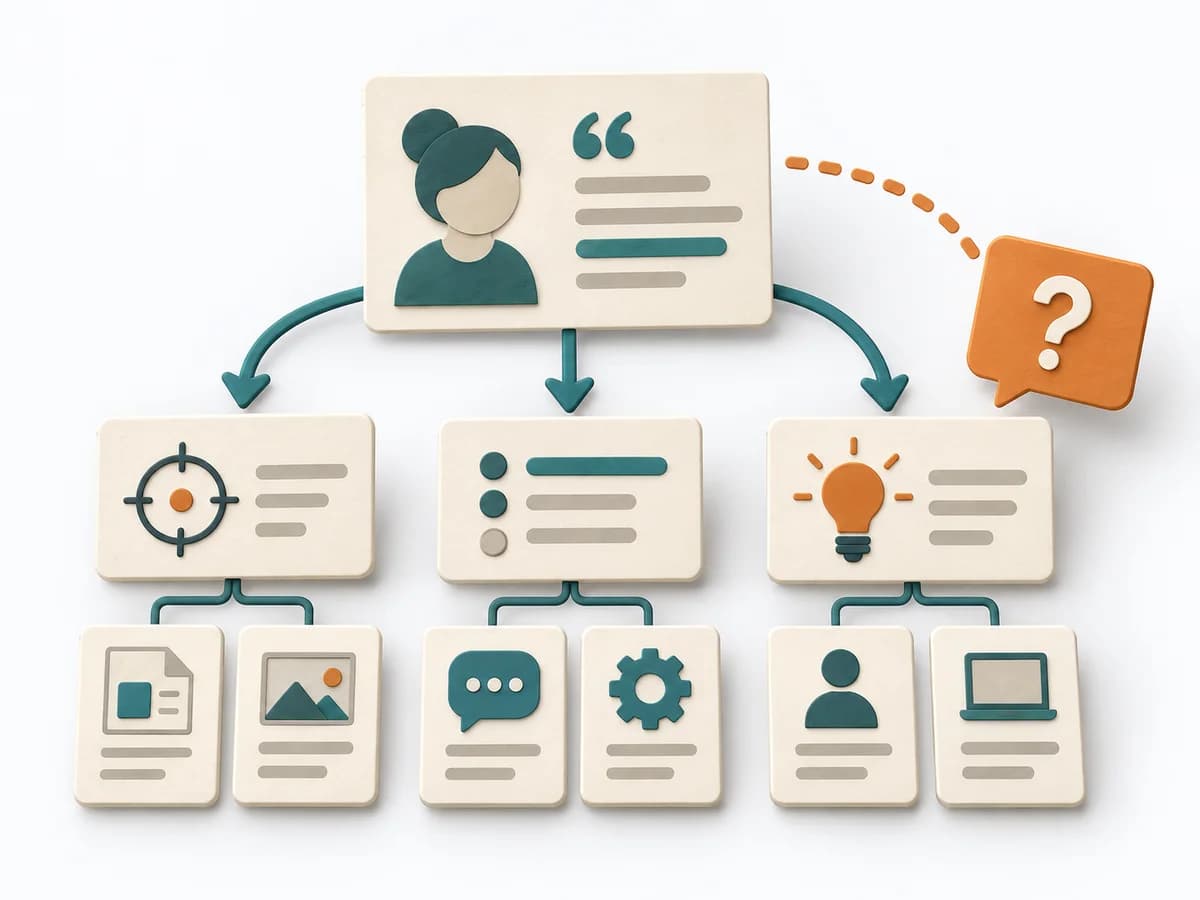 Agile Example Mapping |
|---|---|---|---|---|
Purposedifferent | When a team is starting fresh or working past each other, Team Charter clarifies the shared working basis. It visibly sets out how collaboration, decision paths, and mutual conduct should work day to day. | When business rules need to become precise, it ties language, example, and test together. It sorts work by value, risk, and delivery ability. The result is captured as an Example Table and Acceptance Tests. | When roles, interfaces, or projects fail because of differing expectations, Expectation Mapping surfaces these differences. It shows what each side takes for granted and where the pictures diverge. | When a story carries business rules and exceptions, it brings clarity before implementation. It makes examples, open questions, and boundaries visible enough that the logic becomes jointly sound. |
Complexitydifferent | Medium | Medium | Low | Low |
Timedifferent | 2-4 h | 60-90 min pro Feature | 45-90 min | 30-60 min |
Participantsdifferent | 3-12 | 3-6 | 3-12 | 3-7 |
Formatsame | Workshop | Workshop | Workshop | Workshop |
Outputdifferent | Team Charter, Working Norms, Role Notes | Example Table, Acceptance Tests | Expectation Map, Alignment Notes, Agreements | Example Map, Acceptance Criteria, Open Questions |
Tagsno overlap | TeamAlignmentCollaboration | AgileRequirementsExamplesBehavior-Driven Development | AlignmentStakeholdersTeam | Behavior-Driven DevelopmentRequirementsExamplesRefinement |