View methods side by side.
Choose up to four methods. Add them using the search and share the comparison by copying its link.
| Criterion |  Facilitation Team Charter |  Systems Thinking Leverage Points | 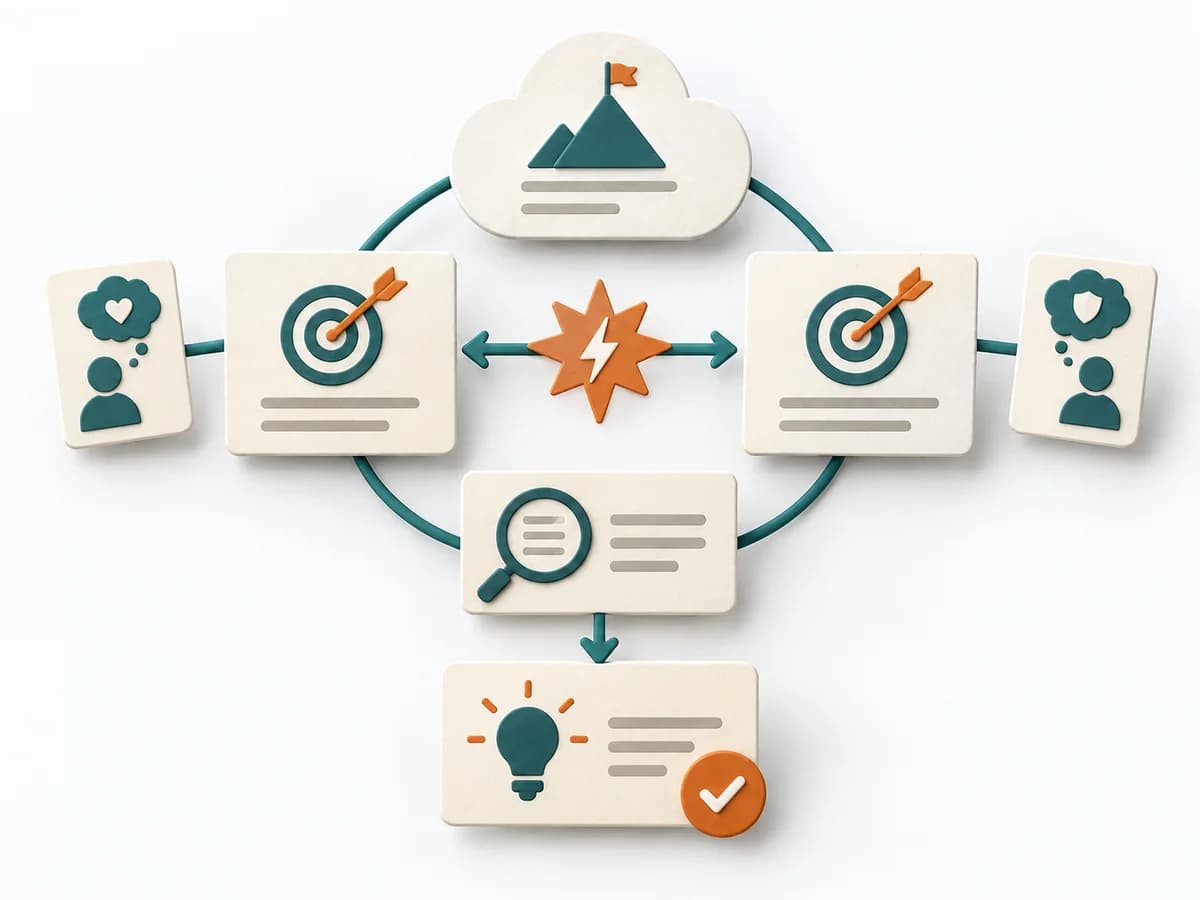 Systems Thinking Evaporating Cloud | 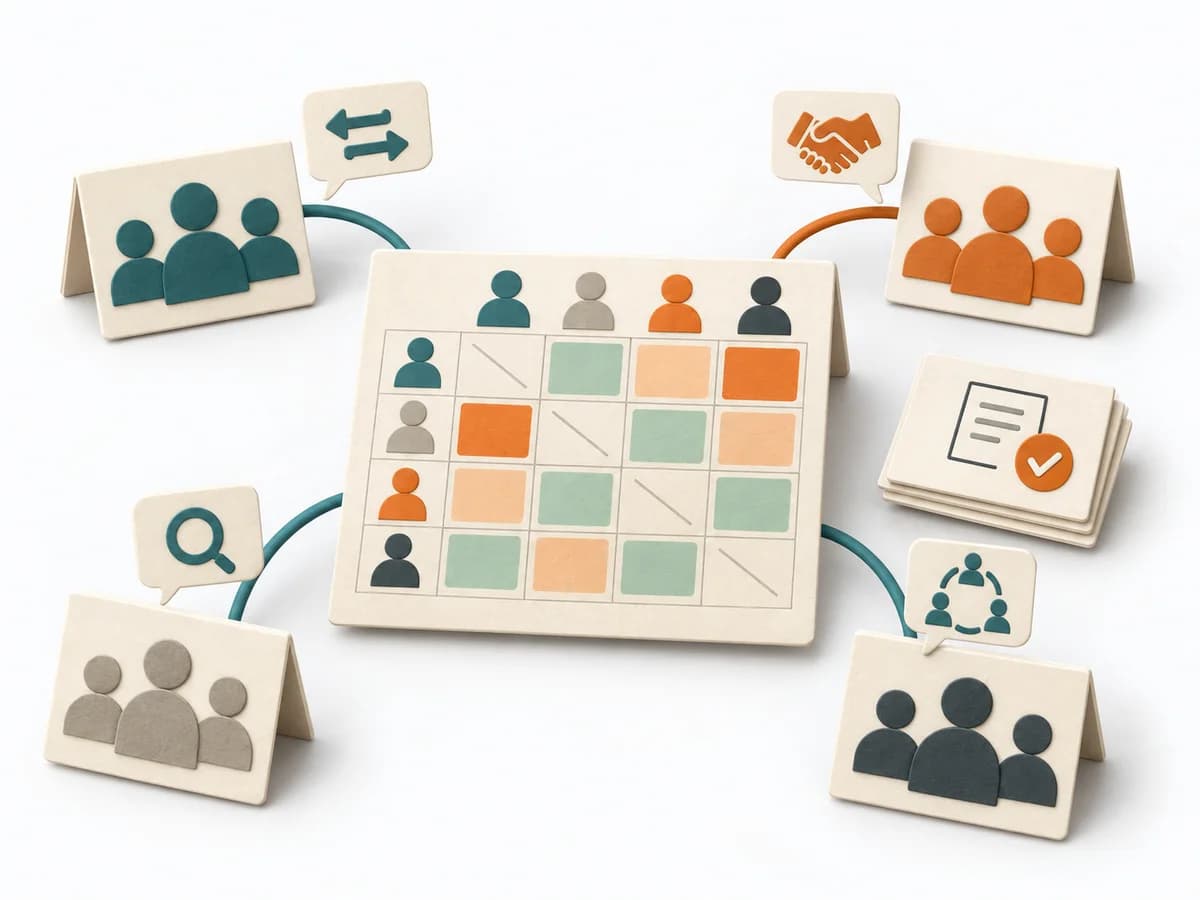 Team Design Team Topologies Interaction Modes |
|---|---|---|---|---|
Purposedifferent | When a team is starting fresh or working past each other, Team Charter clarifies the shared working basis. It visibly sets out how collaboration, decision paths, and mutual conduct should work day to day. | Leverage Points show exactly where interventions in a system produce a disproportionate effect. It draws relationships, patterns, and feedback loops. The result is captured as a leverage map and action strategy. | The method makes visible why two seemingly incompatible demands arise and which assumption must be tested to resolve the conflict. | When several teams collaborate repeatedly, it describes the right interaction mode for each interface between them. It clarifies responsibility, interaction, and load between teams. The result is captured as an interaction heat map and pairwise agreements. |
Complexitydifferent | Medium | High | Medium | Medium |
Timedifferent | 2-4 h | Half day | 60-120 min | Half day |
Participantsdifferent | 3-12 | 3-12 | 2-8 | Team-Leads plus Architecture |
Formatsame | Workshop | Workshop | Workshop | Workshop |
Outputdifferent | Team Charter, Working Norms, Role Notes | Leverage Map, Action Strategy | Conflict Cloud, Assumption List, Breakthrough Ideas, Next Experiments | Interaction Heat Map, Agreements per Pair |
Tagsno overlap | TeamAlignmentCollaboration | Systems thinkingChangeStrategy | Theory of ConstraintsAssumptionsSystems thinking | TeamAlignmentCollaborationOrganization |