View methods side by side.
Choose up to four methods. Add them using the search and share the comparison by copying its link.
| Criterion |  Facilitation Team Charter | 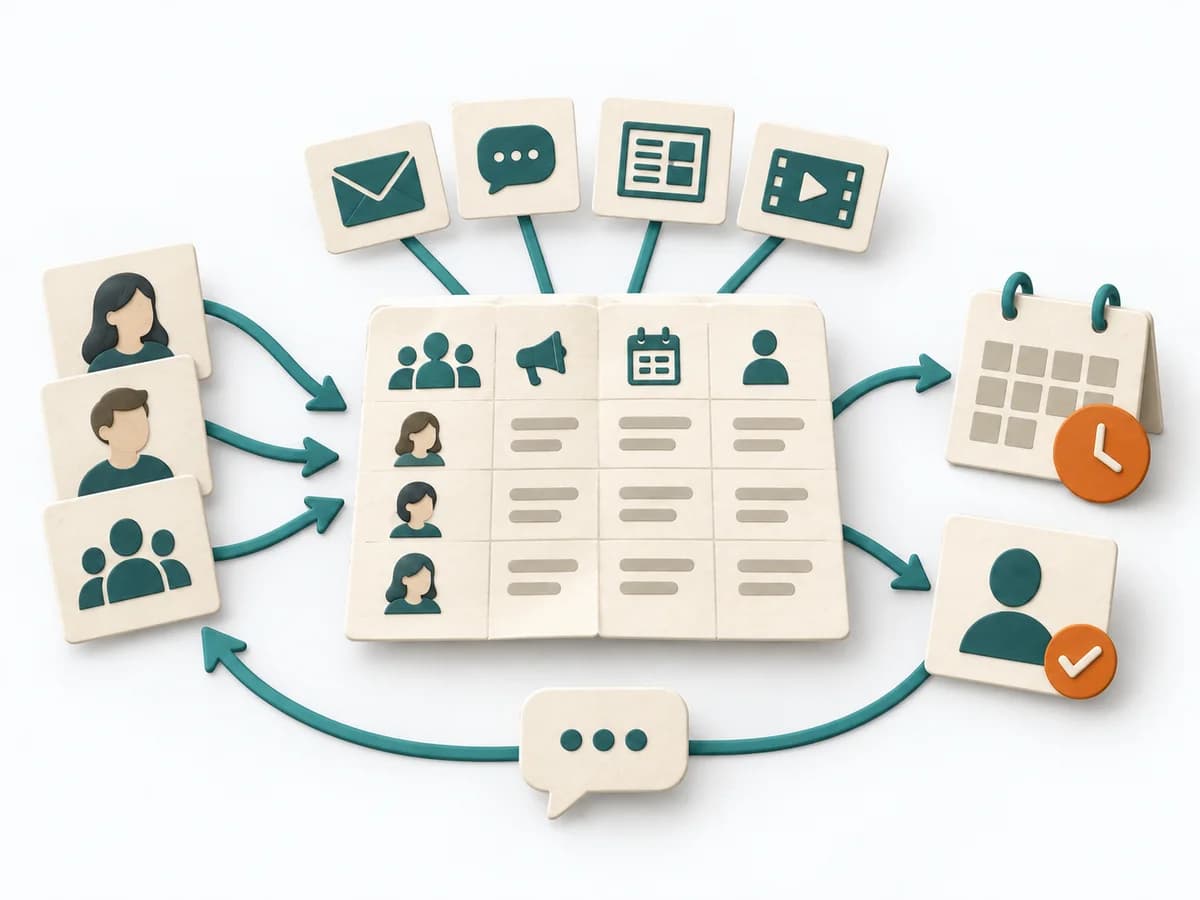 Delivery Communication Plan |  Facilitation Alignment Mapping |  Facilitation Stakeholder Salience Model |
|---|---|---|---|---|
Purposedifferent | When a team is starting fresh or working past each other, Team Charter clarifies the shared working basis. It visibly sets out how collaboration, decision paths, and mutual conduct should work day to day. | When many people need to be informed in parallel and messages would otherwise arrive unevenly or too late, a Communication Plan orders communication reliably. Channels, audiences, and cadences interlock so important information doesn't get lost. | When several people work toward one goal but hold different mental maps, Alignment Mapping makes the discrepancies visible. It arranges goals, assumptions, and priorities so shared direction becomes verifiable. | When stakeholders appear to matter very differently, the Stakeholder Salience Model rates their actual priority through power, legitimacy, and urgency. It turns individual contributions into a visible selection. The result is captured as a Salience diagram and a class-based strategy. |
Complexitydifferent | Medium | Low | Medium | Medium |
Timedifferent | 2-4 h | 45-90 min | 1-2 h | 60-90 min |
Participantsdifferent | 3-12 | 2-6 | 4-12 | 3-6 |
Formatdifferent | Workshop | Workshop + async | Workshop | Workshop |
Outputdifferent | Team Charter, Working Norms, Role Notes | Communication Plan, Channel Matrix, Message Cadence | Alignment Map, Open Issues, Decision Questions | Salience Diagram, Strategy per Class |
Tagsno overlap | TeamAlignmentCollaboration | CommunicationStakeholdersDeliveryPlanning | AlignmentStakeholdersStrategyFacilitation | StakeholdersFacilitationAlignmentGovernance |