View methods side by side.
Choose up to four methods. Add them using the search and share the comparison by copying its link.
| Criterion | 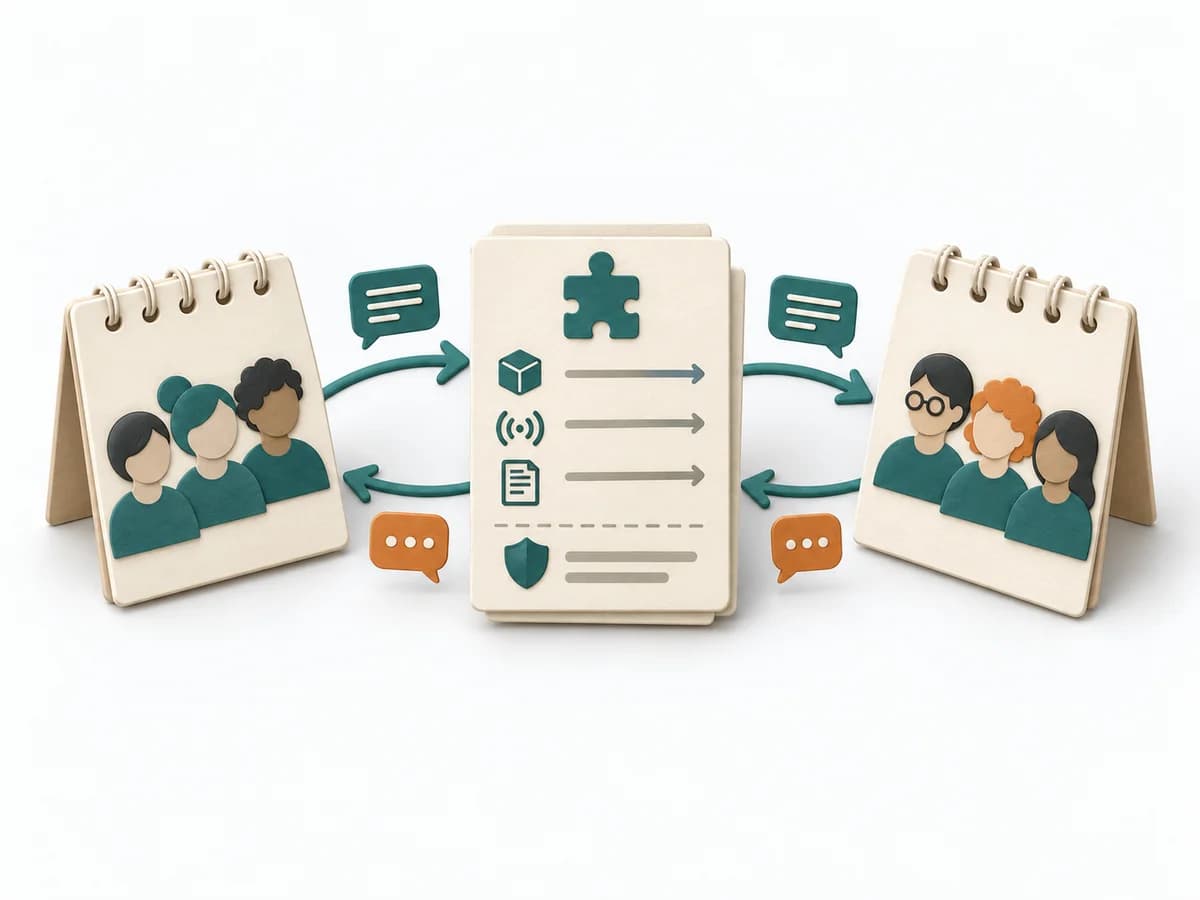 Team Design Team API |  Systems Thinking Leverage Points |  Decision Making DACI |  Decision Making Force Field Analysis |
|---|---|---|---|---|
Purposedifferent | When expectations between teams stay fuzzy, it describes how a team can be reached, used, and held accountable. It clarifies responsibility, interaction, and load between teams. The result is captured as a Team API document. | Leverage Points show exactly where interventions in a system produce a disproportionate effect. It draws relationships, patterns, and feedback loops. The result is captured as a leverage map and action strategy. | In cross-functional decisions, responsibilities quickly blur between approval, influence, and execution. DACI arranges these roles so decision pressure, contribution, and information stay cleanly separated. | In change initiatives, supporting and restraining forces sit at the table at the same time. Force Field Analysis makes these tensions explicit and shows where change can be pushed forward by strengthening or relieving. |
Complexitydifferent | Low | High | Low | Low |
Timedifferent | Half day initial, dann laufend | Half day | 30-60 min | 45-90 min |
Participantsdifferent | Ein Team plus Stakeholder | 3-12 | 2-10 | 3-12 |
Formatdifferent | Workshop + async | Workshop | Workshop + async | Workshop |
Outputdifferent | Team API Document | Leverage Map, Action Strategy | DACI Matrix, Decision Owner, Decision Log | Force Field Map, Change Levers, Risk Notes |
Tagsno overlap | TeamAlignmentCommunicationService | Systems thinkingChangeStrategy | DecisionRolesGovernanceAlignment | ChangeDecisionStrategy |